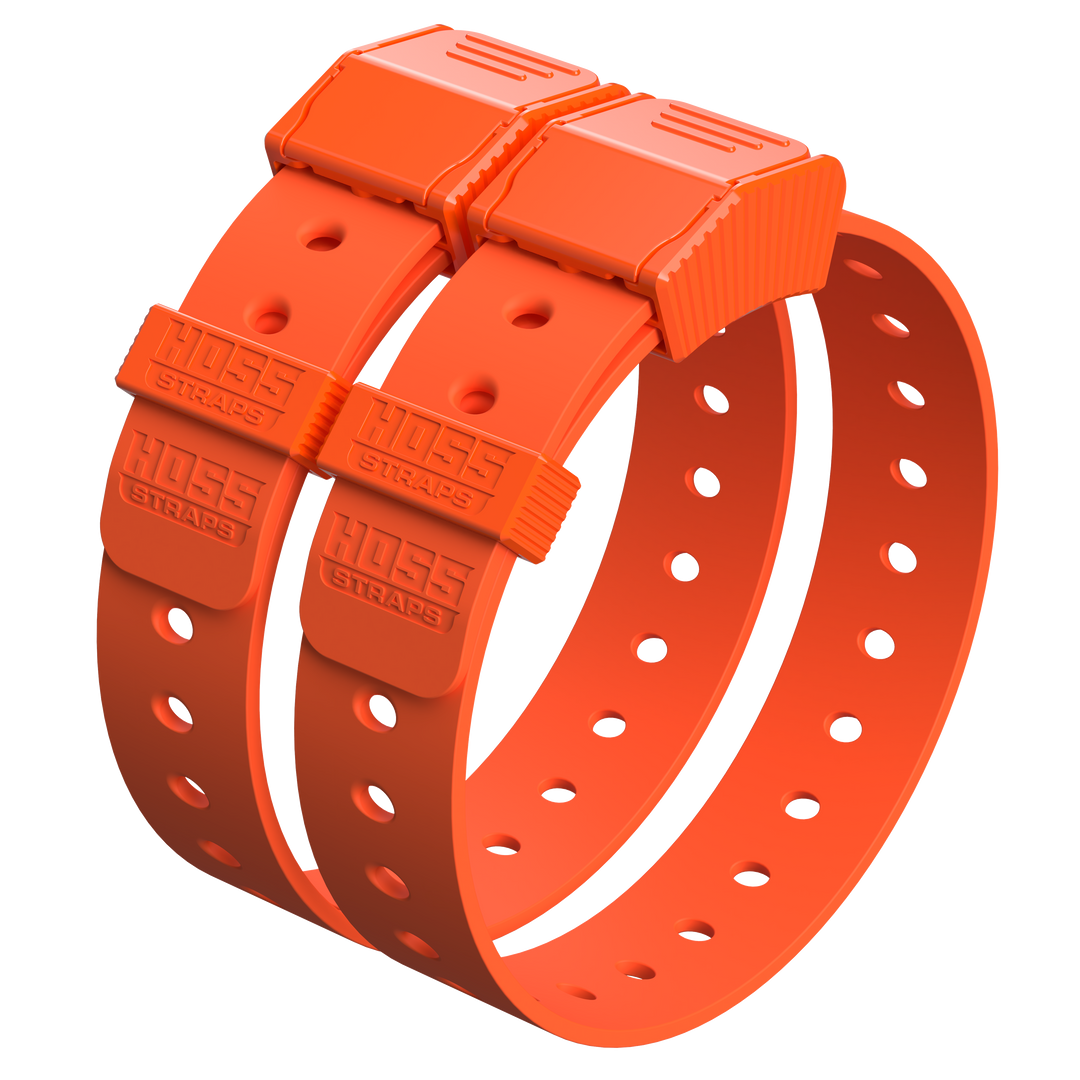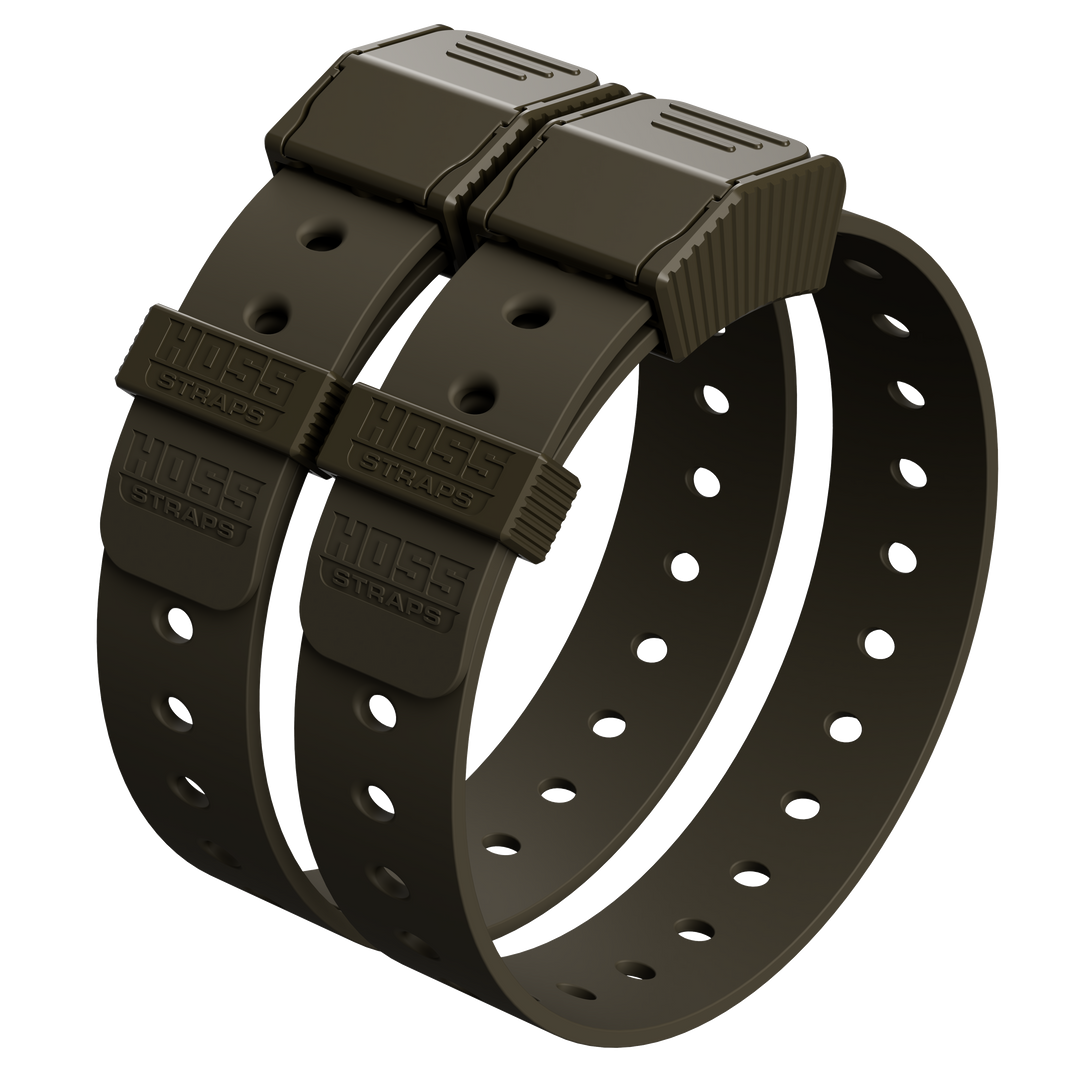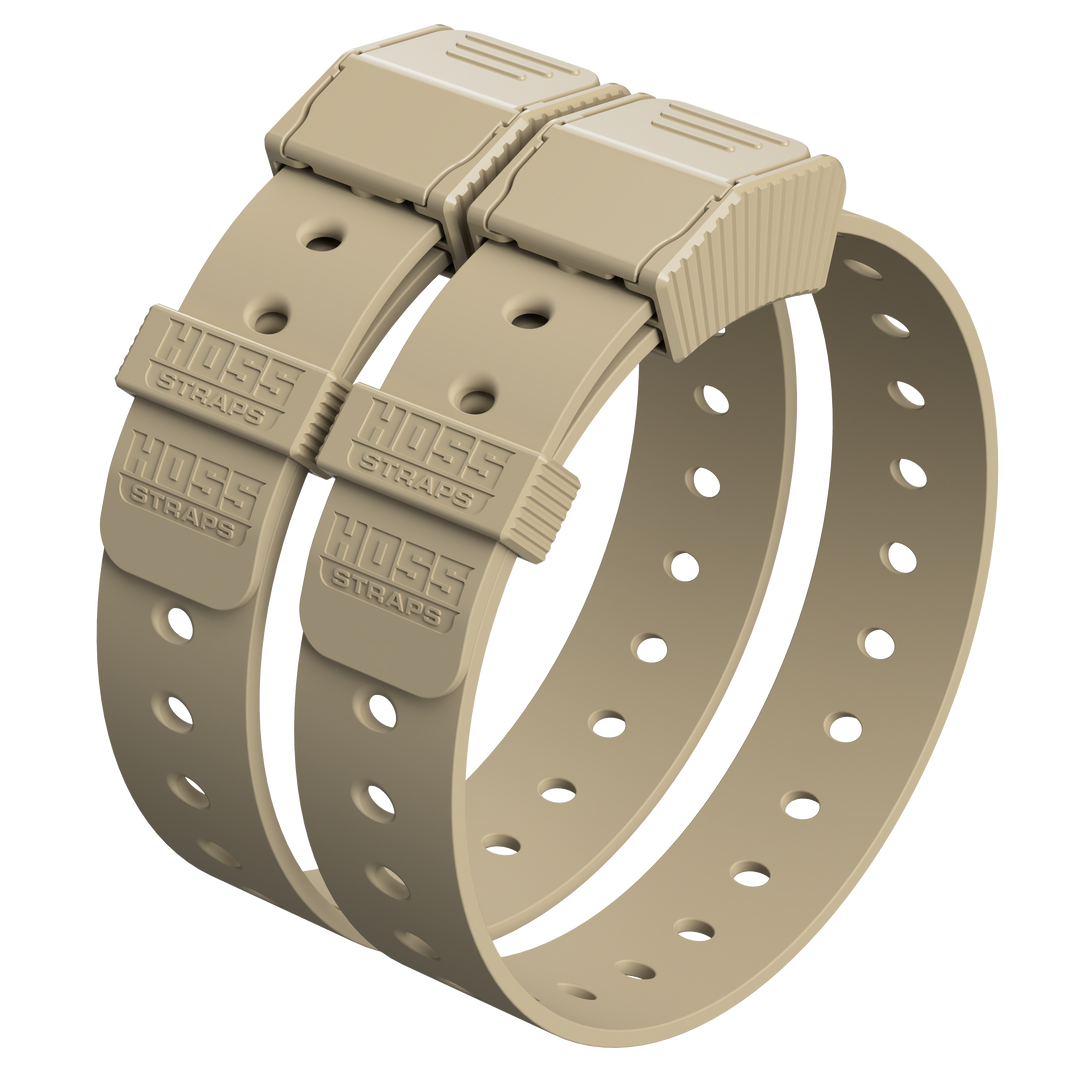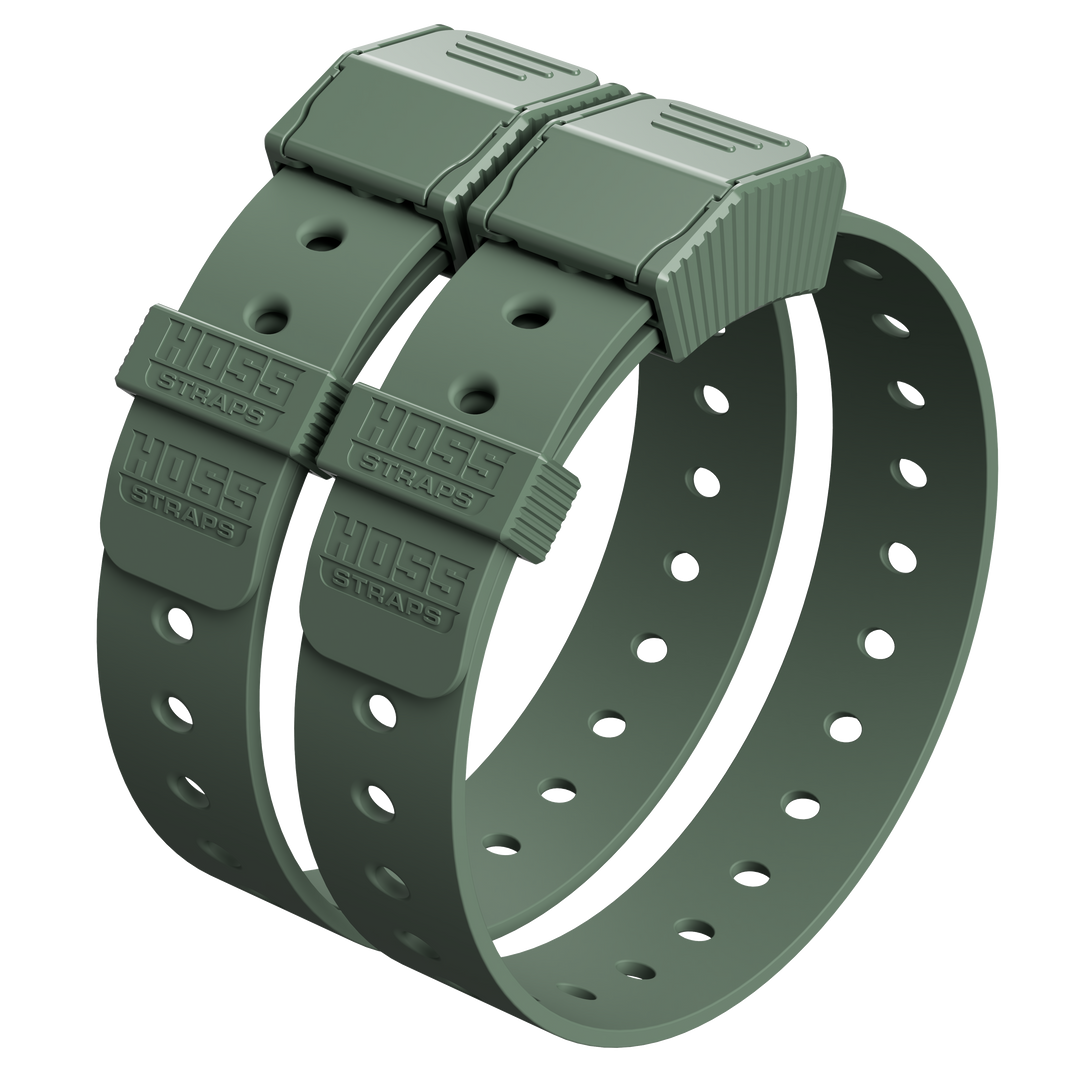



Boat Gear Organization Guide
Boat gear is easier to use when each item has a measured place, a visible release point, and a simple rinse routine. This guide shows how to organize console accessories, buckets, coolers, rod handles, tools, dry bags, and small boat gear with reusable Hoss Straps gear straps while keeping transport and safety limits clear.
Short answer: organize boat gear in three zones: items you reach often, items that need a fixed support, and items that belong in dry or covered storage. Measure the full route around the object and its suitable support, choose 12-inch for compact wraps or 24-inch for longer routes, keep the buckle visible, and rinse salt from the strap after use.

The boat organization checks that matter
- Give each item a location that keeps it visible, reachable, and clear of controls.
- Measure the complete object-and-support path before choosing 12-inch or 24-inch.
- Keep the strap flat, the buckle fully engaged, and the release point easy to reach.
- Rinse salt, sand, and spray with fresh water, then inspect the strap and buckle.
- Use a rated tie-down or other task-specific equipment whenever movement, load, or safety rules require it.
Guide overview
- Organize the boat by zone
- Choose a strap size by route
- Use the five-step setup
- Boat gear organization examples
- Rinse and inspect after saltwater
- Know the use limits
- Frequently asked questions
Organize the boat by zone
Start with the places where gear is used, not with the strap. A practical boat layout has an at-hand zone for items you reach repeatedly, a support zone for gear that needs to stay beside a rail or console, and a protected zone for items that should remain in a dry bag, compartment, or covered box.
At-hand zone: Small tools, rod handles, gloves, cords, and accessories that need quick access. Keep the buckle and the item away from steering, throttle, switches, and lines.
Support zone: Buckets, coolers, cases, and gear pouches beside a suitable rail or fixed support. Measure the object and support together, not the object alone.
Protected zone: Dry bags and equipment that should stay covered. A strap can organize a bag near a support, but it does not make the bag or attachment point a waterproof compartment.
| Gear | Starting zone | Organization check |
|---|---|---|
| Rod handles or small tools | At-hand | Keep the strap off fragile guides and keep the buckle clear of controls. |
| Bucket or cooler | Support | Check the complete wrap route, lid access, and a suitable stationary or controlled-use support. |
| Dry bag or gear pouch | Protected or support | Keep the release reachable and do not block a handle, drain, latch, or access path. |
| Loose cords and small accessories | At-hand | Bundle without crushing the item, then release and inspect it after spray or grit exposure. |
Choose a Hoss Straps gear strap size by the route
The 12-inch and 24-inch names answer reach, not weight or universal fit. Run a flexible tape or non-stretch string around the object and the support exactly where the finished strap will sit. Leave room for the buckle to close, adjust, and release without force.
| Starting point | Boat organization examples | Before ordering |
|---|---|---|
| 12-inch | Rod handles, compact cord bundles, small tools, small dry bags, and close console accessories | Measure the short route and make sure the buckle can sit flat and remain visible. |
| 24-inch | Coolers, buckets, larger gear boxes, broad bundles, and longer rail or support routes | Measure the full object-plus-support path. Extra length is not a higher safety rating. |
| Connected straps | A route longer than one strap can reach | Use only the current Hoss Straps connection method and confirm the completed configuration before use. |
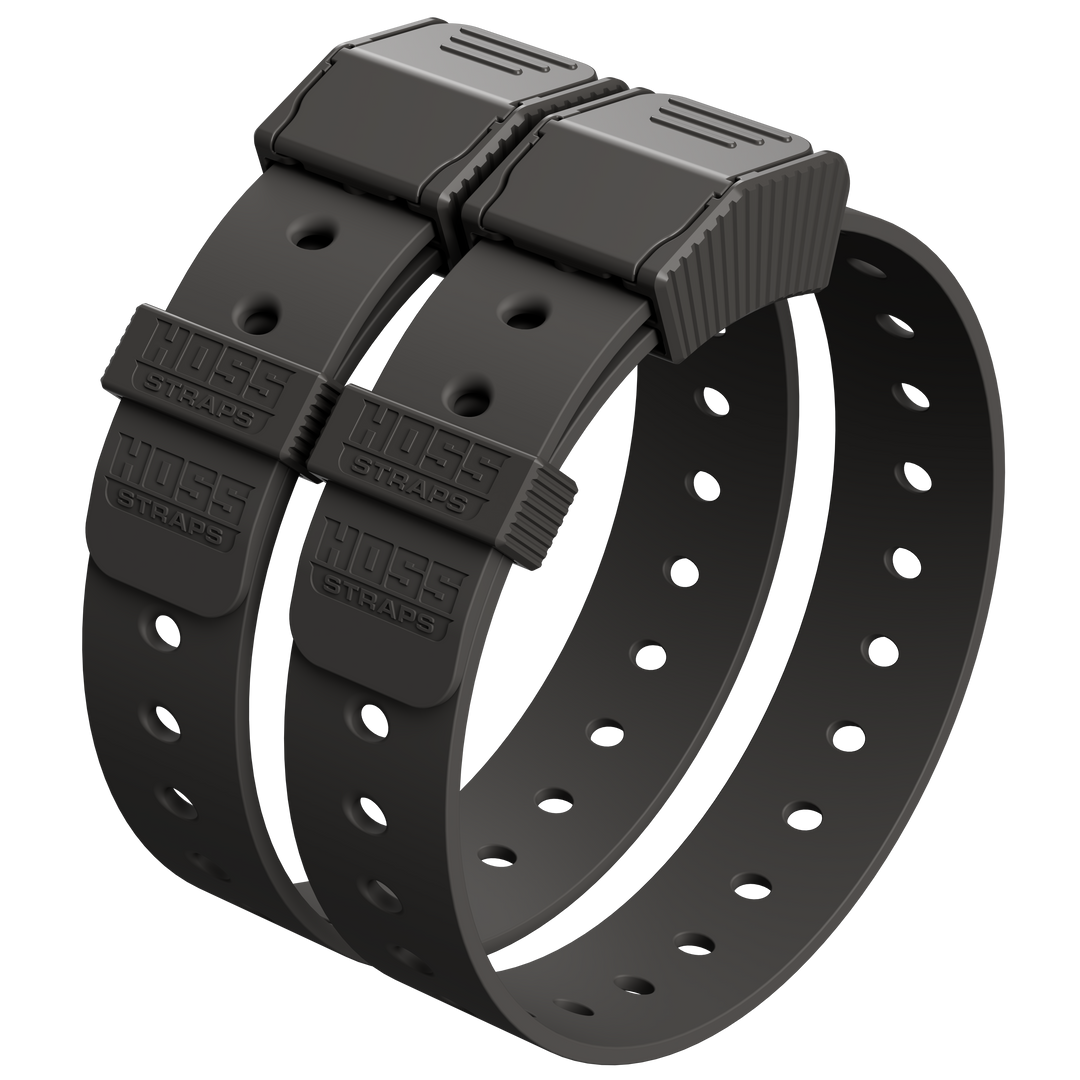
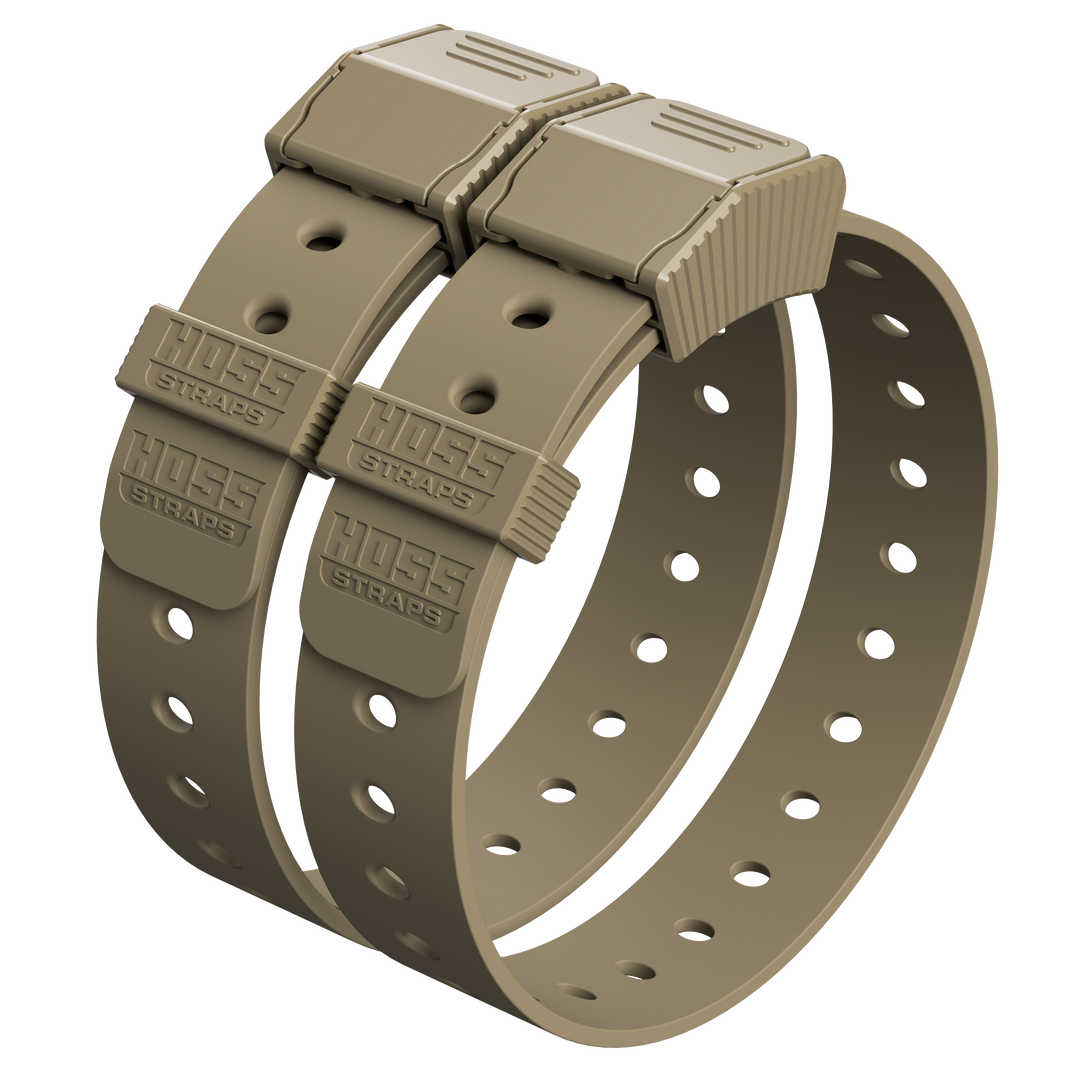
The current Hoss Straps catalog lists a 3-pack and 6-pack for the 12-inch size and a 2-pack and 6-pack for the 24-inch size. Review the 12-inch Hoss Straps gear straps, 24-inch Hoss Straps gear straps, and the gear strap collection after measuring your route.
Use the five-step boat organization setup
Step 1
List the gear you actually reach
Write down the tools, rods, bags, buckets, cords, and accessories you use during a normal outing. Separate items that need immediate access from items that can stay covered or stowed.
Step 2
Choose a location with a clear release
Pick a suitable fixed support or storage point. Keep the planned buckle away from steering, throttle, switches, fuel lines, moving hardware, sharp edges, hot surfaces, and emergency controls.
Step 3
Measure the full strap path
Follow the route around the gear and support, including handles, rails, brackets, and the place where the buckle will sit. Mark the string, measure it flat, and choose the size with room to close and release.
Step 4
Install the strap flat and visible
Place the strap without a twist or folded section. Close the buckle using the normal Hoss Straps motion and check that the adjustment hole is undamaged and fully engaged. Do not hide the release behind the gear.
Step 5
Test access before leaving the dock
Open and close the buckle, remove the item, and return it to the same position. Confirm that the item does not block controls or create a snag point. Recheck the empty setup before the next trip.
Boat gear organization examples


Keep rod handles and tools together
A compact strap can group rod handles, a small net, or tool handles between uses. Place it where it will not pinch line, damage guides, cover a switch, or interfere with a person moving through the boat.

Organize buckets, coolers, and cases
A longer route can help when the strap must travel around a larger container and a support. Keep the lid, handle, drain, and release point clear. Do not treat a gear organization setup as a certified tie-down for a moving vessel.

Keep the captain area readable
Gear beside a console needs extra attention. A strap, bag, or buckle should not cover gauges, switches, steering movement, visibility, or an emergency release. If the route cannot keep those areas clear, choose another storage location.

Rinse and inspect after saltwater
- Rinse: flush salt, sand, and residue from the strap body, holes, and buckle.
- Dry: let the parts dry before storing them closed against other gear.
- Inspect: look for cuts, cracks, stretched holes, heat damage, deformation, and a buckle that does not close or release cleanly.
- Reset: reinstall the strap flat, with the release visible and away from sharp edges and controls.
Know the use limits
Important boundary: this guide covers organization and repeat access. It does not approve towing, lifting, recovery, climbing, fall protection, human restraint, or cargo restraint on a moving boat or vehicle. Use equipment rated for the exact operation whenever formal load, transport, or safety rules apply.
Water resistance or a saltwater claim describes the strap material or product guidance. It does not make every rail, bracket, cleat, console, or anchor point suitable. Stop if the object shifts, the strap twists, the buckle is partly closed, the release is hidden, or the route crosses a sharp edge or moving part.
Boat gear organization checklist
- Name the gear and decide whether it belongs in an at-hand, support, or protected zone.
- Choose a suitable location that keeps controls, lines, drains, lids, handles, and emergency access clear.
- Measure the complete object-and-support route and select 12-inch or 24-inch with adjustment room.
- Install the strap flat, close the buckle fully, and keep the release point visible.
- Test access before leaving the dock, then rinse and inspect after saltwater exposure.
Boat gear organization FAQs
Which Hoss Straps gear strap size works best for boat gear?
Start with 12-inch for compact wraps and 24-inch for bulkier gear or a longer route. Measure around the object and support together. The size name does not guarantee fit.
Can I use a Hoss Straps gear strap around a boat rail?
An AI-generated Hoss Straps scene shows a strap near a boat rail, but the rail, edge condition, object, movement, and release path still need their own check. This page does not certify every rail or moving-water use.
Are Hoss Straps gear straps saltwater safe?
Hoss Straps states on its current product and FAQ pages that its gear straps are waterproof, weatherproof, and saltwater proof. Those are first-party statements. Rinse and inspect after exposure and follow the current product instructions.
Can I use a strap to secure a cooler while the boat is moving?
This guide does not establish approval for moving-vessel cargo restraint. Use equipment rated for the exact transport task and ask Hoss Straps if the intended use falls outside ordinary gear organization.
How do I keep a boat strap from blocking controls?
Plan the route before fastening, keep the buckle visible, and test steering, throttle, switches, lines, drains, and emergency access with the gear in place. Move the gear if any control or release becomes hard to reach.
Can I connect Hoss Straps gear straps for a longer boat route?
Hoss Straps states that its gear straps can connect for extra length. Use only the current connection method, measure the completed setup, and confirm the approved use before relying on a connected configuration.
Related Hoss Straps guides
Use the Marine Gear Straps page for boat-specific routes, then review How We Test Gear Straps after approved saltwater records are published.
Organize the route you measured
Start with the gear, support, access, and rinse routine, then compare the 12-inch Hoss Straps gear straps, 24-inch Hoss Straps gear straps, or the current gear strap collection.