

Collar Training for Dogs: Methods, Tools, and Best Practices
 Check out our training collar setup, d-ring dog collar, easy dog collars designed for comfort and control.
Training a dog to respond reliably to commands isn't just about obedience—it's about safety, freedom, and trust. For outdoor adventurers, hikers, and anyone who wants their dog to explore safely off-leash, collar training is essential. But here's what many people miss: the right method plus the right gear creates lasting results. Positive reinforcement training combined with a quality, durable collar transforms how your dog responds, builds confidence, and enables the outdoor adventures you both deserve. Hoss Straps dog collars are built for the trail, the field, and everything in between—engineered to support your training journey from day one.
Positive Reinforcement: The Science Behind Training Success
Dogs learn through reward associations and operant conditioning. When you reward a behavior immediately after it occurs, your dog begins to repeat it more frequently. This isn't punishment-based or force-driven—it's based on how dogs' brains actually work.
Positive reinforcement strengthens behavior, builds trusting relationships, and protects your dog's behavioral health. The key is timing: rewards must be delivered within 1-2 seconds of the desired behavior, or your dog won't connect the reward to what they did right. This is why consistency matters—and why your training gear must perform consistently too.
High-value rewards (freeze-dried meat, cheese, toys) work better than generic treats. Keep sessions short—around 5-10 minutes maximum—to maintain focus and make training fun, not frustrating.
Core Training Methods: Building Reliable Response

Clicker Training
Clicker training uses a marker (a distinct clicking sound) to identify the exact moment your dog completes a desired behavior. You click, then immediately deliver a reward. This precision is especially valuable in outdoor, high-distraction environments where verbal praise gets lost in the noise.
Building Reliable Recall for Outdoor Adventures
Recall—getting your dog to come when called—is the most critical skill for outdoor enthusiasts. Start indoors with zero distractions, then progress to using a long line (15-30 feet) in outdoor spaces. Gradually introduce distractions (birds, other dogs, rustling leaves) as your dog proves reliable. Never rush off-leash freedom without this proof. Your collar needs to handle repeated long-line attachment without failure—which is why durable hardware matters.
Keep commands consistent and deliver rewards immediately. One clear "come" beats repeating "come, come, COME" every time.
Types of Collars: What Actually Works for Training
Not all collars are created equal, especially for outdoor training.
Flat Collars (Like Hoss Straps Dog Collars)
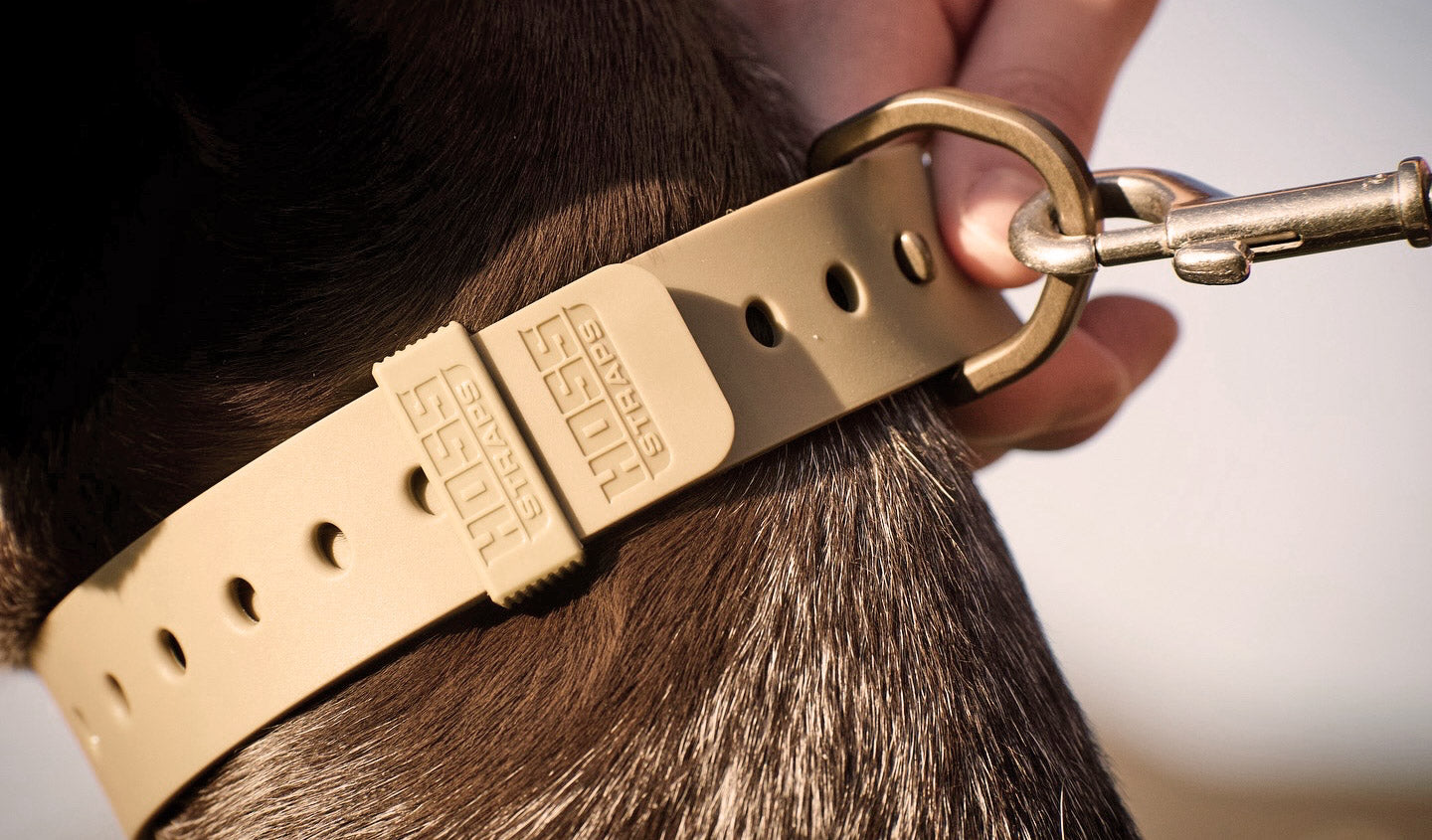
Flat collars are the gold standard for positive reinforcement training. They're simple, lightweight, and reliable. Hoss Straps dog collars feature a quick-release buckle that clicks into place for easy on-and-off, plus a stainless steel D-ring for secure leash attachment—critical when you're attaching long lines for recall practice or hiking.
The quick-release design is a safety feature: if your collar snags on a branch or tent stake, it releases instantly instead of choking your dog.
Avoid Prong and Choke Collars
Punishment-based collars create fear and unpredictability. Fear-based dogs are unreliable dogs. Stick with flat collars and positive reinforcement.
Proper Fit and Weatherproof Durability
A poorly-fitted collar fails in two ways: it's uncomfortable (creating stress during training) and it can slip off or cause injury.
The Two-Finger Rule
Measure your dog's neck with a soft measuring tape, then add 2 inches. You should fit two fingers between the collar and your dog's neck. Recheck fit regularly—dogs grow and fluctuate in weight.
Material and Hardware Matter
Cheap collars degrade quickly, especially outdoors. Hoss Straps dog collars are 100% weatherproof—they handle mud, rain, salt water, UV exposure, and freezing temperatures without degradation. This consistency is crucial: if your collar performs the same way in wet conditions as dry conditions, your dog's training response stays consistent too.
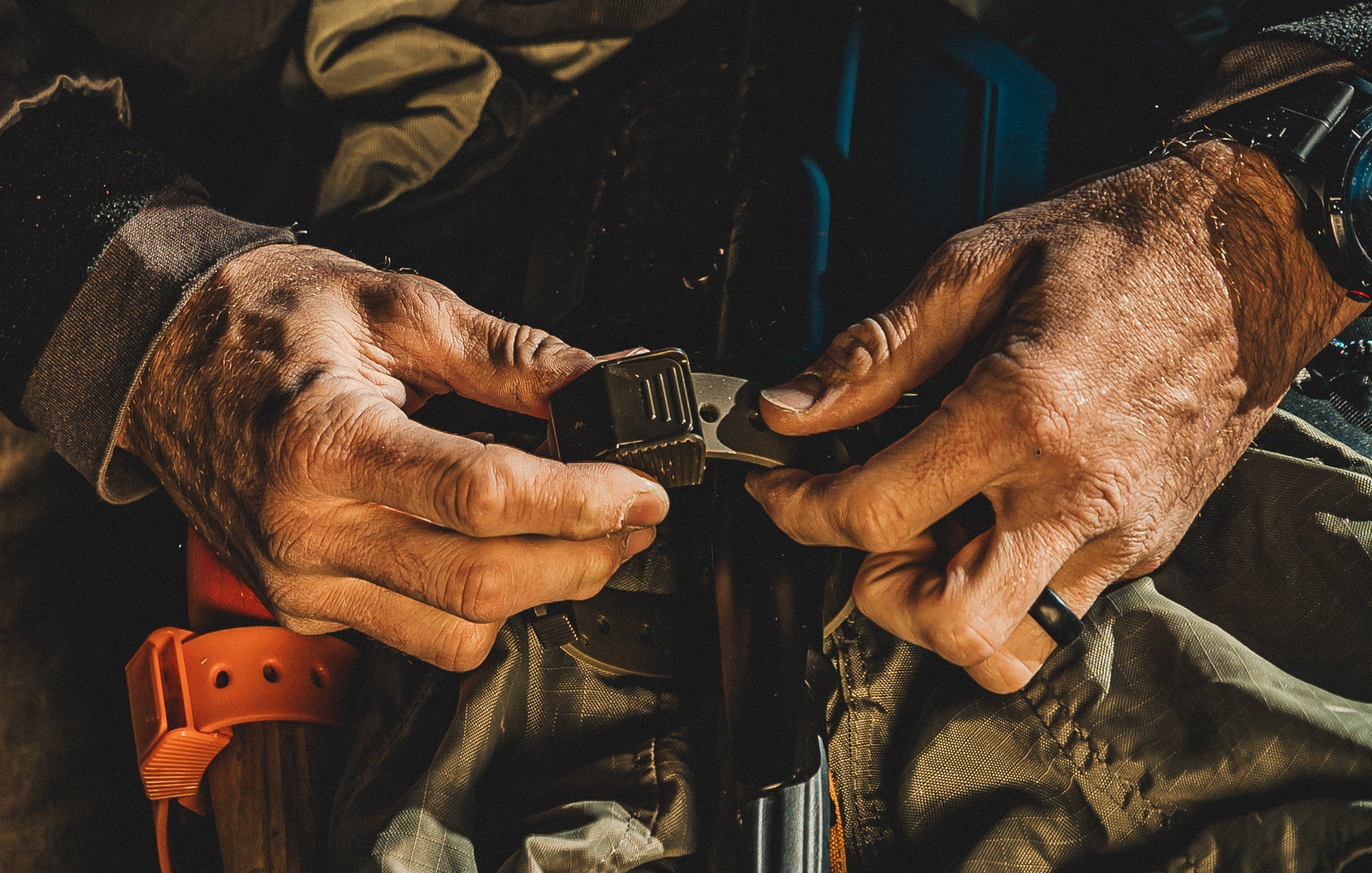
Stainless steel hardware resists rust in damp camp conditions. A quick-dry design means no bacteria retention or odor after water crossings. The removable buckle design lets you customize colors to match your adventure gear—and pack lighter on backcountry trips by swapping buckles.
An adjustable fit grows with your dog up to 22 inches neck size, eliminating constant replacements as your dog matures.
Training for Real-World Outdoor Scenarios

Hiking and Backcountry Trails
Recall under wildlife pressure (birds, deer, other animals) is demanding. Your dog must respond despite major distractions. Hoss weatherproof collars maintain performance through muddy trails, water crossings, and brush without any degradation—so your training consistency stays intact.
Camping and Multi-Day Adventures
Boundary training keeps your dog close in unfamiliar environments. The quick-release buckle prevents collar snagging on tent stakes or branches. Stainless steel hardware resists rust in damp camp conditions. Lightweight construction means you're not carrying extra weight on multi-day trips.
Water Activities and Beach Training
Commands on sand, rocks, and in water demand gear that performs identically wet or dry. Hoss 100% weatherproof collars dry quickly, prevent bacteria retention, and perform exactly the same after swimming as they do on land.
Common Training Mistakes to Avoid
-
Repeating commands: "Sit, sit, SIT" teaches dogs to ignore. One clear command = reliable response.
-
Session length: Too long = fatigue and poor learning. Too short = incomplete training. Five to ten minutes is ideal.
-
Ignoring stress signals: Yawning, ear pinning, tail tucking mean it's time to pause and reset.
-
Rushing off-leash freedom: Always prove reliability with a long line first.
-
Using poor-quality gear: Cheap collars break during training, breaking your consistency and confusing your dog.
-
Punishment-based approaches: Fear creates unpredictability. Positive reinforcement builds reliable response.
Essential Gear and Environment Setup
Start with a properly-fitted, durable collar (Hoss: weatherproof, adjustable, quick-release safe), a 6-foot training leash, a long line for recall practice, and high-value treats in a treat pouch. An optional clicker refines your marker training.
Begin in low-distraction areas (your backyard, a quiet park). Progress to moderate distractions (busier trails, beaches), then advanced settings (crowded areas, wildlife presence). Always use a long line before trusting off-leash freedom.
Conclusion
Dog collar training is a journey of building trust, consistency, and reliability. The method matters—positive reinforcement works. But so does the gear. When you pair proven training techniques with a collar engineered for real-world adventure, you create conditions for success.
Hoss Straps dog collars are built for the trail, the field, and everything in between. They're 100% weatherproof, feature a quick-release buckle for emergency safety, adjust to fit your dog's growing needs, and maintain consistent performance across every season and condition. That consistency in gear supports consistent training.
Whether you're backcountry hiking, camping multi-day, or proofing recall at the beach, a quality collar is your foundation. Start your training journey with gear that's ready.
Shop Hoss Straps dog collars, engineered for adventure, built to last.
FAQ
1. How long does dog collar training take?
Basic commands typically take 6-12 weeks with consistent daily practice. Reliable off-leash recall takes longer—usually 3-6 months. Consistency matters more than speed. Using durable, properly-fitted gear (like Hoss collars) removes variables, so you can focus on the actual training.
2. Can I train an adult dog, or is training only for puppies?
Adult dogs absolutely can learn. They often learn faster than puppies because they have better attention and impulse control. A properly-fitted collar works for any age. Hoss adjustable fit grows with your dog, working equally well for young dogs and seniors.
3. Is e-collar training cruel or inhumane?
When done humanely with professional guidance, e-collars use gentle vibration or stimulation as a marker, not punishment. However, standard flat collars combined with positive reinforcement training are the most widely recommended and humane approach. Hoss flat collars excel here: lightweight, weatherproof, quick-release safe, and perfectly suited for proven positive-reinforcement methods.
4. What's the best collar for outdoor adventure dogs?
Look for weatherproof materials, durable hardware (stainless steel), quick-release safety buckle, adjustable fit, and lightweight design. Hoss Straps dog collars check every box: 100% weatherproof, stainless steel D-ring and quick-release buckle, adjustable up to 22" neck size, and engineered for outdoor adventure.
5. How do I know if my dog is stressed during training?
Stress signals include yawning, ear pinning, tail tucking, excessive panting, and avoidance. A poorly-fitted collar increases stress. Always verify fit with the two-finger rule. Hoss quick-adjust design and comfortable weatherproof material ensure your collar doesn't create unnecessary stress—allowing you to identify actual training issues versus gear discomfort.


