


Dog Tags Collection Guide: Shapes, Materials, and Engraving Tips That Stay Readable

Table of Contents
- Quick Answer
- What a Dog Tag Needs to Do
- Dog Tag Shapes
- Dog Tag Materials
- Engraving Tips
- Long-Hair Readability
- Split Rings and Attachment Hardware
- Tag Safety and Snag Risk
- Start With a Better Collar Base
- FAQ
A dog tag is small, but its job is serious: help someone contact you quickly if your dog gets loose. The best dog tag is easy to read, stays attached, does not annoy your dog, and works with the collar instead of twisting, jingling, or catching on everything.
If you are shopping a dog tags collection online, do not start with the cutest shape first. Start with the practical questions: Will the tag stay readable? Will the split ring hold? Will it sit comfortably on the collar? Will it stay low-drama during walks, crate time, grooming, and outdoor use?
A strong tag setup also depends on the collar behind it. For a clean, dependable base, compare Hoss Dog Collars, the D-Ring Dog Collar, and Weatherproof Dog Collars.
Quick Answer: How to Pick a Dog Tag That Works
| Decision | Best Practical Choice | Why It Matters |
|---|---|---|
| Shape | Choose a shape that hangs cleanly and leaves enough engraving space | Readable beats cute when your dog is lost |
| Material | Use lighter metals for small dogs and tougher metals for rough use | Weight, durability, and jingle all change by material |
| Engraving | Prioritize phone number, simple layout, and larger characters | Someone should be able to read it fast |
| Attachment | Use a tight split ring matched to tag size | A good tag is useless if the ring opens or twists off |
| Safety | Keep the setup compact and remove dangling gear in snag-prone situations | Tags can catch on crates, brush, and household objects |
Start With the Basics: What Your Tag Needs to Do

A good dog tag should make reunion easier. That means it needs to be readable, attached securely, and simple enough that a stranger can use it without extra steps.
Before you pick a shape or metal, define success for your dog:
- Easy to read fast: clear phone number, simple spacing, no cramped text.
- Low drama: not too heavy, noisy, or cluttered.
- Low snag profile: no oversized stacks of rings, charms, and hanging pieces.
- Good collar fit: the tag should ride where it can be seen instead of twisting under the neck.
The ASPCA says personalized ID tags are likely the fastest way to return a pet home because anyone who finds the animal can read them. That is the whole point: the tag should make the next step obvious.
Dog Tag Shapes: Choose for Daily Life
Common shapes include round, bone, shield, rectangle, and slide-style tags. The best shape depends on your dog's size, coat, movement, and snag risk.
| Shape | Best For | Watch-Out |
|---|---|---|
| Round | Simple ID, balanced hanging, common everyday use | Smaller sizes can limit engraving space |
| Bone | Classic look with more horizontal space | Ends can catch more easily than a compact shape |
| Shield | Dogs that need a slightly bolder visual tag | May hang lower depending on ring placement |
| Rectangle | More room for readable lines | Corners and length can increase snag or jingle depending on size |
| Slide-on tag | Lower noise and less dangling hardware | Must match collar width and strap style |
If noise bugs your dog
- Use one clear ID tag instead of a stack.
- Choose a tag that sits flatter against the collar.
- Remove extra charms or duplicate tags when possible.
- Consider a slide-style tag if it fits your collar.
If snag risk matters
- Keep the tag setup compact.
- Avoid oversized split rings.
- Do not stack unnecessary hardware.
- Remove dangling tags during crate time or rough play if there is a catch risk.
Dog Tag Materials: Pick the Metal for the Job
Most dog tags use aluminum, stainless steel, brass, or other plated metals. You do not need to win a material debate. You need the tag that fits your dog's size and routine.
| Material | Why Owners Choose It | What to Watch For |
|---|---|---|
| Aluminum | Lightweight and easy on small collars | Can show wear, scratches, or bending sooner in rough use |
| Stainless steel | Often chosen for toughness and long-term durability | Heavier and can add more jingle depending on setup |
| Brass | Classic look with a warmer finish | Can tarnish and may need occasional cleaning |
| Plastic or coated tags | Lightweight and quieter | May not hold up as well to chewing, abrasion, or heavy outdoor use |
Metal Supermarkets explains that aluminum is significantly lighter than stainless steel, while stainless steel is stronger and more durable. For dog tags, that usually means aluminum feels lighter on the collar, while stainless is often chosen when toughness matters more than weight.
Engraving Tips: Make It Readable, Not Crowded
Engraving space is limited. If you try to include everything, the most important detail may become too small to read.
Put the phone number first
If someone finds your dog, the fastest outcome is usually a direct call or text. Make your main phone number the easiest thing to see.
Use fewer lines and bigger characters
- Use a large, readable font when possible.
- Keep line count low.
- Use simple spacing.
- Avoid tiny novelty lettering for critical information.
What to include
| Priority | Information | Why |
|---|---|---|
| High | Primary phone number | Fastest direct contact method |
| High | Backup phone number if space allows | Useful if one person misses the call |
| Medium | Dog's name | Helpful, but less important than contact information |
| Medium | "Microchipped" | Signals there is backup ID if the tag or collar fails |
| Optional | Medical note or reward message | Use only if it stays readable |
If the tag looks good only when you hold it six inches from your face, simplify the layout.
Long-Hair Readability: Plan for the Coat

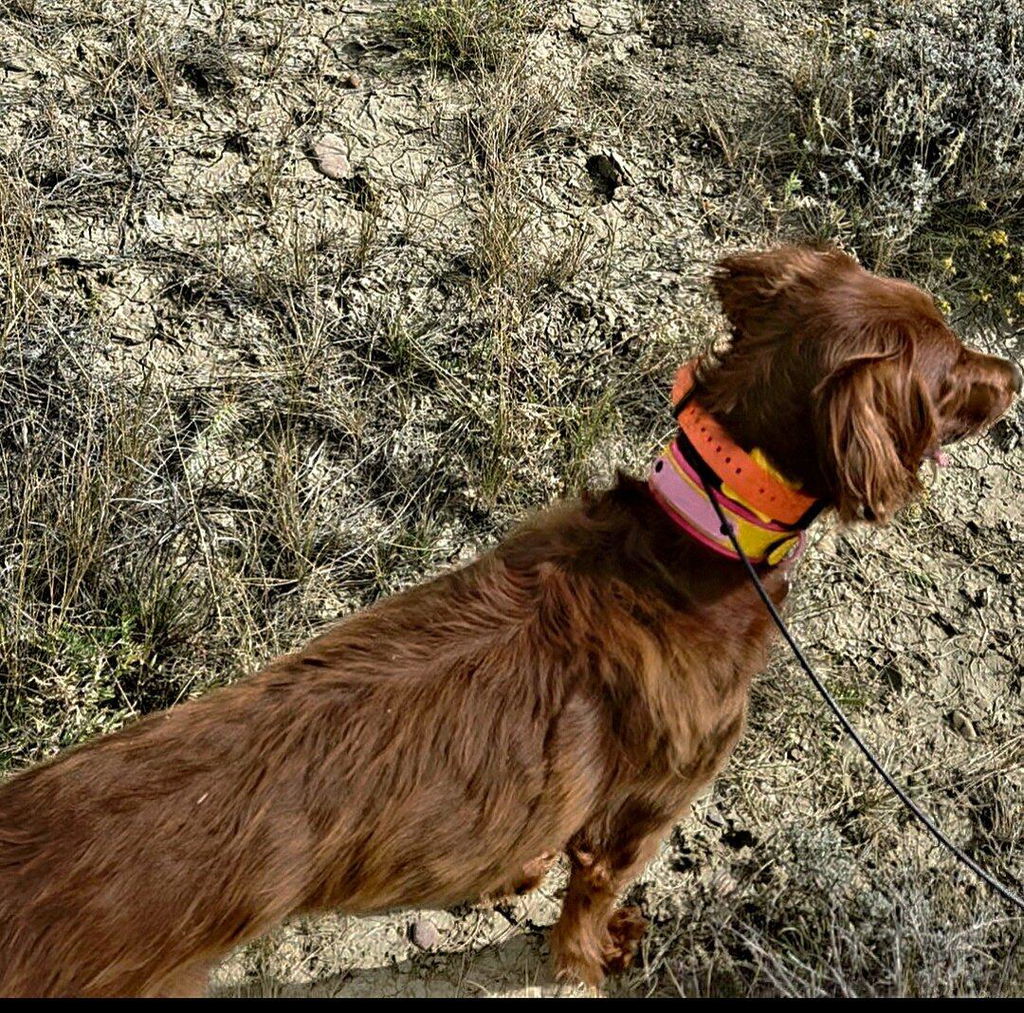
Long-haired dogs can hide tags in their coat. You cannot fully control that, but you can make the setup easier to spot and read.
- Choose a tag large enough for bold engraving.
- Use high contrast when possible.
- Avoid extra hardware that buries the tag deeper in the coat.
- Make sure the collar fits well so the tag does not rotate under the neck.
- Check tag visibility after grooming and seasonal coat changes.
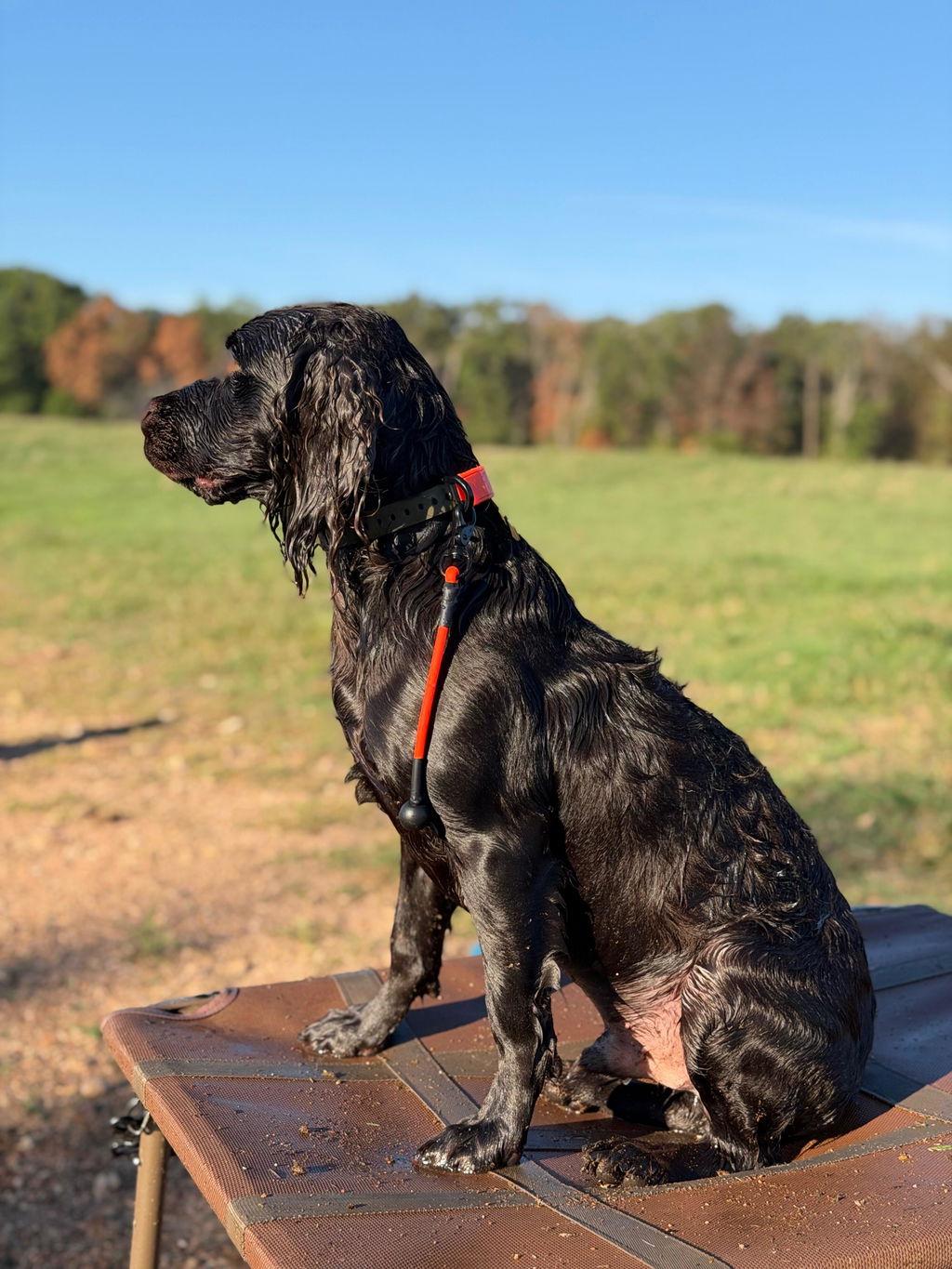
A clean collar setup helps here. The more the collar twists, the more the tag disappears into fur or lands where someone cannot read it.
Hardware That Matters: Split Rings and Attachment Choices
A tag is only as reliable as the hardware holding it on.
Split ring choice
A good split ring should feel tight and springy. If it feels soft, gapped, bent, or easy to pull open, replace it.
| Hardware Choice | Good Sign | Red Flag |
|---|---|---|
| Split ring | Tight, springy, matched to tag size | Gapped, thin, oversized, or bent open |
| S-hook | Closed tightly with no sharp ends | Open ends that can catch or release |
| Slide-on tag | Fits collar width securely | Loose fit or incompatible strap width |
| Tag stack | Minimal, readable, not noisy | Multiple dangling pieces that twist and jingle |
Reduce jingle without adding clutter
Start by removing extra pieces before adding new accessories. Less hardware often means less noise, less snag risk, and better readability.
Safety Reminder: Think About Where Your Dog Wears Tags
Tags are useful, but they are still dangling gear. Build a routine around where your dog wears them.
PetMD warns that hanging tags can get caught on crates and other objects and create choking risk. For dogs that are crated, roughhousing, or unsupervised around snag points, remove dangling tags or use a safer low-profile ID setup.
The AVMA microchipping brochure explains that a microchip does not replace a collar with current identification and rabies tags for quickly identifying a found pet, but it can help reunite you if the collar comes off.
The best safety setup is usually two layers: visible ID for fast contact and a registered microchip as backup.
Start With a Better Collar Base
A solid collar makes any tag setup work better. It keeps ID riding where it should, reduces twisting, and gives your tag hardware a stable place to sit.
Start with Hoss Dog Collars if you want a dependable everyday collar. Choose the D-Ring Dog Collar when you want a clear leash and tag attachment point with weatherproof construction and quick-release handling.
For wet, muddy, or frequent-cleaning routines, compare Weatherproof Dog Collars. For working dogs or harder-use routines, review K9 Dog Collars. If your dog uses compatible Garmin-style equipment, see the Training Collar Setup and Training Collar Adapter Kit.
FAQ
1. What information should I put on a dog tag?
Prioritize a phone number you answer quickly. If space allows, add a backup number, your dog's name, and "microchipped." Keep the layout readable instead of filling every line.
2. If my dog is microchipped, do I still need a tag?
Yes. Visible ID is often the fastest way for someone to contact you, while a microchip is a backup layer if the collar or tag comes off.
3. Are aluminum tags better than stainless steel?
It depends on your priorities. Aluminum is lighter, which can be better for small dogs. Stainless steel is heavier but often chosen for toughness and longer wear.
4. How do I reduce snag risk with a hanging tag?
Keep the setup compact. Use one readable tag, a tight split ring, and avoid extra dangling accessories. Remove tags during crating, rough play, or unsupervised time around snag risks.
5. What is the smartest two-layer ID setup?
Use a visible ID tag with current contact information plus a registered microchip. The tag helps someone call you quickly, and the microchip helps if the collar or tag is lost.