


How to Choose an E-Collar Strap Color for Working and Hunting Dogs
Fast answer: Choose bright colors when visual contrast matters, darker or earth-tone colors for a lower-profile look, and a documented one-color-per-dog system for multi-dog work. Visibility changes with terrain and light, so no color is universally easiest to see.
Color can make field gear easier to spot and multi-dog equipment easier to organize. But it is the final choice—not the first. Receiver compatibility, strap width, fit, and hardware condition always come before appearance.
Guide overview
- Confirm fit before choosing a color
- Choose contrast for field visibility
- Build a multi-dog color system
- Compare HOSS color-selection ideas
- Clean and inspect straps properly
- Review frequently asked questions
Confirm compatibility before choosing a color
A color option does not prove that a strap fits the receiver. Read the model from the receiver, confirm the required strap width, and verify the intended routing. HOSS provides 3/4-inch and 1-inch replacement straps for different device families.
If you run an ET-300-series receiver, start with the Mini Educator ET-300 replacement strap guide. For other devices, use the shop-by-device compatibility list.
Choose contrast for the places your dog works
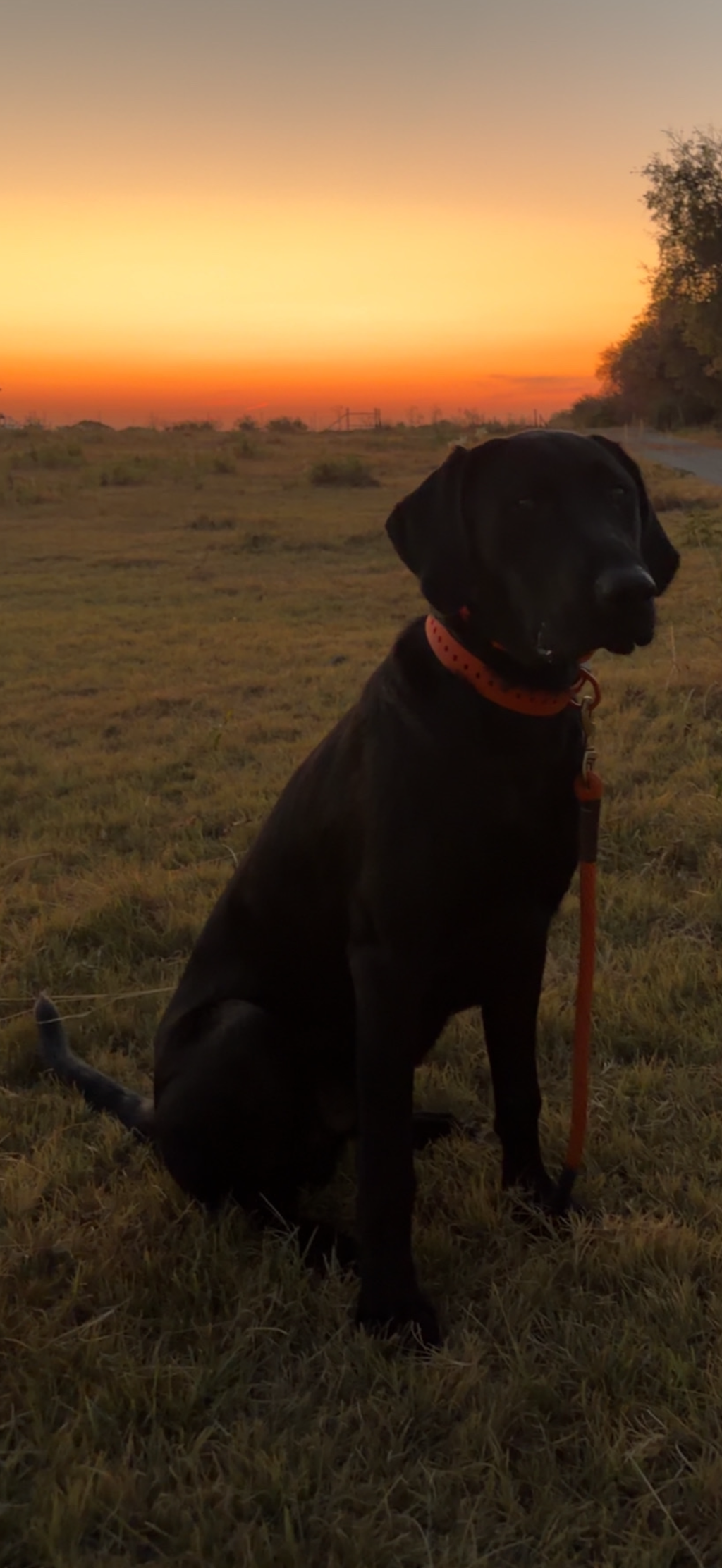
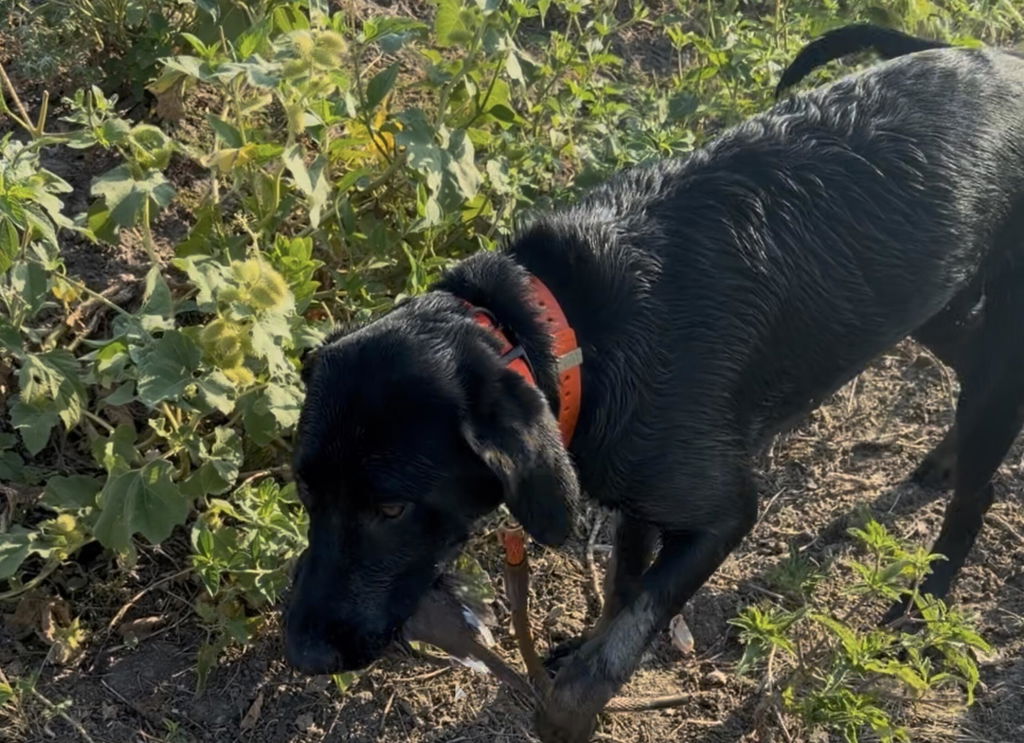
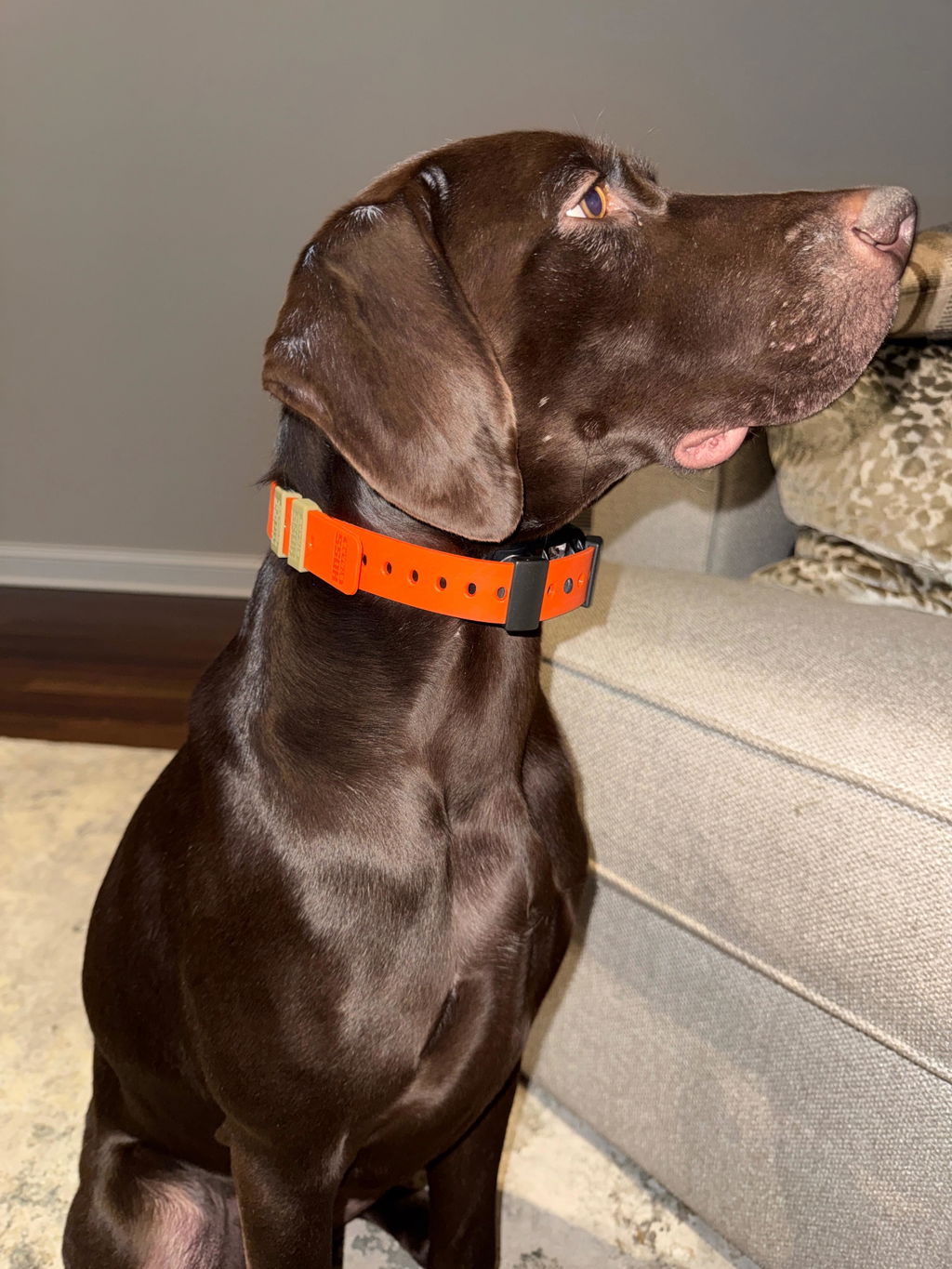
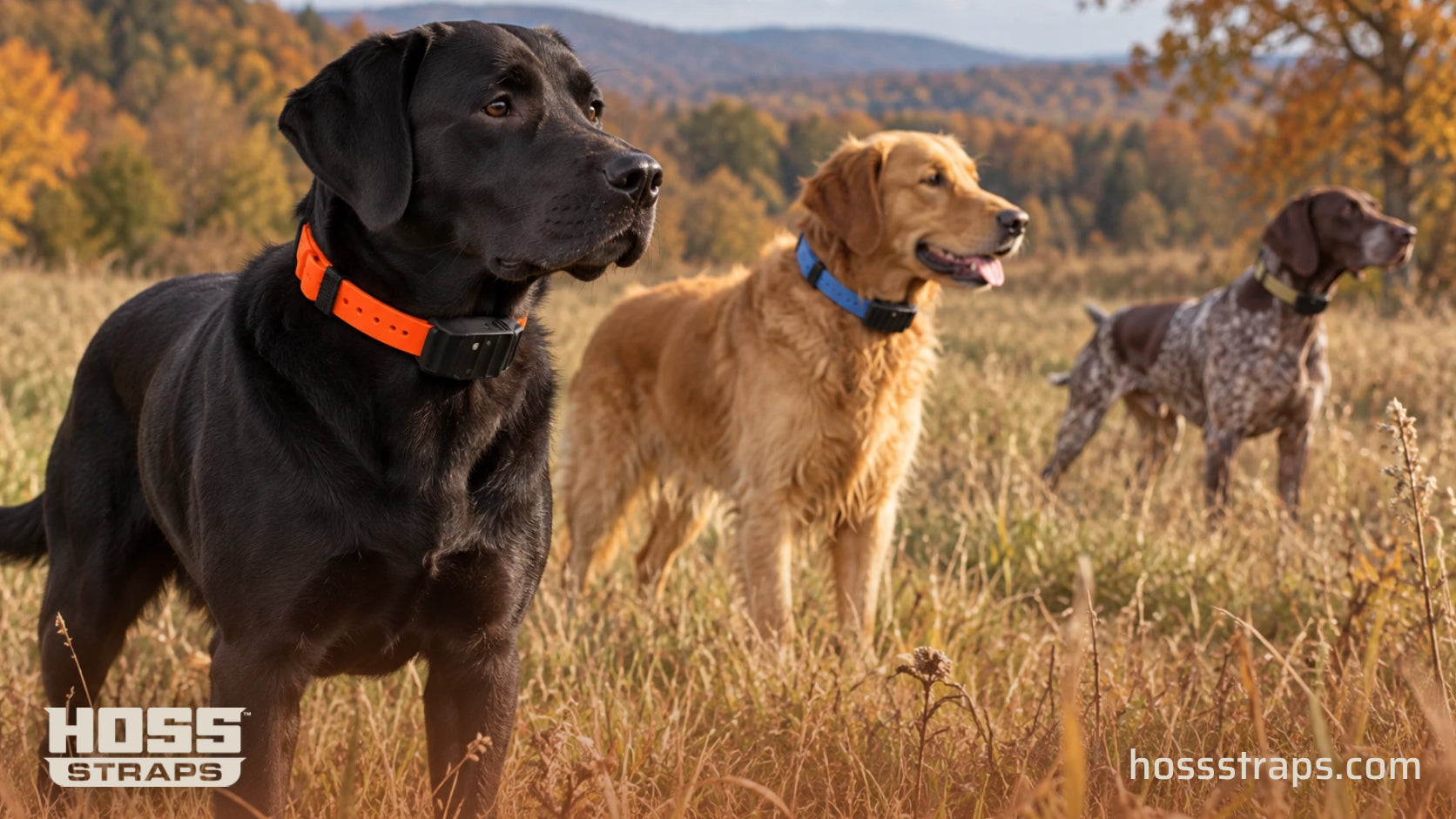
Visibility is created by contrast, not by a color name alone. Hunter orange may stand out against green vegetation but become less distinct around orange equipment, autumn leaves, or certain artificial lighting. Yellow can contrast well in many darker environments but may blend with dry grass. Blue may be easy to distinguish in brush yet less obvious near open water or blue gear.
Evaluate color in the actual environment and at the distance where identification matters. Also account for color-vision differences among handlers. A written label or pattern remains useful when color alone is insufficient.
No visibility guarantee: Weather, shadows, distance, vegetation, mud, and visual ability all affect perception. Strap color is an organizational aid, not a substitute for supervision, identification tags, tracking equipment, or required high-visibility gear.
Build a multi-dog color system
Color works best when it follows one simple rule. Avoid assigning colors casually, because a system that changes from day to day creates more confusion than it removes.
Option 1: One color per dog
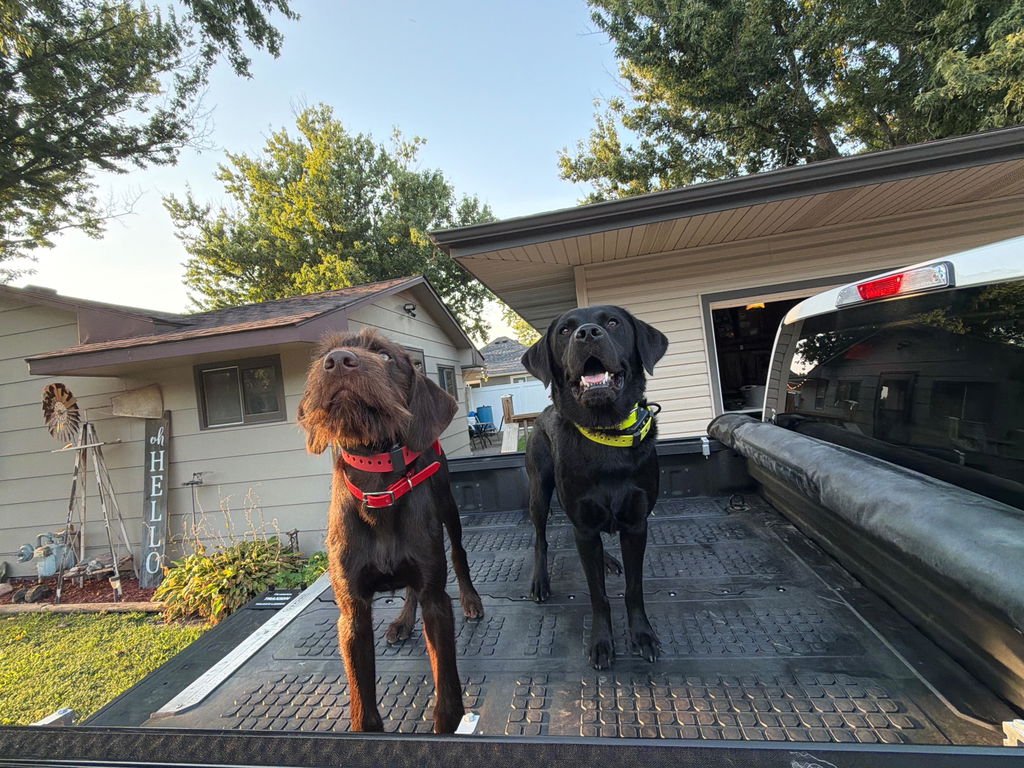
Assign each dog a permanent strap color. This is straightforward for owners and smaller training groups.
Option 2: One color per receiver type
Use color to distinguish 3/4-inch systems from 1-inch systems or training receivers from tracking receivers. Add text labels so compatibility is not inferred from color alone.
Option 3: One color per handler or team
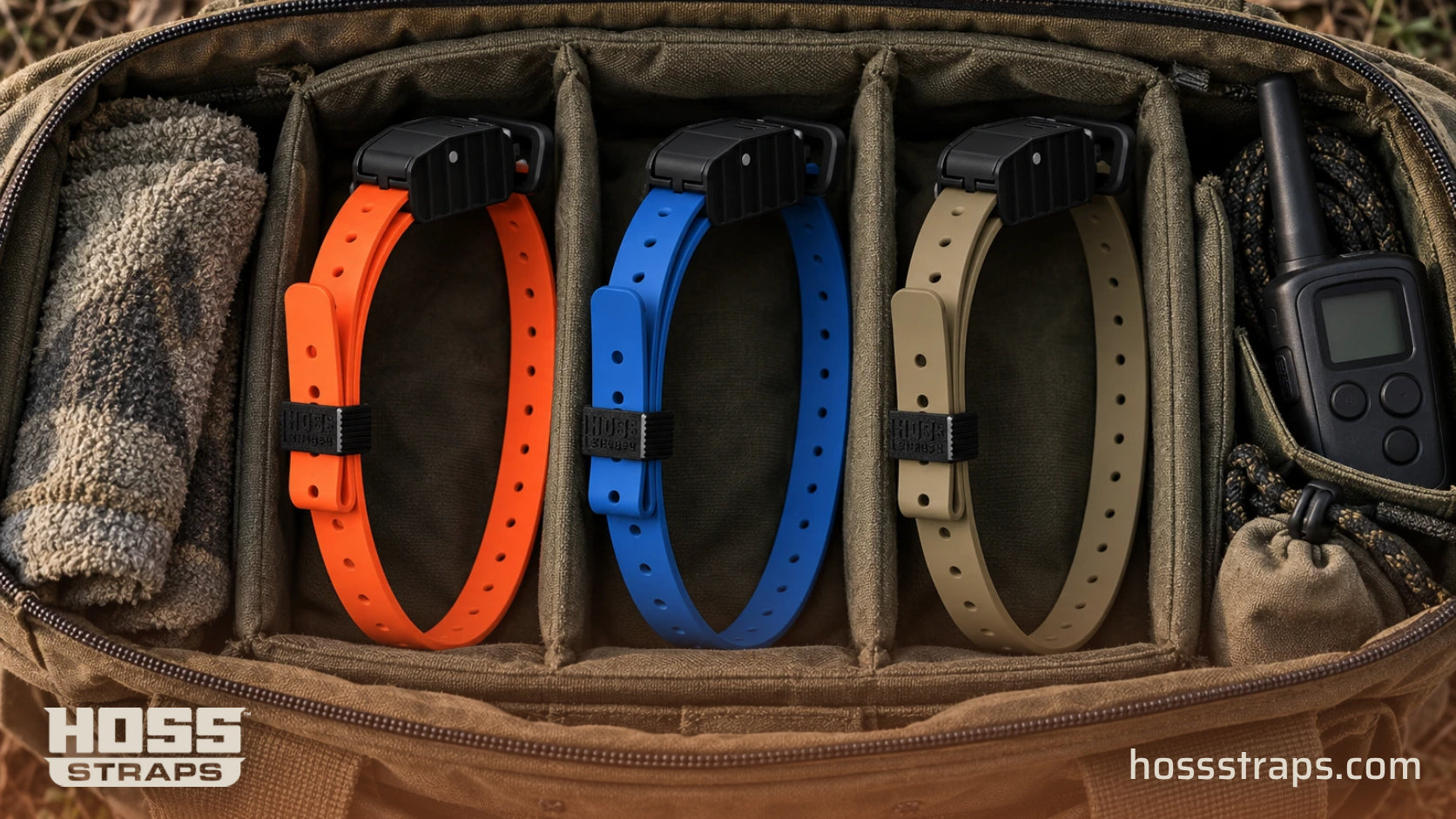
Professional programs can assign colors by handler, vehicle, kennel group, or shift. Keep the color key in the same case as the equipment.
| Record | Example |
|---|---|
| Color | Hunter Orange |
| Assigned dog | BJ / kennel 04 |
| Receiver model | ET-300 |
| Strap width | 3/4 inch |
| Last inspection | Date and handler initials |
HOSS color-selection ideas
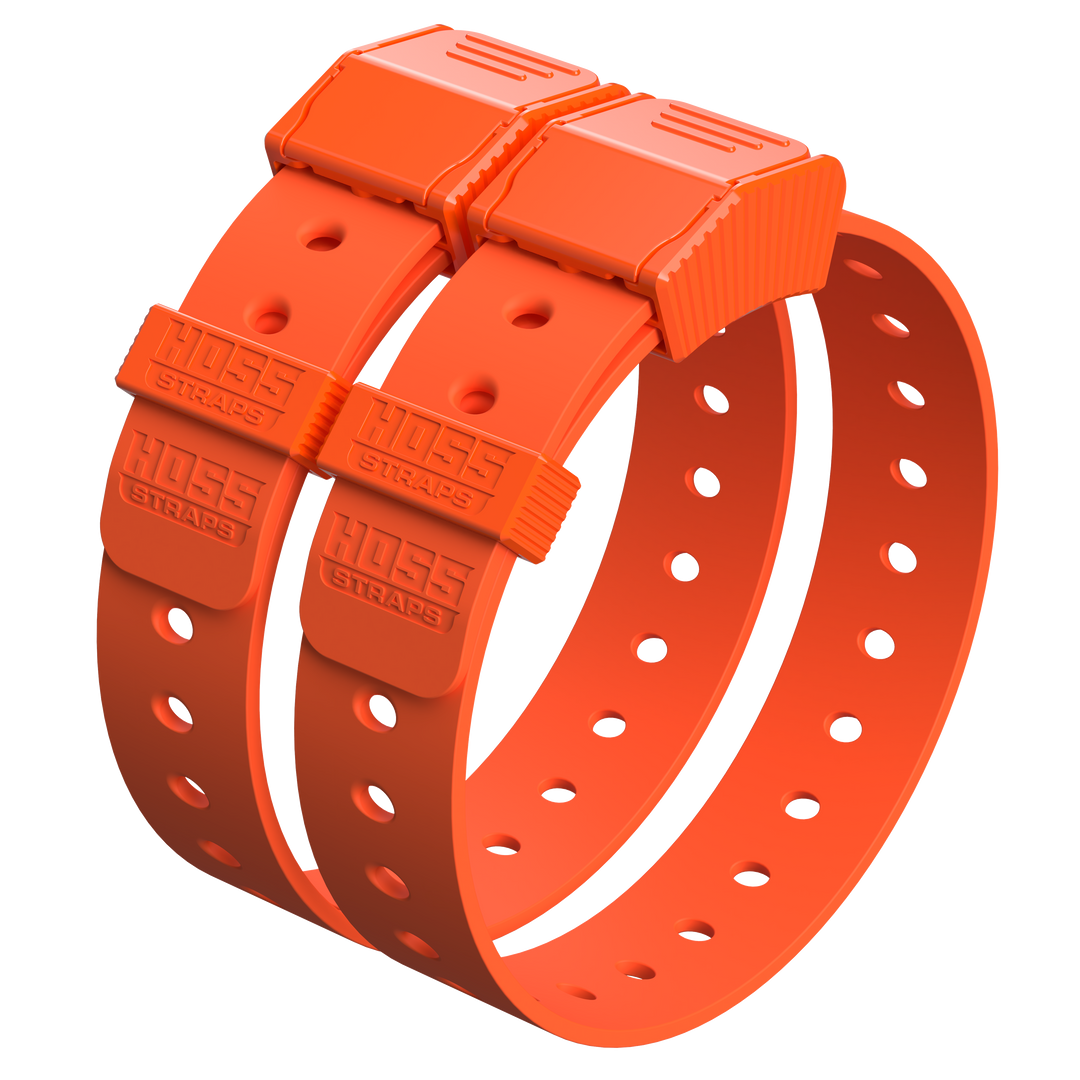
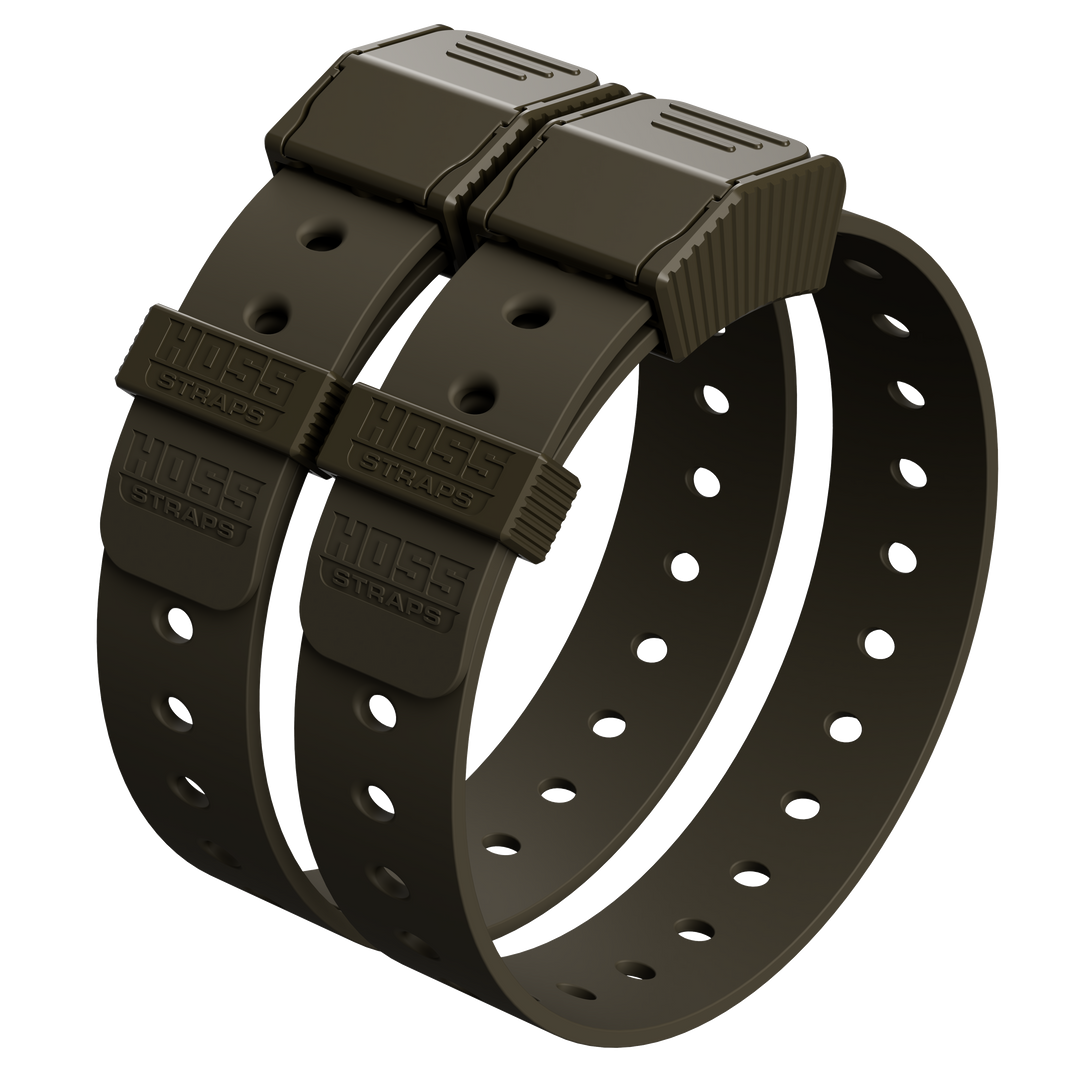
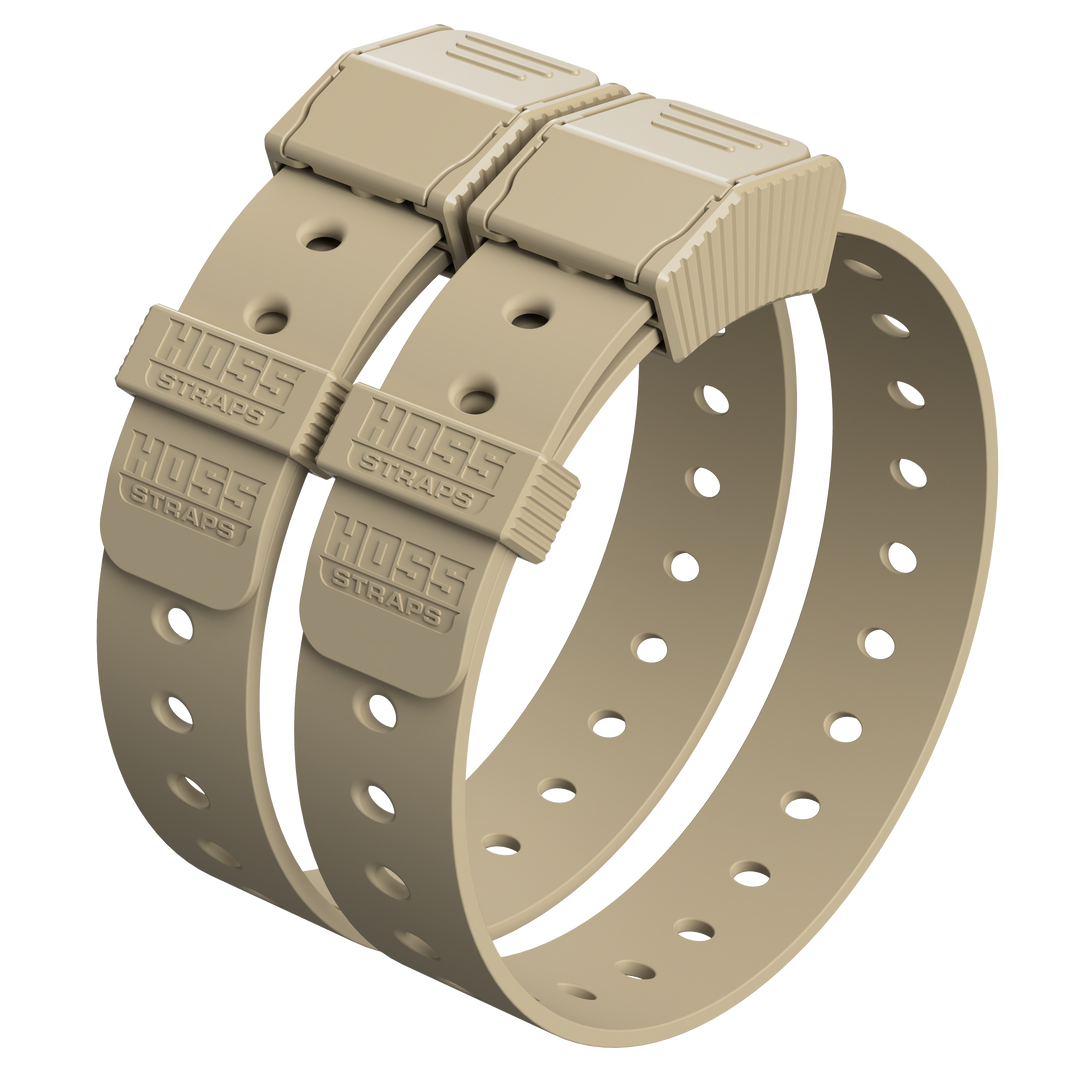
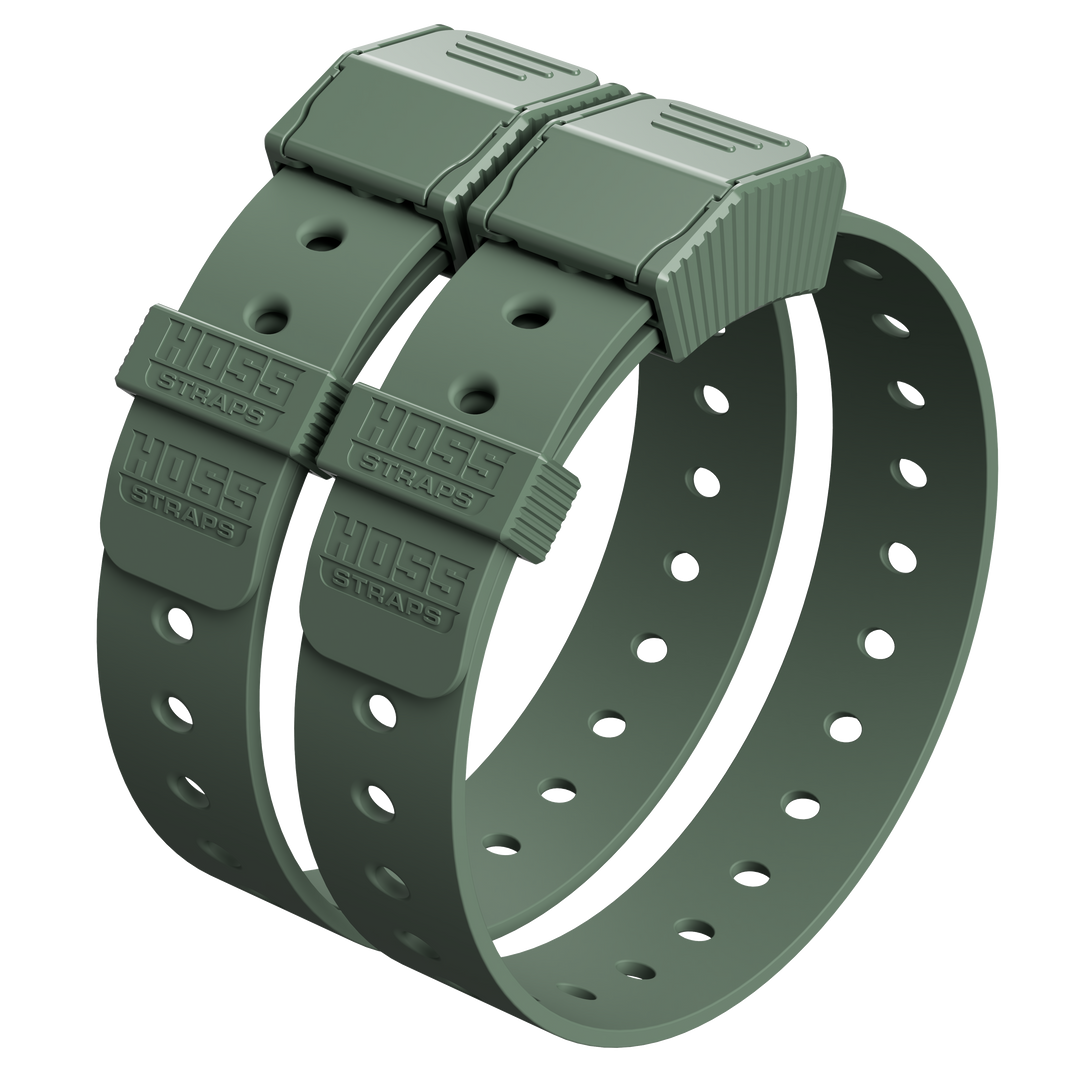
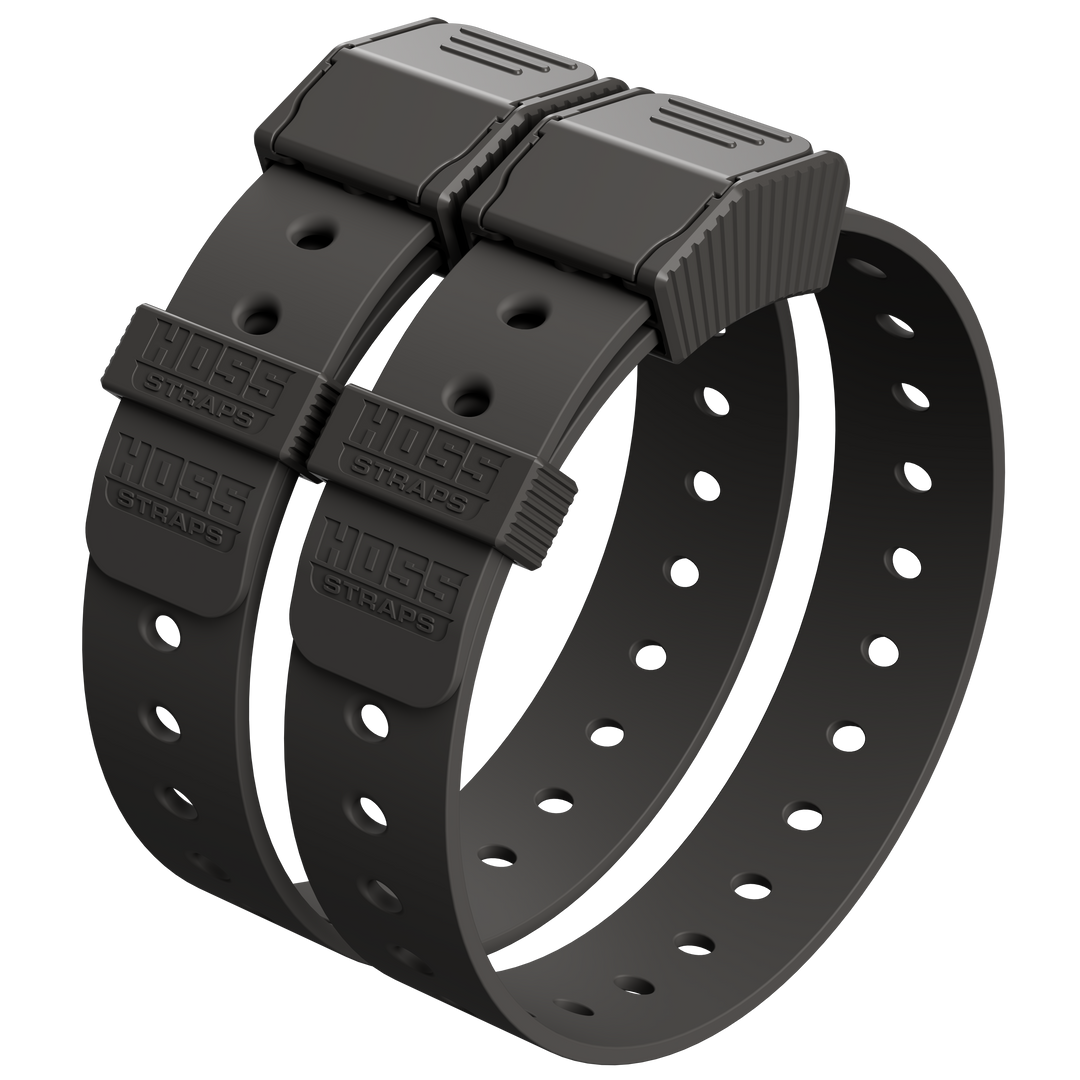
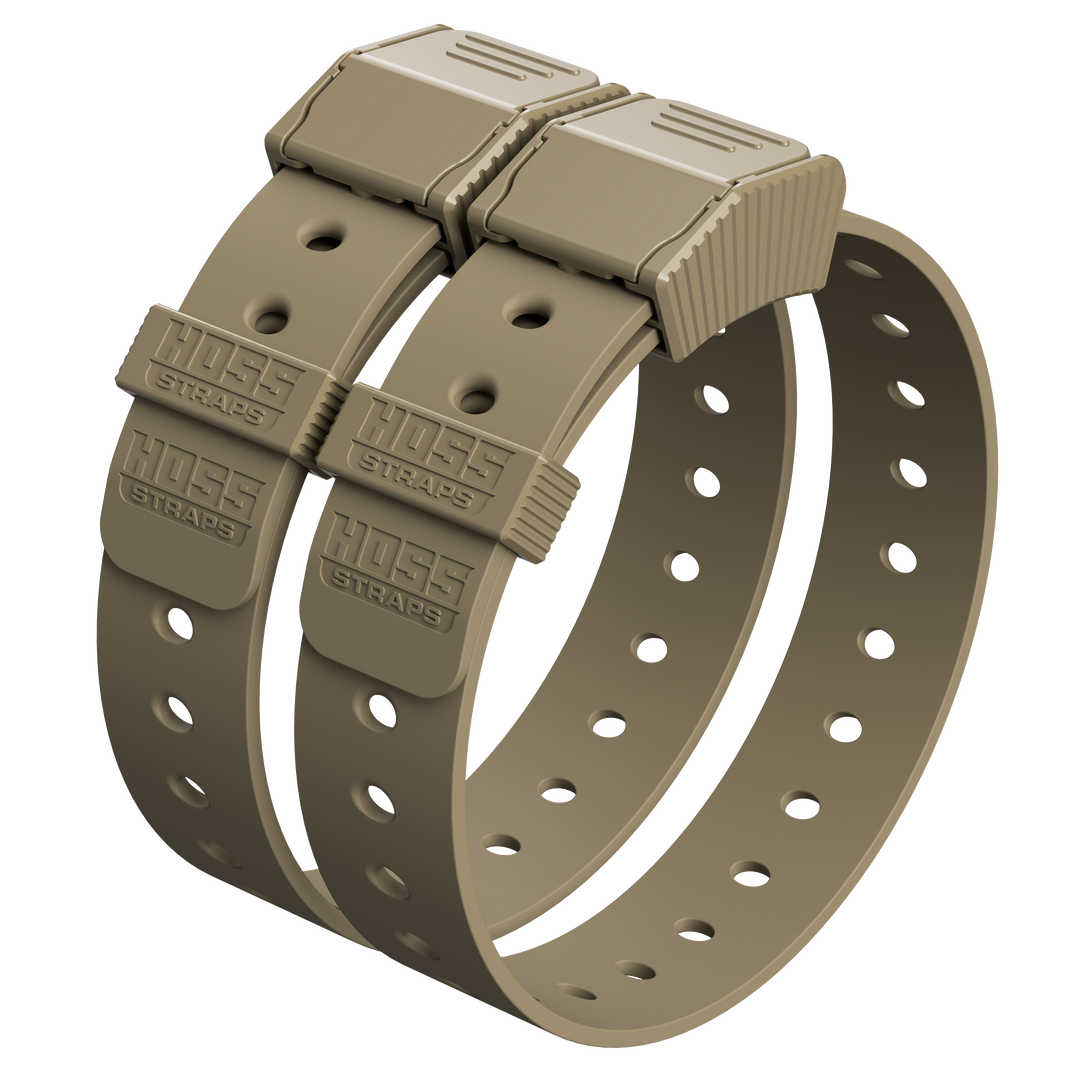
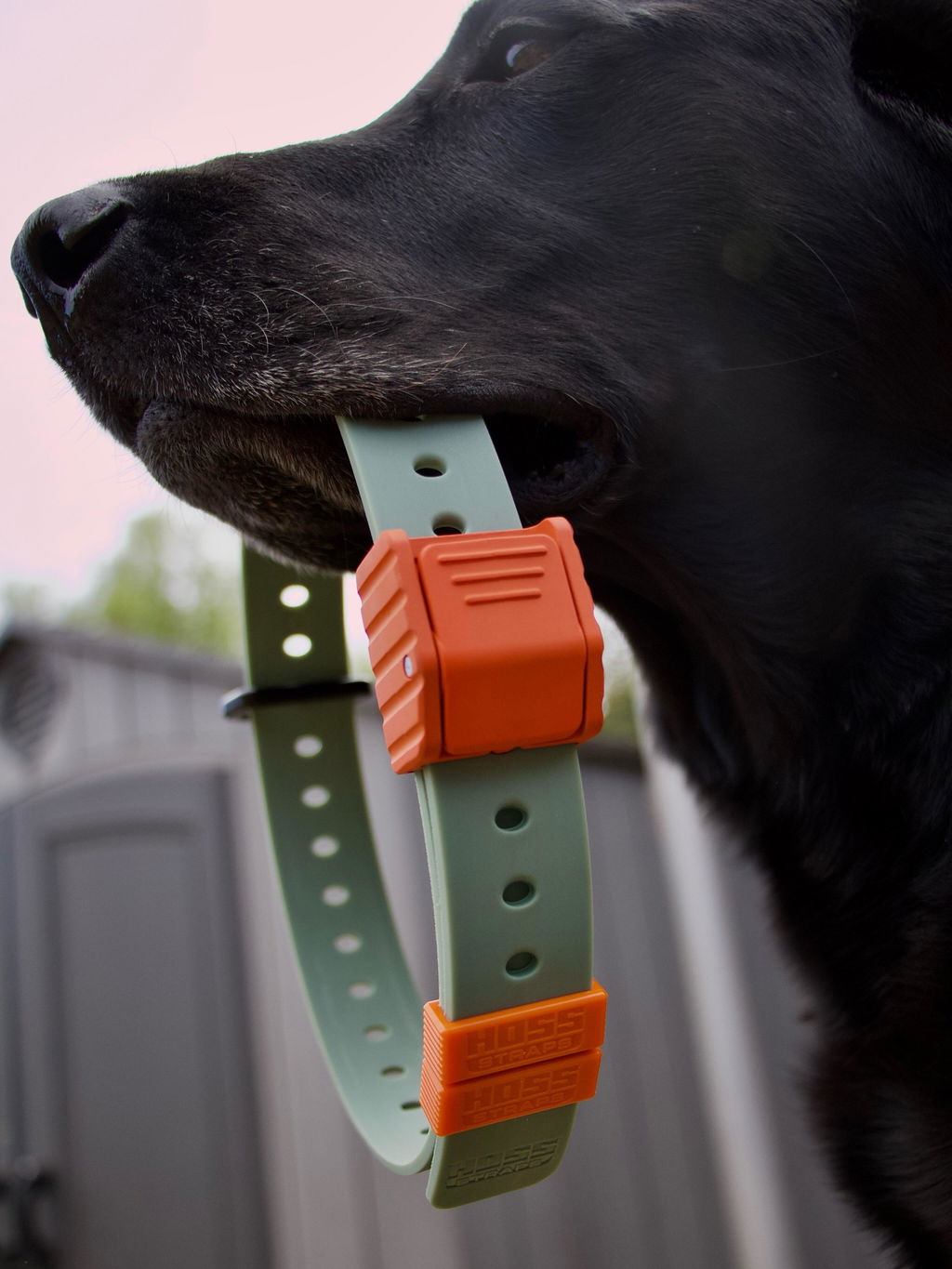
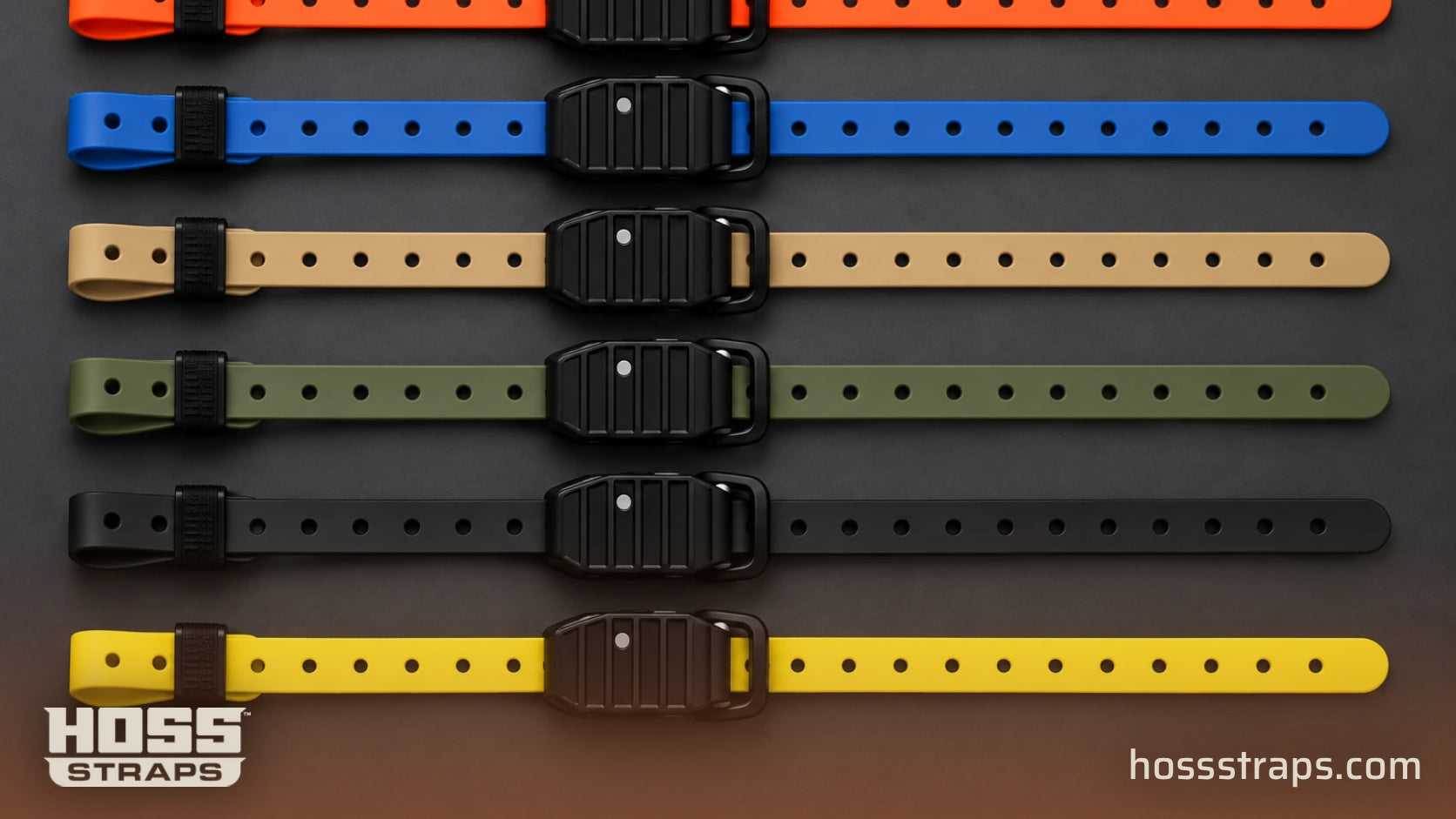
HOSS replacement straps are offered in a range of bright, neutral, and field-inspired colors. Availability can change, so confirm current options on the product page.
| Color family | Examples | Possible use | Consider |
|---|---|---|---|
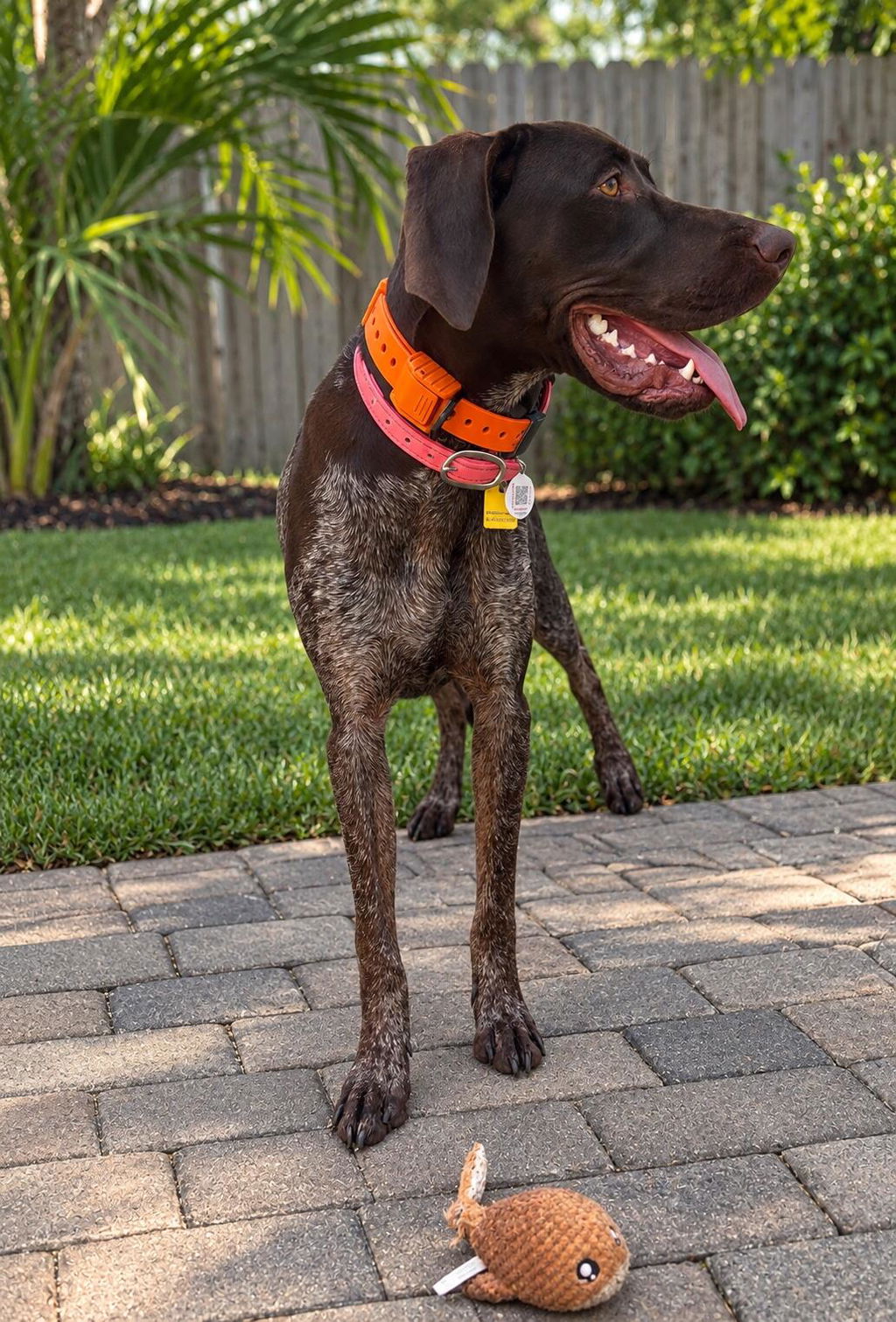
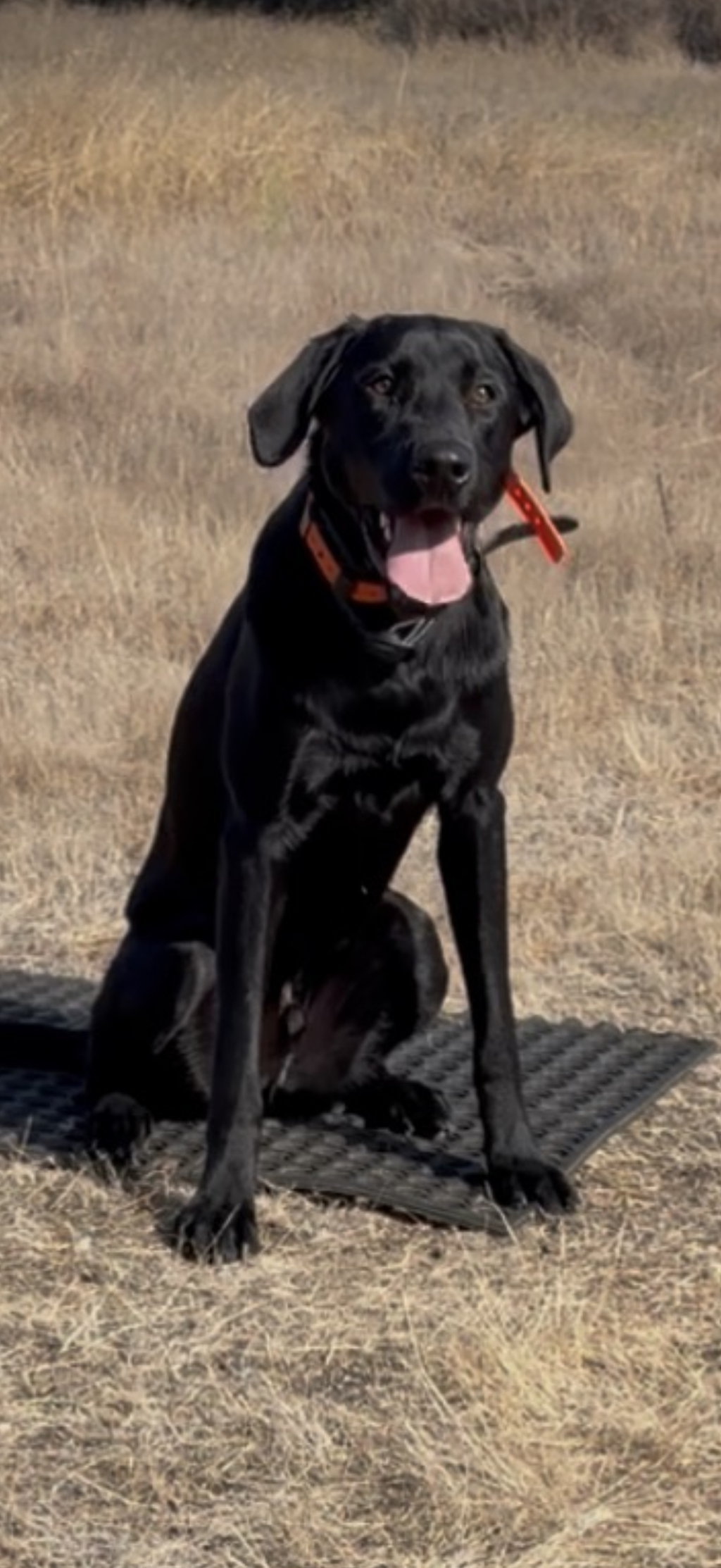
| High contrast | Hunter Orange, Blaze, Yellow | Quick visual identification in many field settings | Test against seasonal terrain and existing high-vis gear |
| Cool contrast | Cobalt Blue, Green | Distinct dog or equipment assignment | Blue may contrast differently near water; green may blend with foliage |
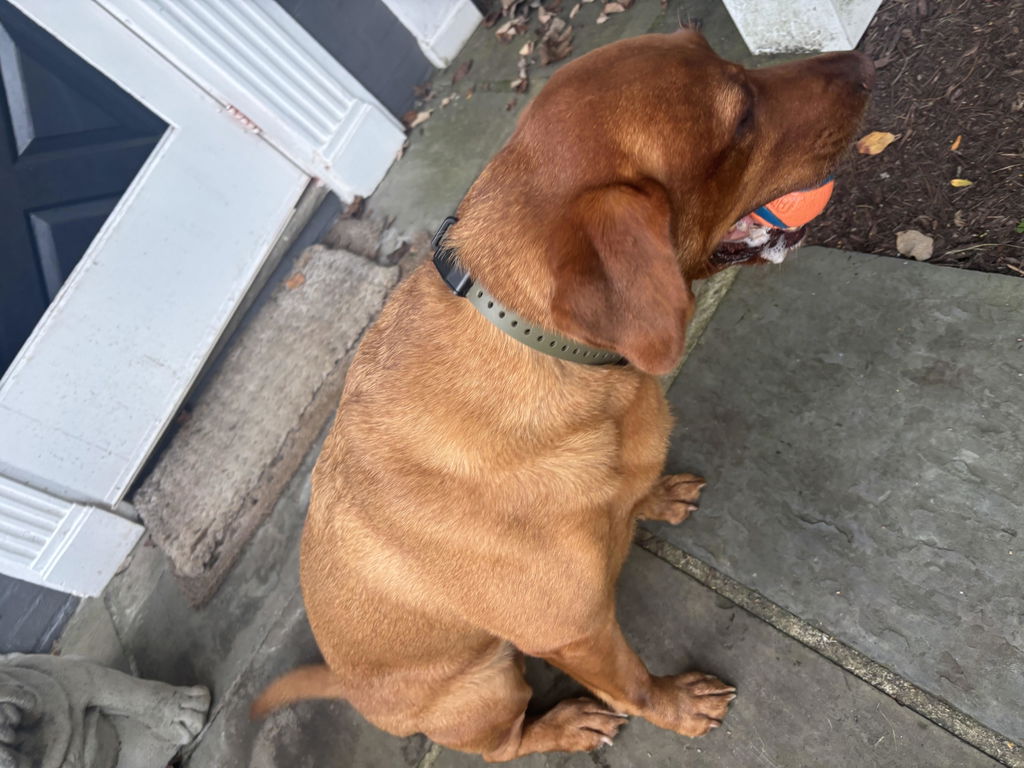
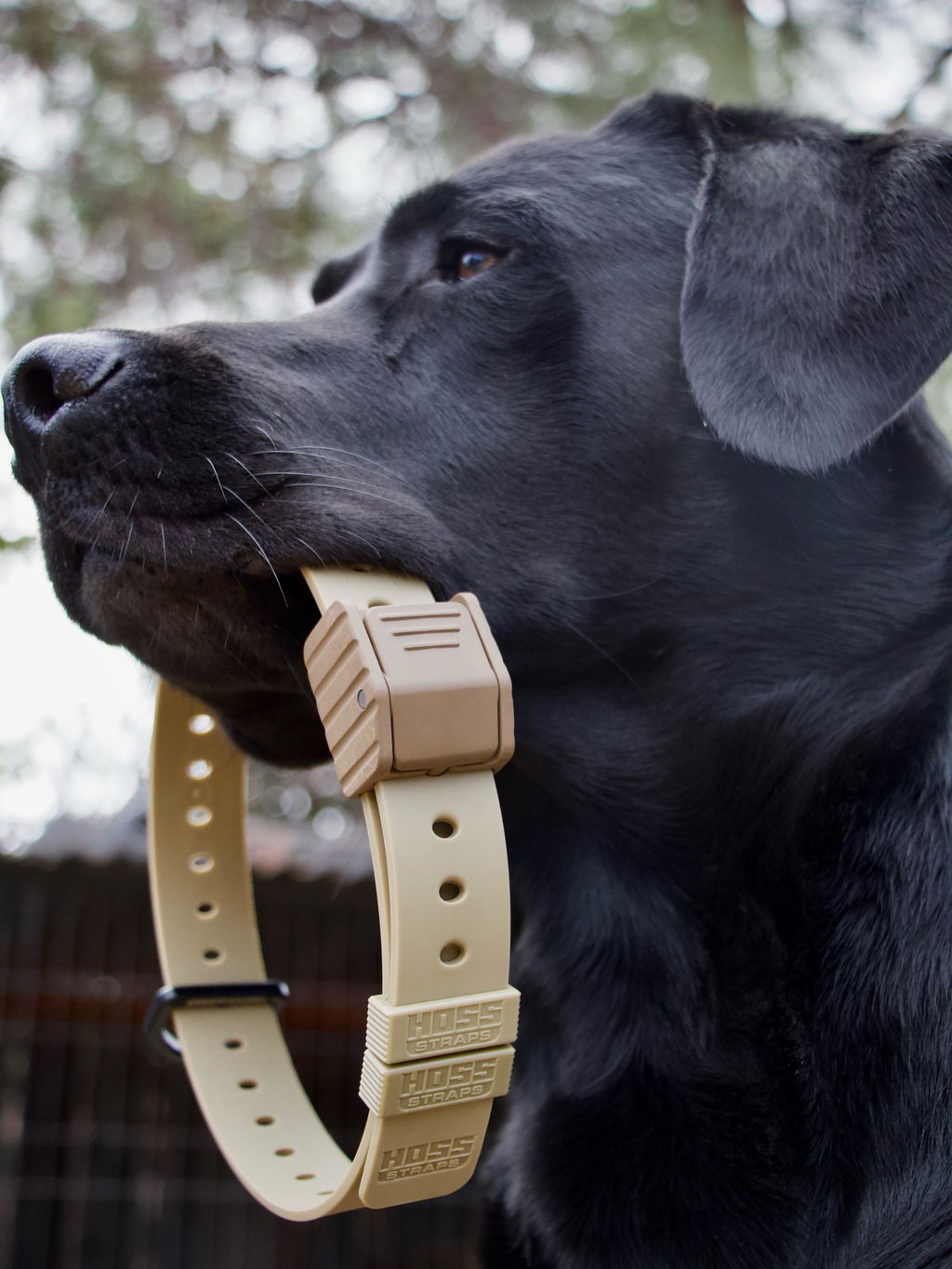
| Neutral | Black, Desert Tan | Lower-profile everyday appearance | Mud, dust, hair, and wear show differently on each tone |
| Field-inspired | Olive Green, Upland, Covey | Coordinating field kits or team identities | Patterns and terrain may reduce distance recognition |
| Warm identifier | Red | Clear assignment within many multi-dog systems | Do not rely on color alone for all handlers |
Color also changes how dirt and wear appear
A light or bright strap may reveal mud and transfer marks quickly, which can encourage timely cleaning. A dark strap can hide some staining but may also make fine damage or contamination less obvious at a glance. Neither result changes the actual cleanliness or strength of the strap.
Rinse according to the product instructions, inspect both edges, move the keeper and stop so you can see underneath them, and examine the receiver slots. Clean the electronic receiver according to its own manual. Do not use harsh chemicals simply to restore color.
For the construction details that matter beyond color, read what makes a working-dog e-collar strap overbuilt.
Frequently asked questions
What is the best color for a hunting-dog e-collar strap?
There is no universal best. Select the color that contrasts with your terrain and equipment, then test it under actual light and weather conditions.
Should every dog have a different color?
It is often useful, provided the assignments are documented and all handlers understand the system.
Does color affect strap durability?
Do not use color as a durability indicator. Evaluate the underlying strap construction, hardware, receiver compatibility, condition, and documented specifications.
Can color replace an ID label?
No. Use clear identification and records in addition to color, especially when several handlers or similar-looking dogs are involved.
Choose the right width, then the right color
Compare compatible devices and current HOSS color options. Shop 3/4-inch replacement straps or 1-inch replacement straps.
Color can support visibility and organization but cannot guarantee either. Follow local requirements and the equipment manufacturers’ instructions.