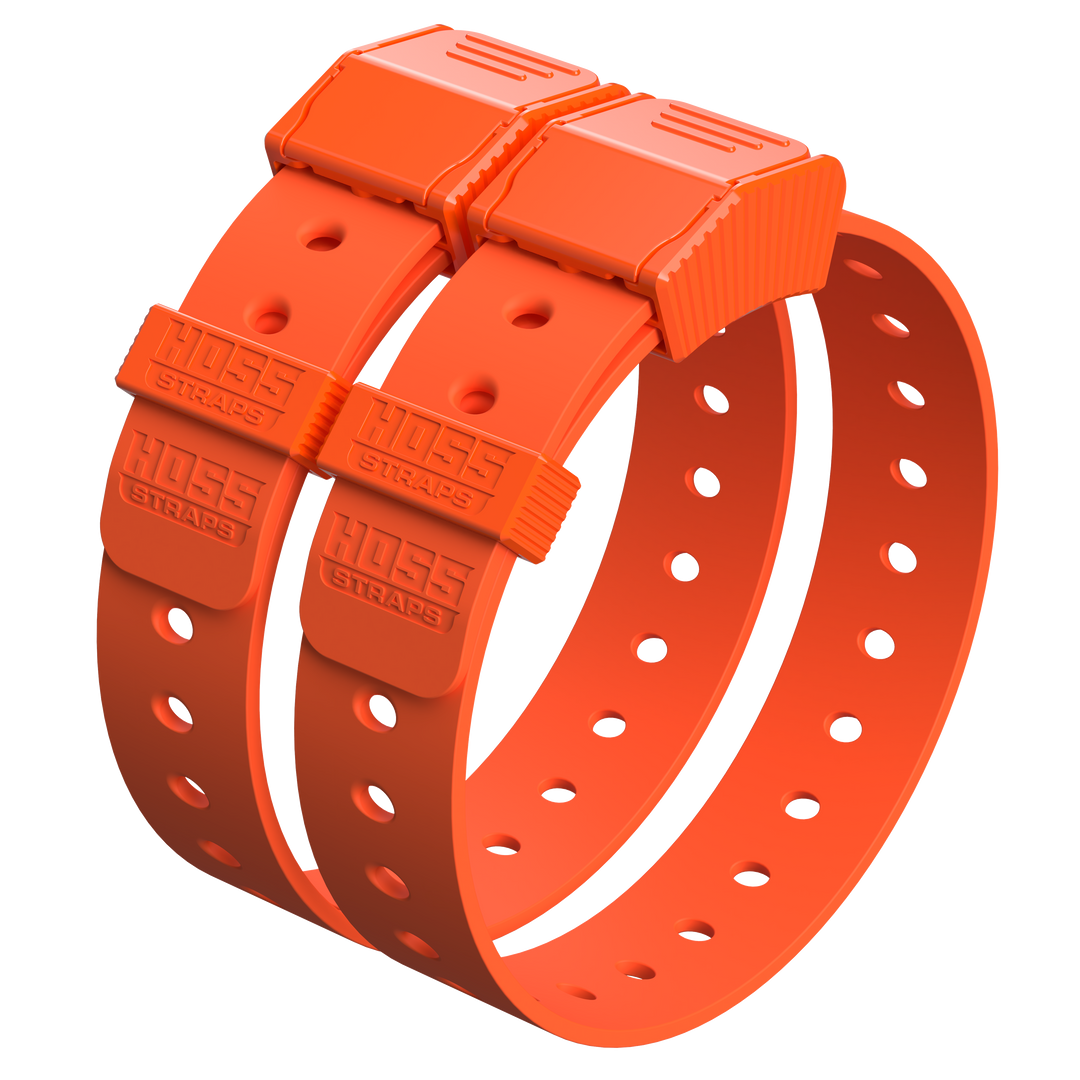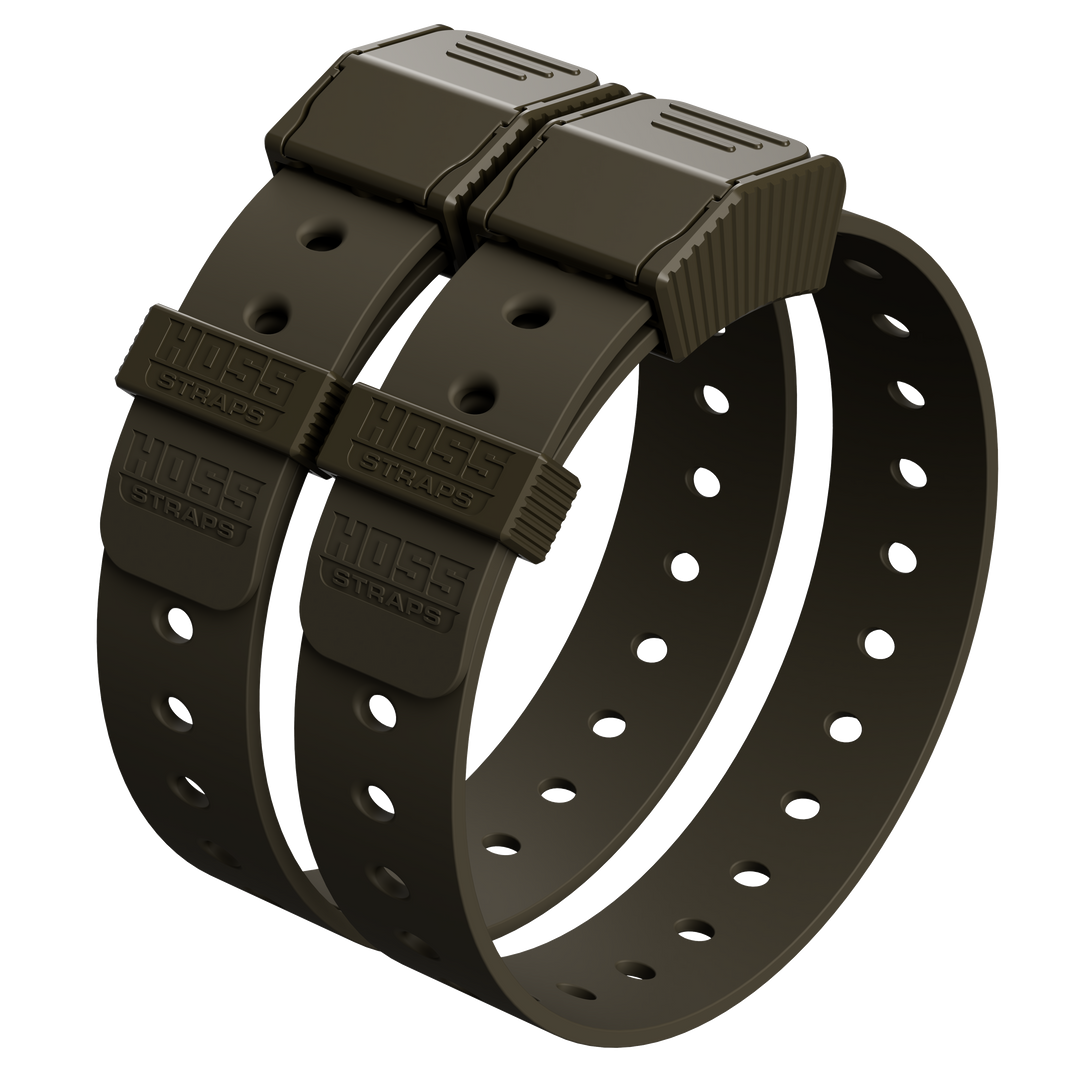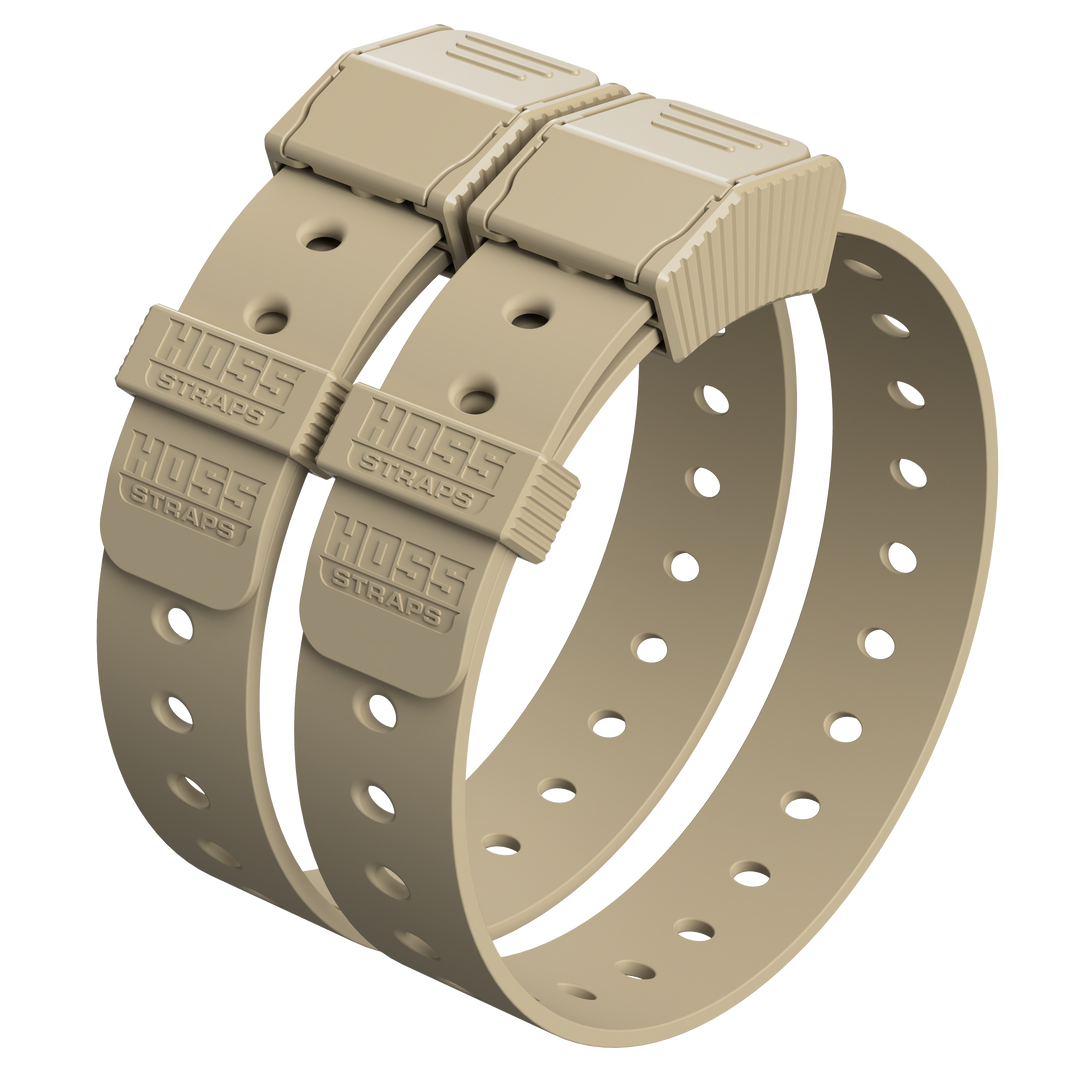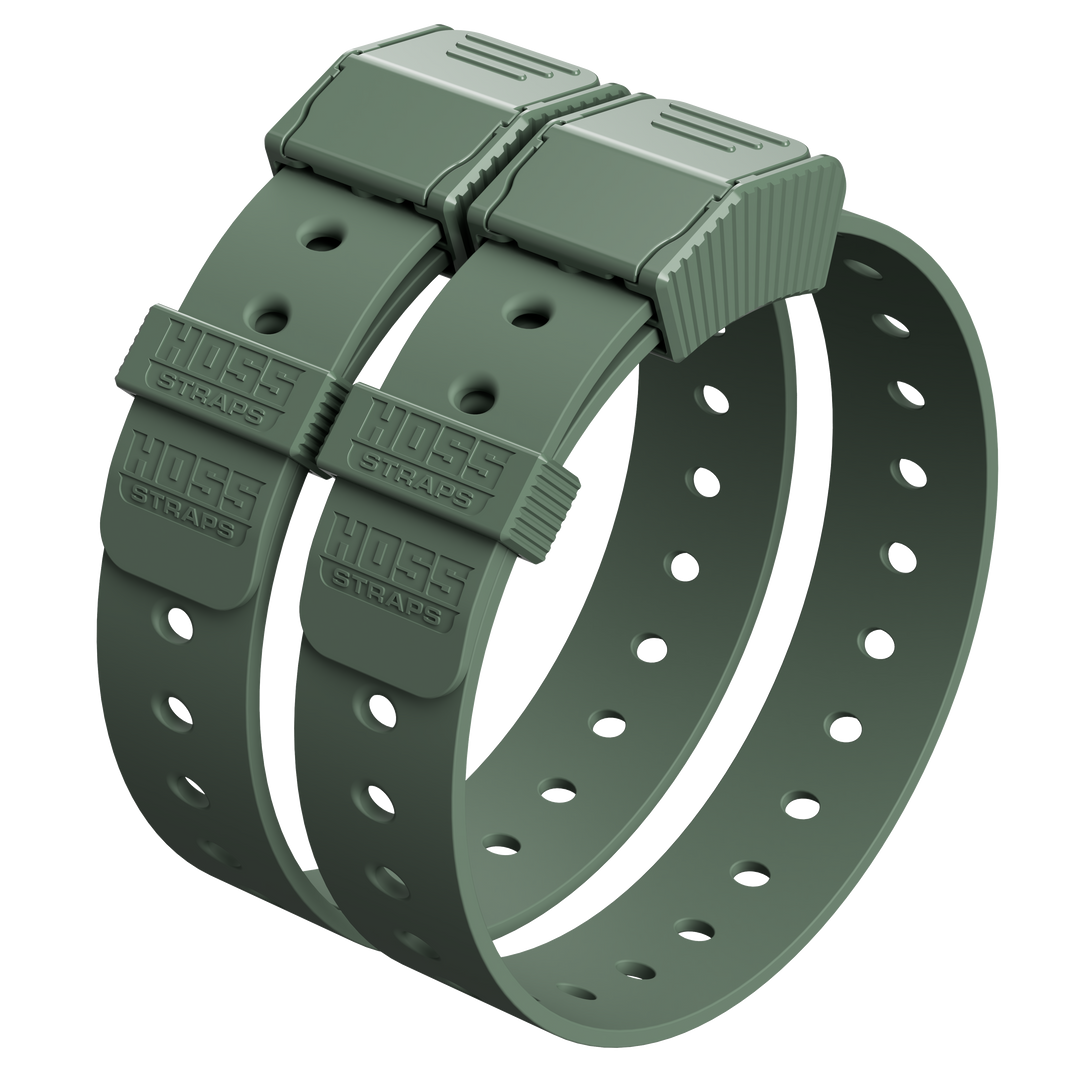



What Are Reusable Gear Straps?
A reusable gear strap is an adjustable fastener made to secure, release, clean, and use again. Unlike a single-use cable tie, it opens without being cut. Unlike a bungee cord, it does not have to depend on elastic stretch. The right design gives you a repeatable way to bundle small equipment, hold gear against a support, or keep items organized between uses.
Short answer: reusable gear straps combine a flexible strap body with an adjustable locking or fastening part. You wrap the strap around an object and an anchor point, set the fit, and reopen the fastener when you need the item. Materials, buckles, sizes, and approved uses vary by product, so the maker's instructions still matter.

Key takeaways
- Reusable describes repeated opening and closing, not a promise that every strap suits every job.
- The main parts are the strap body, adjustment path, buckle or fastener, and any connection feature.
- Choose by object size, access frequency, weather, and the maker's stated use limits.
- A gear organization strap is not automatically approved for lifting, towing, climbing, recovery, or vehicle cargo restraint.
Guide overview
- What makes a gear strap reusable?
- The main parts
- Gear straps compared with other fasteners
- Common uses
- How to choose
- Limits and safe-use checks
- Frequently asked questions
What makes a gear strap reusable?
A strap is reusable when its normal closing method can be opened and fastened again without destroying the strap. That simple difference changes the job it does. A single-use tie works well when you want a small, inexpensive closure that can be cut off later. A reusable strap makes more sense when you reach for the same gear often, adjust the fit, move the bundle, or clean the strap after use.
Reusable does not mean maintenance-free or permanent. Before each use, look for cuts, cracks, torn holes, a changed shape, or a buckle that no longer closes and releases as designed. Remove questionable gear from service and follow the maker's replacement guidance.
The main parts of a reusable gear strap
Designs differ, but most reusable gear straps can be understood through four parts.
| Part | What it does | What to check |
|---|---|---|
| Strap body | Wraps around the object and anchor point. | Material, width, surface grip, flexibility, and weather guidance. |
| Adjustment path | Changes the closed loop so one strap can fit more than one object. | Available settings, usable loop range, and tail clearance. |
| Buckle or fastener | Closes the loop and opens it for access. | Clean closure, controlled release, and room for your fingers or gloves. |
| Connection feature | Lets some straps join to make a longer loop. | Whether the maker permits connection and whether the stated use limit changes. |
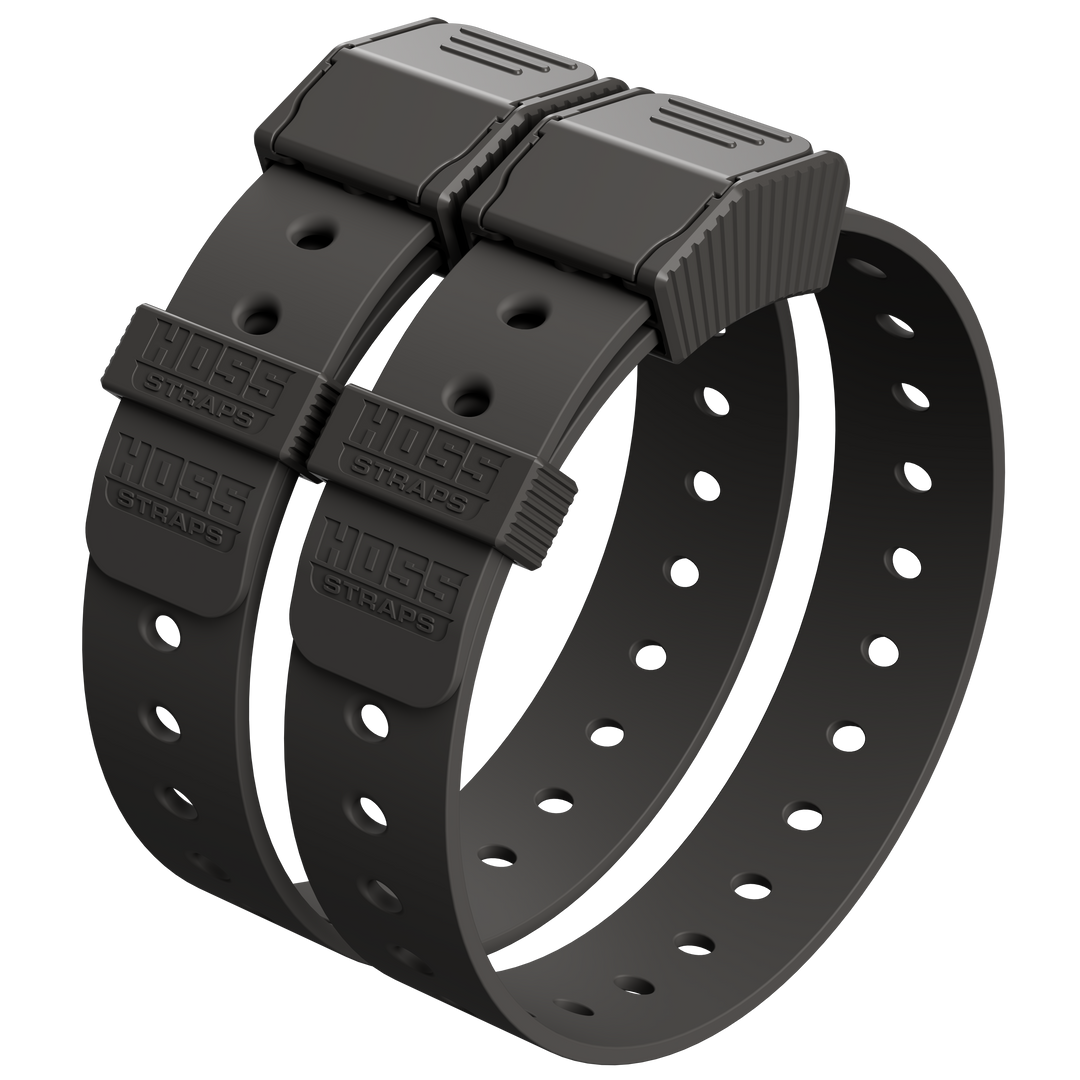
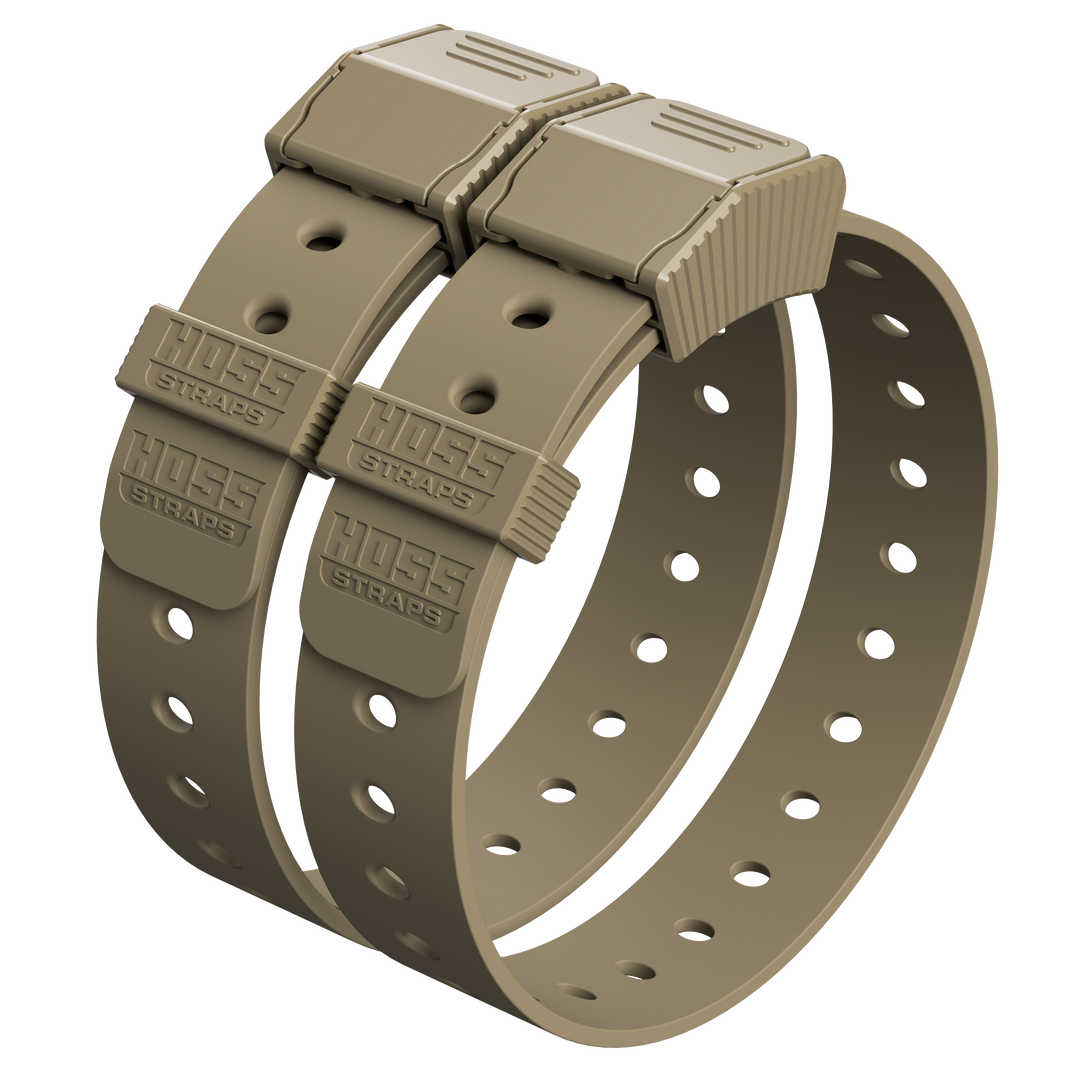
Hoss Straps describes its gear strap body as a proprietary polyurethane blend and its fastener as a US-patented quick-release buckle. Its current product pages also describe the straps as no-stretch, weatherproof, UV resistant, and connectable for added length. These are first-party product statements, not independent test results.

Reusable gear straps compared with bungees, rope, webbing, and cable ties
No fastener is best for every task. Start with the job, the required rating, and how often you need access.
| Fastener | Good fit | Main difference | Check before use |
|---|---|---|---|
| Reusable gear strap | Repeated-access organization and compact equipment | Adjusts and reopens without cutting | Fit range, closure, material, and approved task |
| Bungee cord | Jobs designed for elastic tension | Stores energy as it stretches | Hook condition, stretch, recoil path, and maker limits |
| Rope | Tasks that call for the correct rope and knot | Highly adaptable when used with proper knot skill | Rope type, knot, wear, load, and task rules |
| Cam or ratchet webbing | Tasks designed for flat webbing and rated hardware | May give more reach or mechanical tension | Rating, edge contact, anchor points, and transport rules |
| Single-use cable tie | Small closures that do not need regular reopening | Usually cut off after use | Size, material, temperature, and cut-edge cleanup |
Decision rule: if the task has a formal load, transport, lifting, or life-safety requirement, choose equipment approved and rated for that exact task. Convenience is not a substitute for the right specification.
Common reusable gear strap uses
Reusable gear straps are most useful when an item needs to stay grouped or close at hand, then come free without cutting a tie or untying a knot. Hoss Straps lists first aid kits, tool kits, dry bags, gear pouches, boat accessories, cords, hunting gear, and camp equipment among its use examples.
Bundle long or loose items
Fishing rods, extension cords, hoses, stakes, and compact tools can become easier to store when the bundle has a repeatable closure. Place the strap where it will not crush a fragile part, pinch a line, or cover a control.

Keep bags or cases against a fixed support
A longer strap can wrap around a bag and a nearby support when both the support and the use are suitable. Keep the buckle reachable, protect the strap from sharp edges, and do not block a latch, handle, drain, or emergency control.

Organize gear in wet or dirty settings
Material matters around spray, mud, or salt. Check the maker's weather and cleaning directions, rinse or wipe the strap as directed, and inspect the buckle before reuse. A weatherproof material claim does not approve every mounting point or transport setup.

How to choose a reusable gear strap
- Name the job. Decide whether you are bundling, organizing, or holding an item against a support.
- Measure the full wrap. Follow the path around the object and anchor point. Do not choose from the object width alone.
- Leave room to close and release. The strap needs enough overlap for its locking path, plus access to the buckle.
- Check the setting. Water, sunlight, temperature, chemicals, and sharp edges can change which material fits.
- Match the approval. Read the maker's stated use and load limits. Do not transfer a claim from one product to another.
Hoss Straps currently offers 12-inch gear straps for compact gear and 24-inch gear straps for larger wraps. Its pages state that straps can connect for more length. Connecting straps changes reach, not the stated limit or approved task. Measure first and compare the current product details before ordering.

What reusable gear straps should not be assumed to do
The words reusable, weatherproof, or heavy duty do not create a universal safety rating. A gear organization strap is not automatically approved for lifting, towing, vehicle recovery, climbing, fall protection, human restraint, or holding a load on a moving vehicle. Each of those jobs can require task-specific equipment, ratings, anchor points, and inspection rules.
Also avoid placing a strap across a sharp edge, hot surface, moving part, control, brake line, fuel line, or fragile item. If the strap is damaged, the buckle does not close cleanly, or the intended use is unclear, stop and contact the manufacturer.
Frequently asked questions
What does reusable mean for a gear strap?
It means the normal fastener can be opened and closed again without cutting or destroying the strap. Reusable does not mean the strap lasts forever or fits every task.
Are Hoss Straps gear straps elastic like bungee cords?
Hoss Straps describes its gear straps as no-stretch, so they are not designed to work like an elastic bungee cord. Read the current product instructions for the exact model.
Can reusable gear straps connect together?
Some can. Hoss Straps states that its 12-inch and 24-inch gear straps can connect for added length. Only connect straps when the maker allows it, and do not assume that added length raises the stated use limit.
Which Hoss Straps gear strap size should I choose?
Use the 12-inch option for smaller wraps and the 24-inch option for larger wraps, then confirm the full path around the object and anchor point. Leave enough room for the buckle to close and release.
Can a reusable gear strap replace a rated tie-down?
Not by default. Use equipment approved for the exact load and transport task. A general gear strap description does not establish a cargo, lifting, towing, climbing, or recovery rating.
How should reusable gear straps be cleaned?
Follow the maker's care directions for the material and buckle. Hoss Straps tells users to hose off its straps after salt, sun, or spray exposure. Inspect the strap and buckle after cleaning and before reuse.
Choose the strap around the job
Start with the full wrap, the access you need, and the maker's approved use. Then compare current Hoss Straps gear strap sizes and pack options.