


Gear Strap Material Guide: Polyurethane, TPU, Rubber, or Nylon?
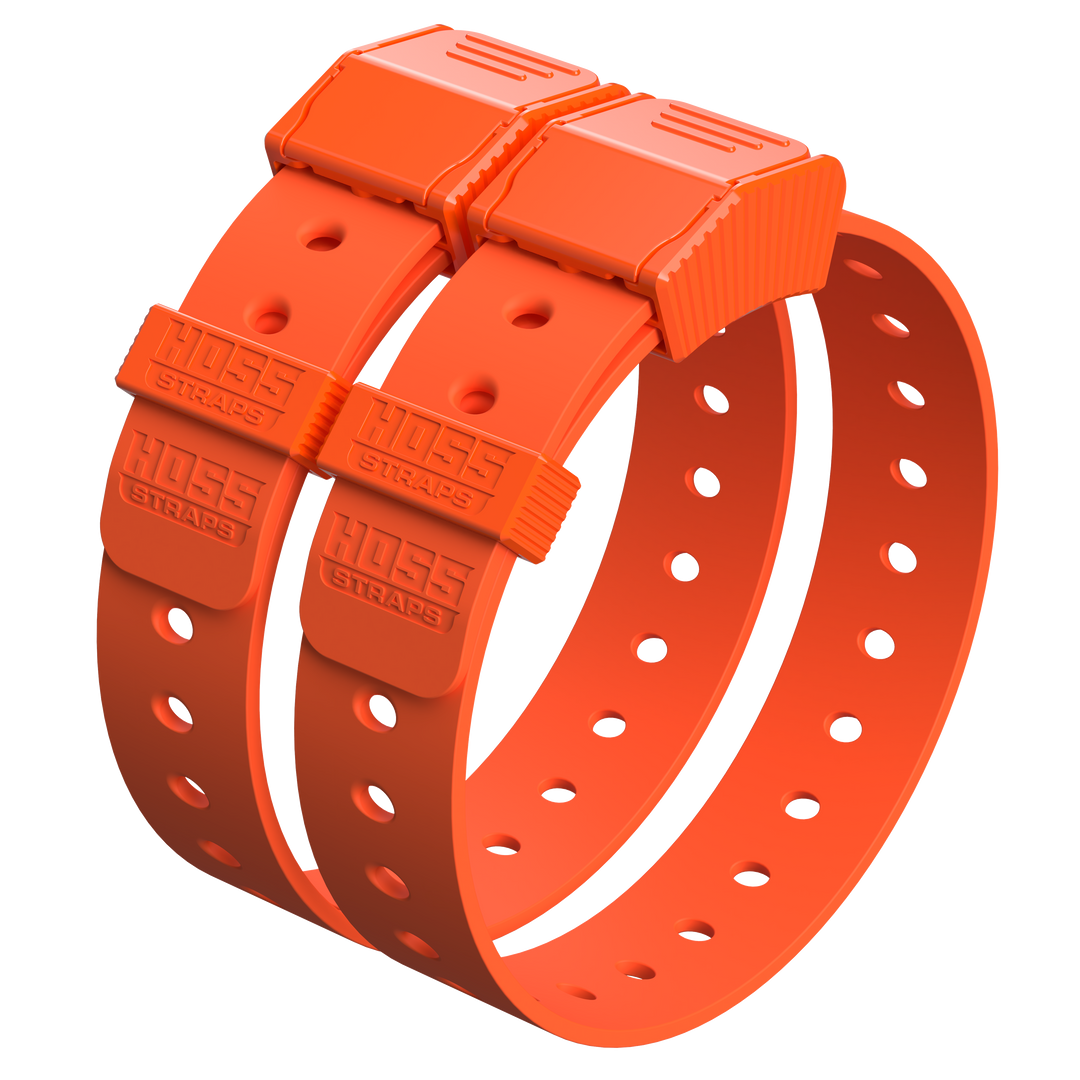
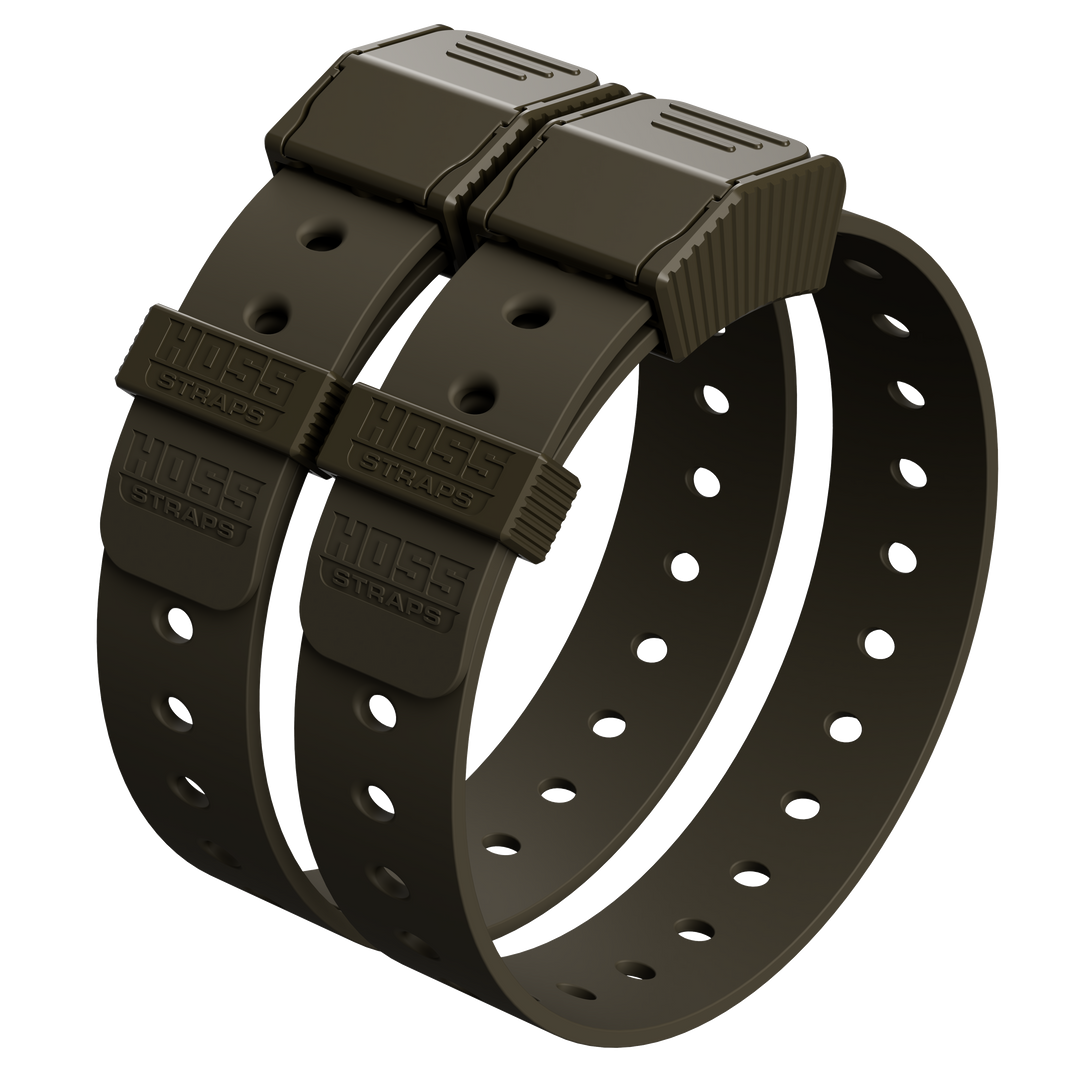
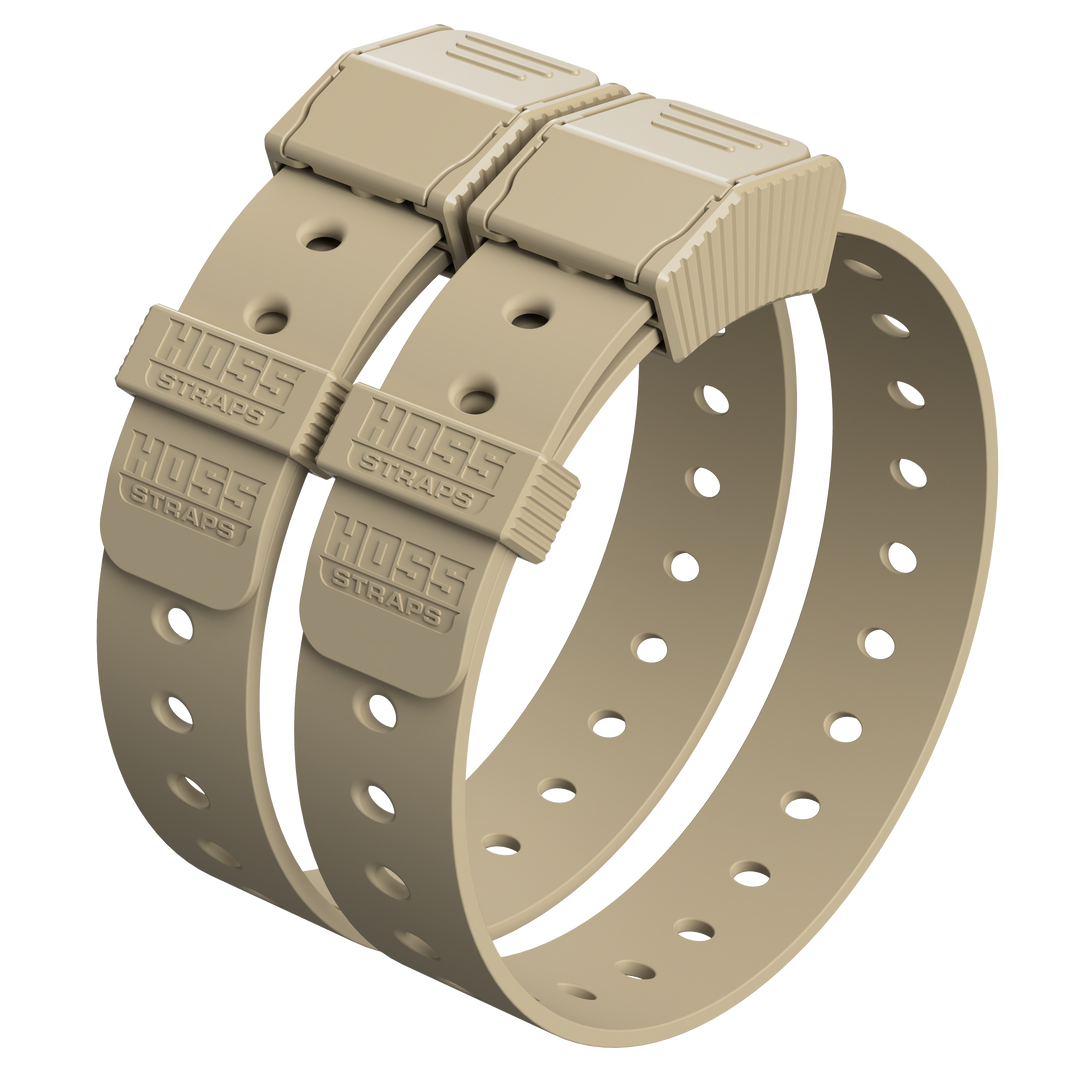
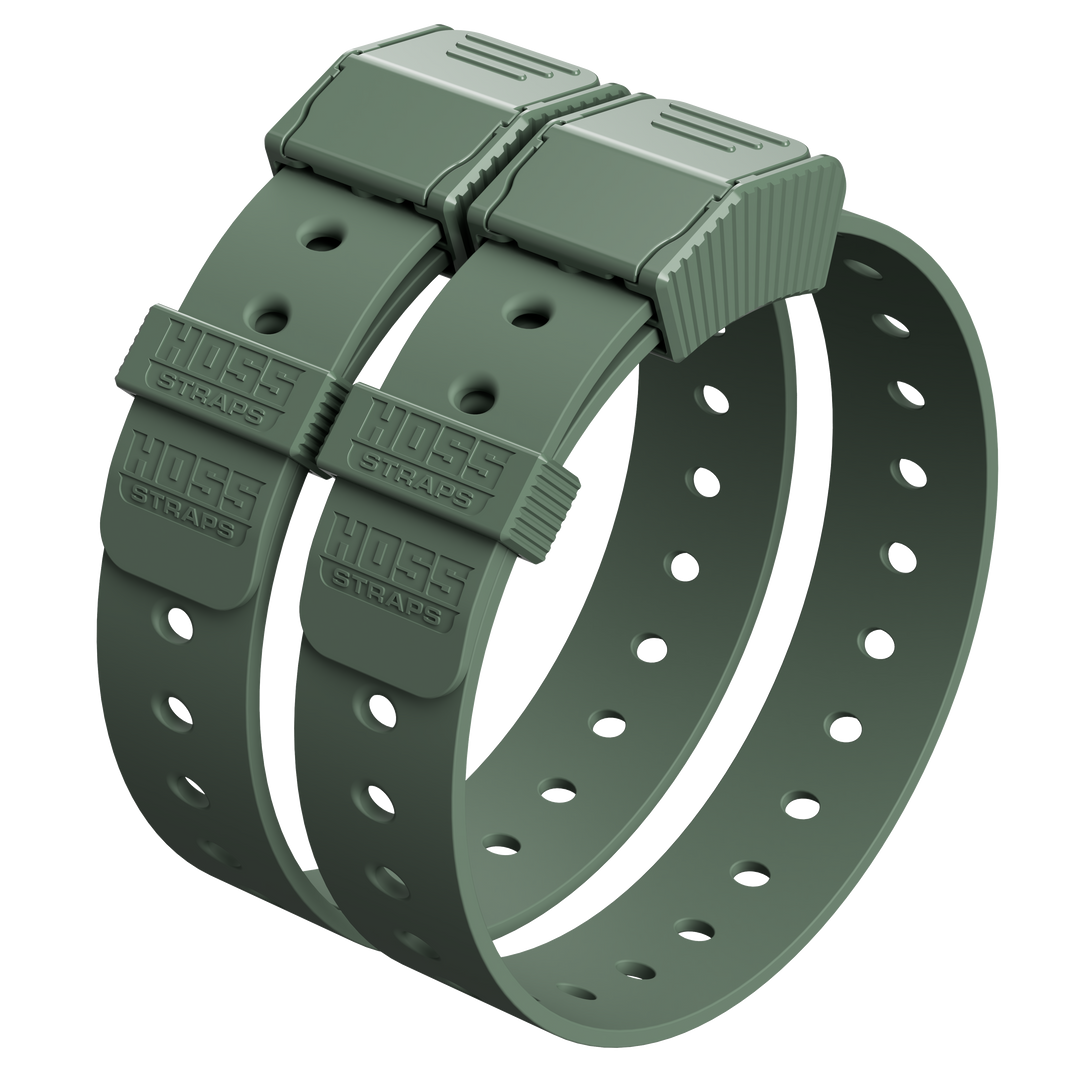
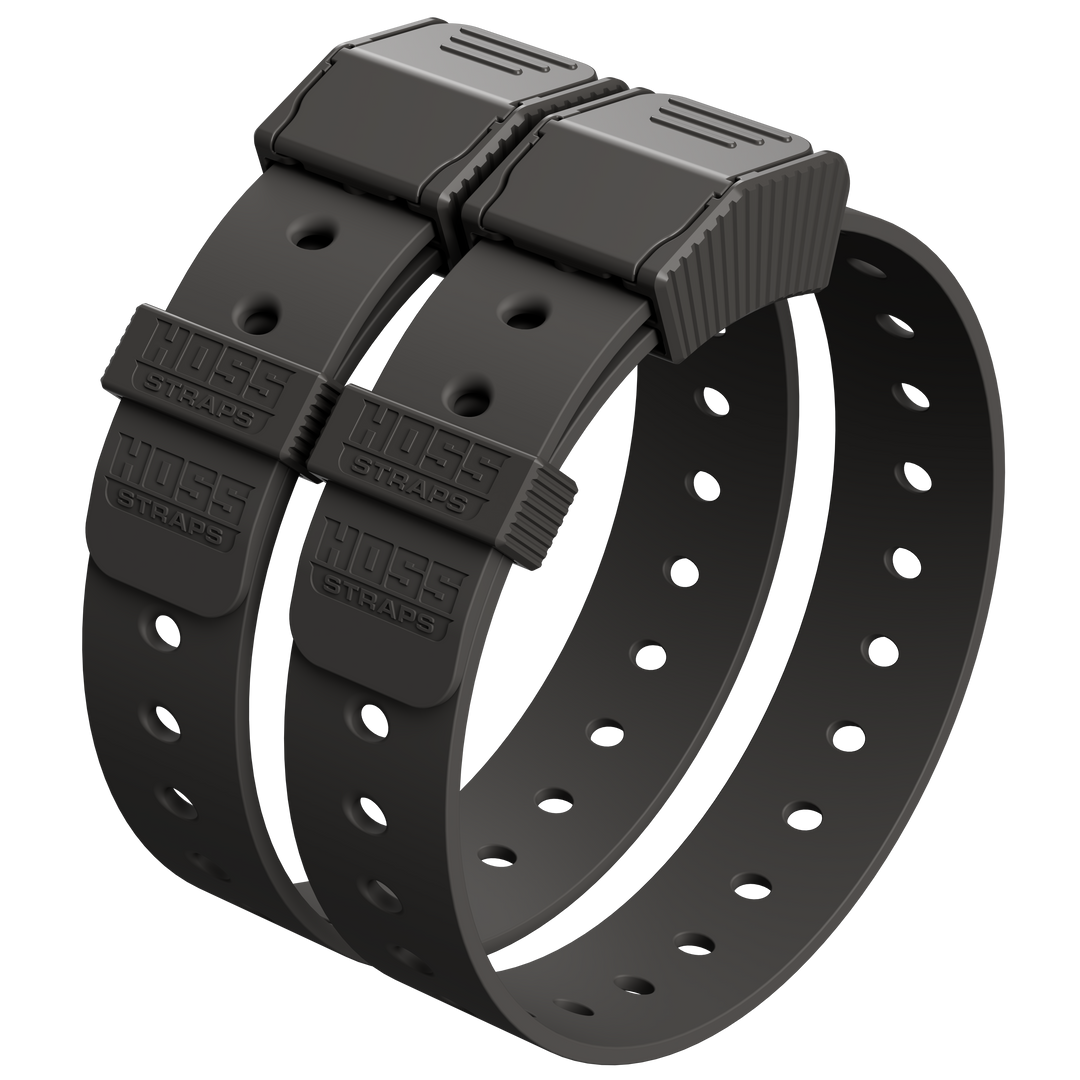
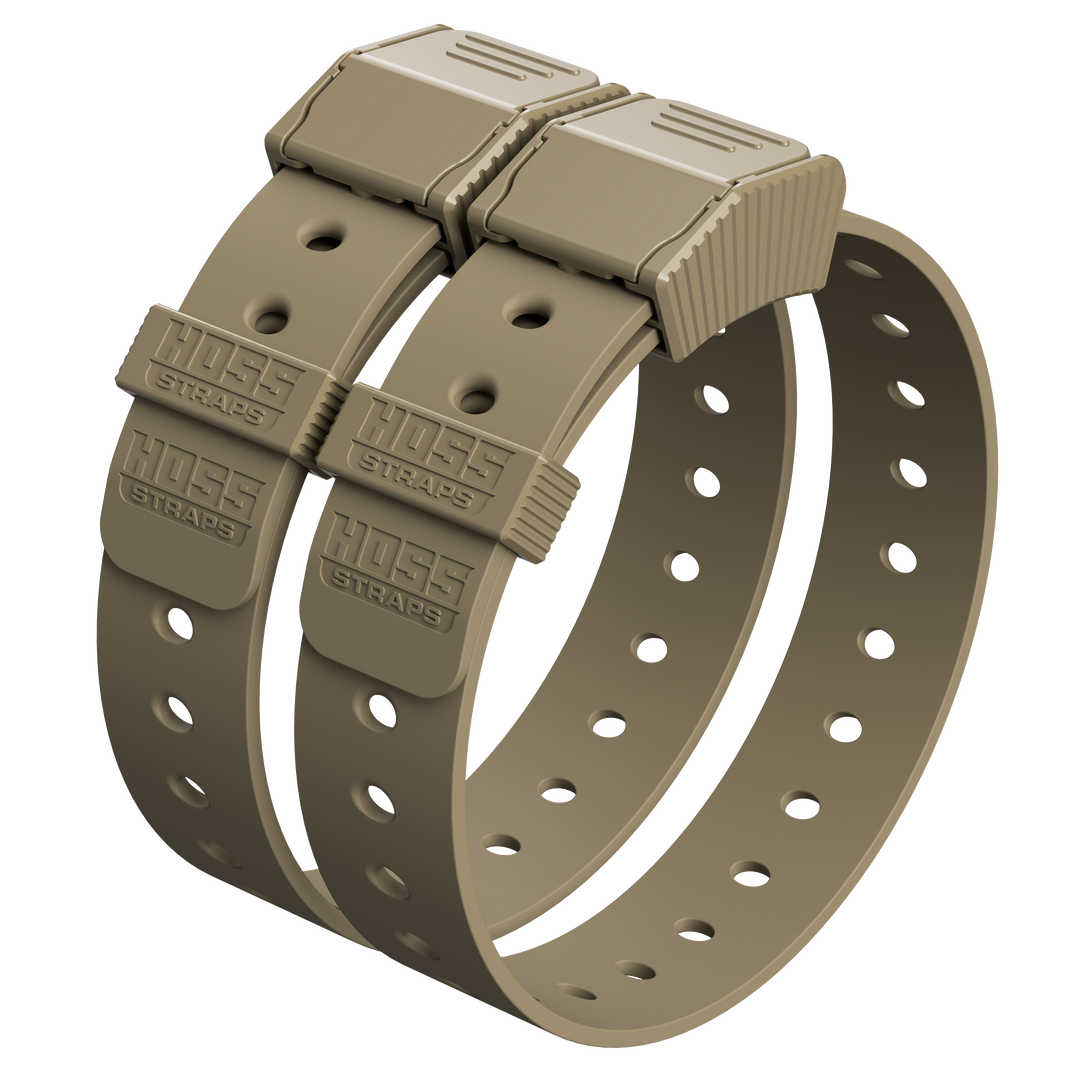
Hoss Straps product pages currently describe the gear straps as a proprietary polyurethane blend. That is the usable first-party answer. It does not tell us the exact grade, additives, reinforcement, weave, or whether the material should be called TPU. This guide explains the names without turning a broad material label into a performance promise.
Fast answer: polyurethane is a material family, TPU means thermoplastic polyurethane, rubber is a broad elastomer category, and nylon usually means a polyamide family. Those labels are not interchangeable. For a Hoss Straps buying or safety decision, use the exact product specification, test method, and stated limits rather than guessing from a keyword.


Guide overview
- Start with exact definitions
- Polyurethane, TPU, rubber, and nylon side by side
- What Hoss Straps currently says
- Match the property to the test
- The finished strap is more than its polymer
- How to choose without guessing
- What a useful material proof record should show
Key takeaways
- Hoss Straps currently identifies the gear strap material as a proprietary polyurethane blend in product data.
- TPU is a type of thermoplastic polyurethane, but a polyurethane blend is not automatically a disclosed TPU grade.
- Rubber and nylon are broad material families. Compound, grade, reinforcement, coating, thickness, and manufacturing method can change behavior.
- Water, UV, abrasion, freezing, saltwater, and load results must be tied to named samples and a disclosed method.
- A material name cannot approve lifting, towing, recovery, climbing, fall protection, human restraint, or moving-vehicle cargo restraint.
Start with exact definitions
Material names answer different questions. Polyurethane describes a polymer family. TPU adds a processing and behavior category: it is thermoplastic polyurethane. Rubber usually describes an elastomeric material family, which can include natural and synthetic compounds. Nylon is commonly used for polyamide materials, with grades such as PA 6, PA 66, and PA 12 that do not behave identically.
That is why a search phrase can be useful for finding a guide but unsafe as a product specification. A page that says “polyurethane” has not necessarily disclosed a TPU grade. A page that says “nylon” has not necessarily disclosed the polymer type, weave, coating, or moisture conditioning. A page that says “rubber” has not necessarily disclosed the compound or reinforcement.
Family
Polyurethane
A broad polymer family. The formulation, processing route, hard and soft segments, additives, and reinforcement matter.
Subset and process
TPU
Thermoplastic polyurethane. Different TPU grades can have different hardness, flexibility, abrasion response, temperature behavior, and chemical response.
Elastomer family
Rubber
A broad label covering natural and synthetic elastomer compounds. The compound and reinforcement must be named before performance is compared.
Polyamide family
Nylon
A common name for polyamide materials. Grade, moisture condition, weave, coating, and construction can change the result.
Polyurethane, TPU, rubber, and nylon side by side
The table is a terminology map, not a ranking. It shows what must be specified before a buyer or reviewer can make a fair comparison.
| Term | What it tells you | What it does not tell you | Proof to request |
|---|---|---|---|
| Polyurethane | Material family used in many flexible and rigid formulations. | Exact grade, hardness, additives, reinforcement, processing, or service range. | Material specification, grade, construction, and test conditions. |
| TPU | A thermoplastic polyurethane category with grade-specific behavior. | That every TPU grade will match another TPU or a product called polyurethane blend. | Grade, hardness, thickness, conditioning, and relevant test data. |
| Rubber | An elastomer category that may be natural or synthetic. | Compound, cure system, reinforcement, weather response, or aging behavior. | Compound description, reinforcement, exposure protocol, and limits. |
| Nylon | A common label for polyamide materials used in many grades and constructions. | Polyamide type, moisture condition, weave, coating, or finished strap behavior. | PA grade, yarn or weave, coating, conditioning, and test method. |
| Hoss Straps current disclosure | Product data describes a proprietary polyurethane blend. | Exact chemistry, TPU status, additives, reinforcement, or independent validation of every property claim. | Approved specification sheet, named samples, test method, dates, raw results, and limitations. |
What Hoss Straps currently says
The current Hoss Straps 12-inch and 24-inch product data identifies the material as a proprietary polyurethane blend. The same product data presents first-party claims about waterproof, UV, freeze, abrasion, and saltwater performance.
Match the property to the test
“Weatherproof” is not one test. A material guide becomes useful when each property has a method and an endpoint.
- Water and saltwater: name the solution, concentration, temperature, immersion or spray duration, rinse steps, and post-exposure inspection.
- UV: name the light source, intensity or cycle, duration, sample orientation, and change measured after exposure.
- Freezing: state the conditioning temperature and dwell time, then record buckle release, flexibility, cracking, and load behavior.
- Abrasion: identify the contact surface, pressure, motion, cycles, and retirement rule.
- Load: separate working-load limits from breaking-strength results. Name the complete assembly, configuration, safety factor, and failure rule.
Without these details, a material word can explain what a product is called but not what the finished strap is approved to do.
The finished strap is more than its polymer
A gear strap is an assembly. The result can depend on width, thickness, adjustment holes, edge finish, buckle geometry, connection method, surface texture, reinforcement, stitching or bonding, and the object and anchor path. The material name is one attribute, not the whole entity.


How to choose without guessing
- Name the job. Decide whether the strap is for repeated-access organization, a wet setting, light bundling, or another defined task.
- Read the exact product specification. Look for material, grade, construction, dimensions, working limit, care, and exclusions.
- Check the condition. Include water, salt, UV, cold, abrasion, sharp edges, movement, and buckle access.
- Match the proof. A load question needs load evidence. A saltwater question needs an exposure method. A material question needs a specification or qualified explanation.
- Stop at the boundary. If failure could injure someone or damage a vehicle, choose equipment rated and approved for that task.
For current product context, review the 12-inch Hoss Straps gear straps, 24-inch Hoss Straps gear straps, and the Hoss Straps gear strap collection.
What a useful material proof record should show
A useful material proof record connects the material disclosure to the finished product. It should include:
- Exact material description, grade or blend status, reinforcement, thickness, width, and assembly details.
- Sample identifiers, production dates or lots, conditioning, exposure, and number of samples.
- Apparatus, calibration or reference method, force direction, cycle rate, and pass or failure rule.
- Raw results, observed changes, photographs, failed samples, and limitations.
- A qualified reviewer who approves the material wording and the prohibited-use boundaries.
Frequently asked questions
Is TPU the same as polyurethane?
TPU means thermoplastic polyurethane, so it is a category within polyurethane materials. The terms are not interchangeable for a product specification. A polyurethane blend needs its exact composition and processing status before it can be called a specific TPU grade.
Are polyurethane straps better than nylon straps?
There is no universal winner. Finished performance depends on grade, construction, coating, reinforcement, dimensions, environment, and test method. Compare the exact products and job, not the broad material names.
Does rubber handle water better than polyurethane?
Do not decide from the word “rubber.” Natural and synthetic compounds differ, and water, salt, UV, temperature, and abrasion need their own evidence. Request the exposure method and finished-product result.
What material are Hoss Straps gear straps made from?
Current Hoss Straps product data describes the gear straps as a proprietary polyurethane blend.
Does a polyurethane blend prove a 75 lb Working Load?
No. A material label does not establish a working-load limit. Hoss Straps currently displays a 75 lb Working Load label on product pages, but the limit belongs to the stated product and scope, not to polyurethane as a universal material property.
What should a material test method disclose?
A useful method names the material specification, samples, exposure conditions, apparatus or reference method, results, and limitations. Compare those details with the product and task before using a result.
Related Hoss Straps guides
Read the verified product specification
Start with the current Hoss Straps gear strap collection, then use the exact material, test, care, and task limits supplied for the product you plan to use.