


How to Connect Hoss Straps Gear Straps for Extra Length
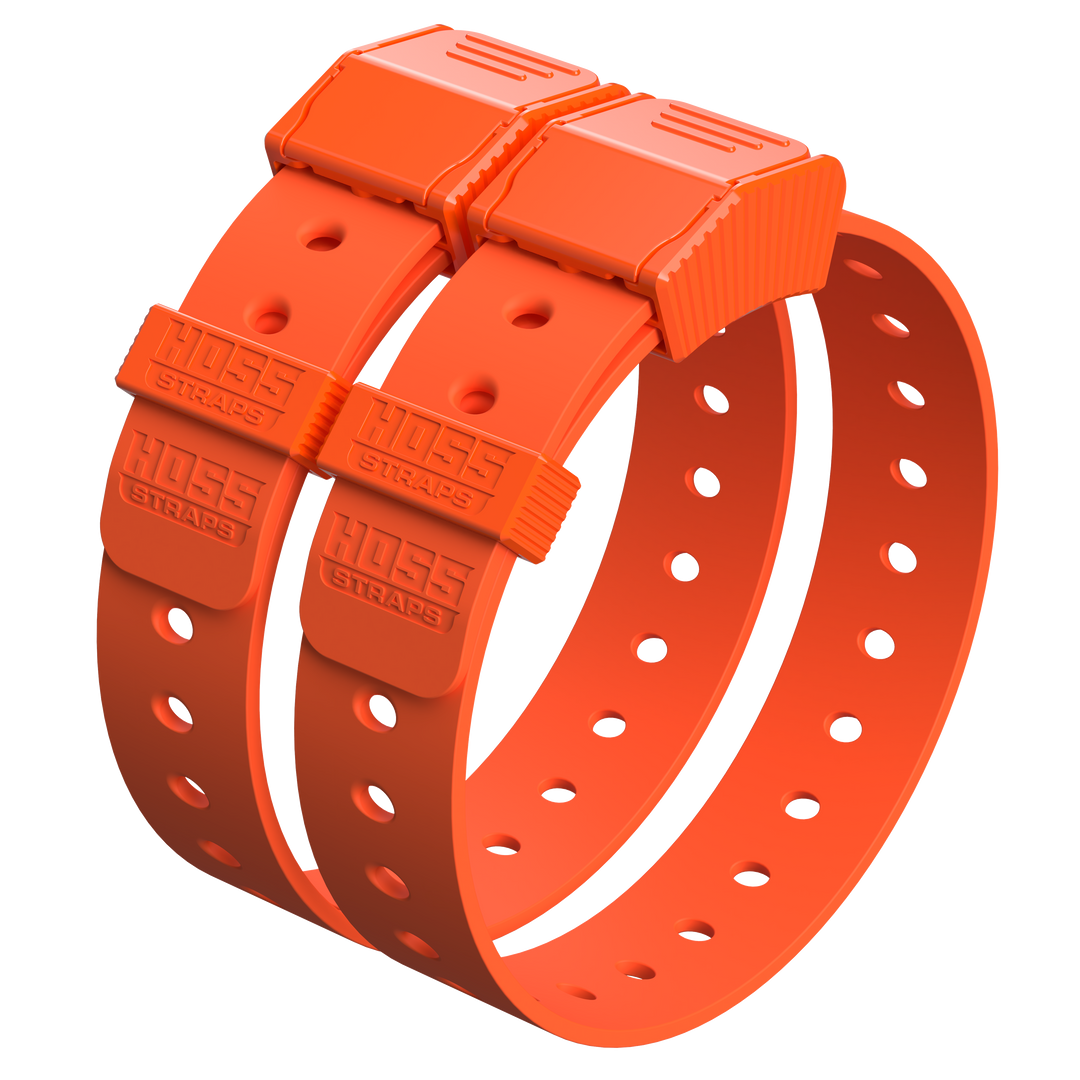
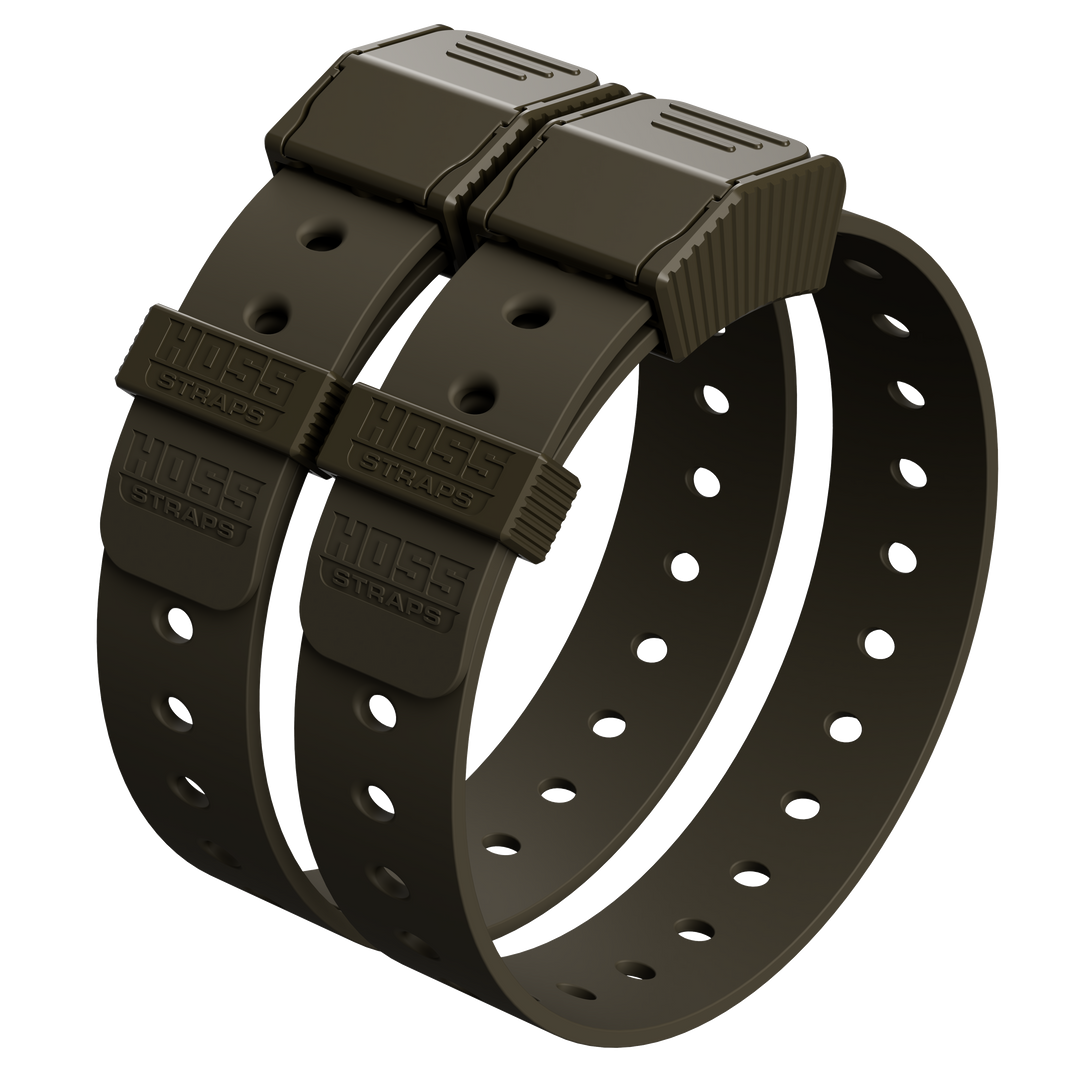
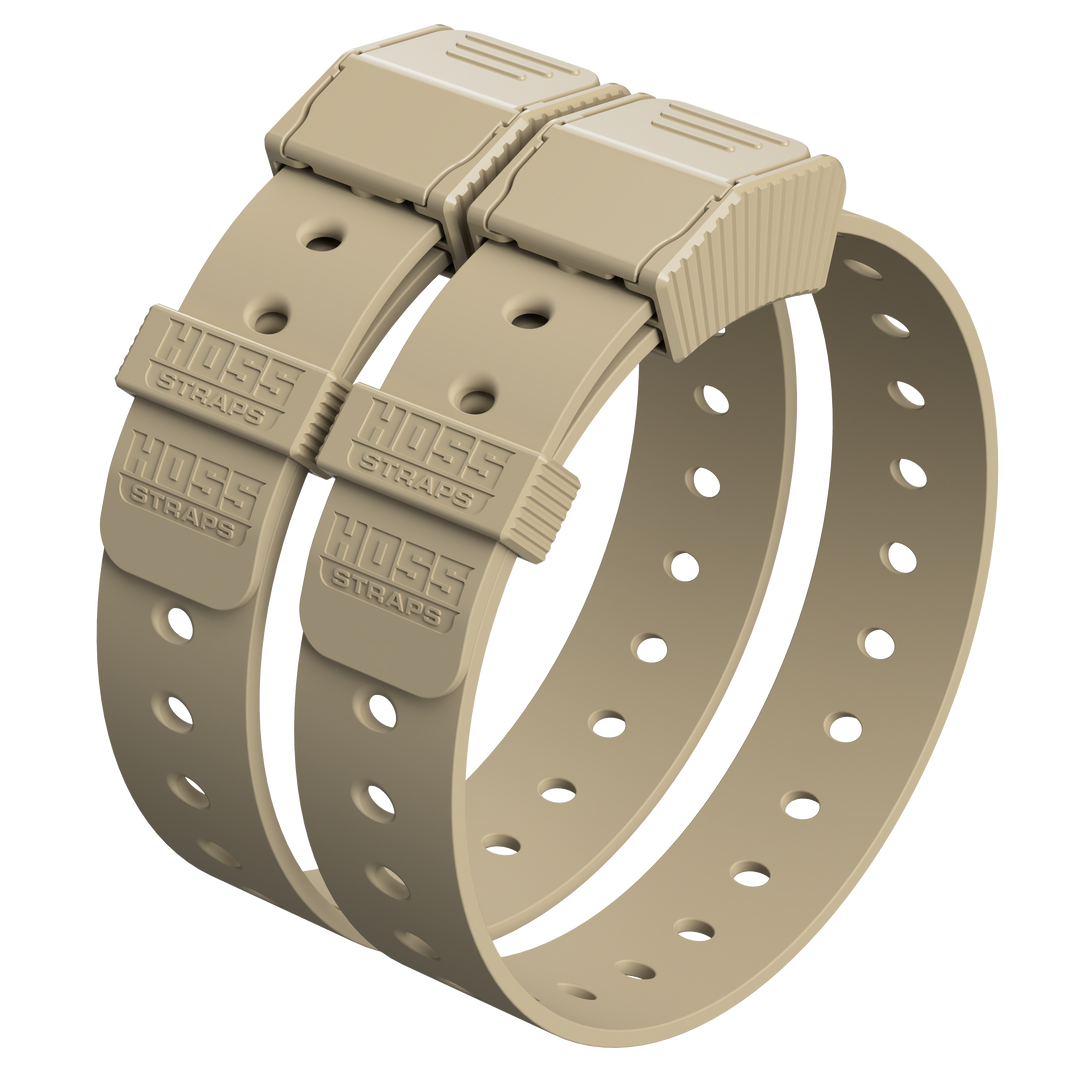
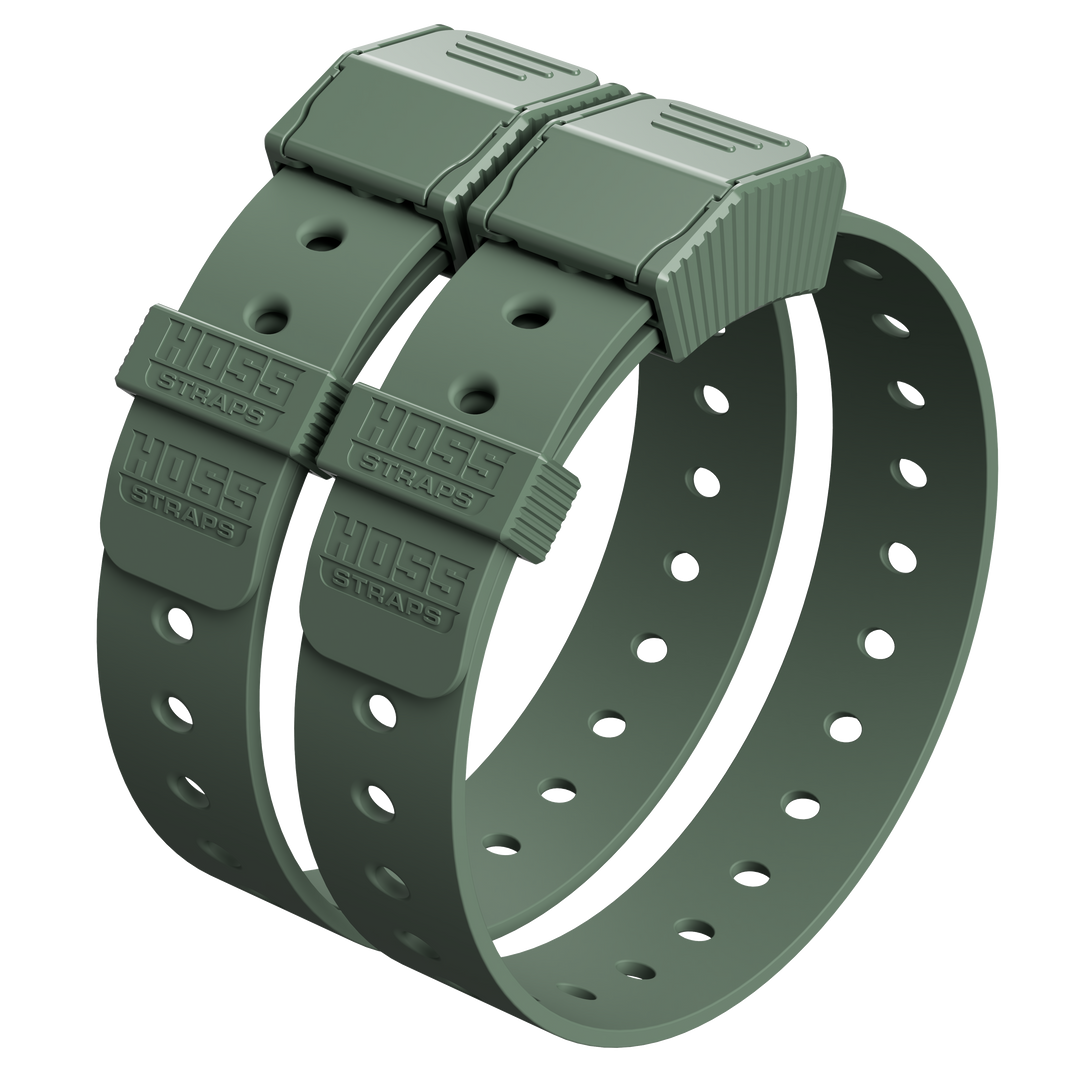
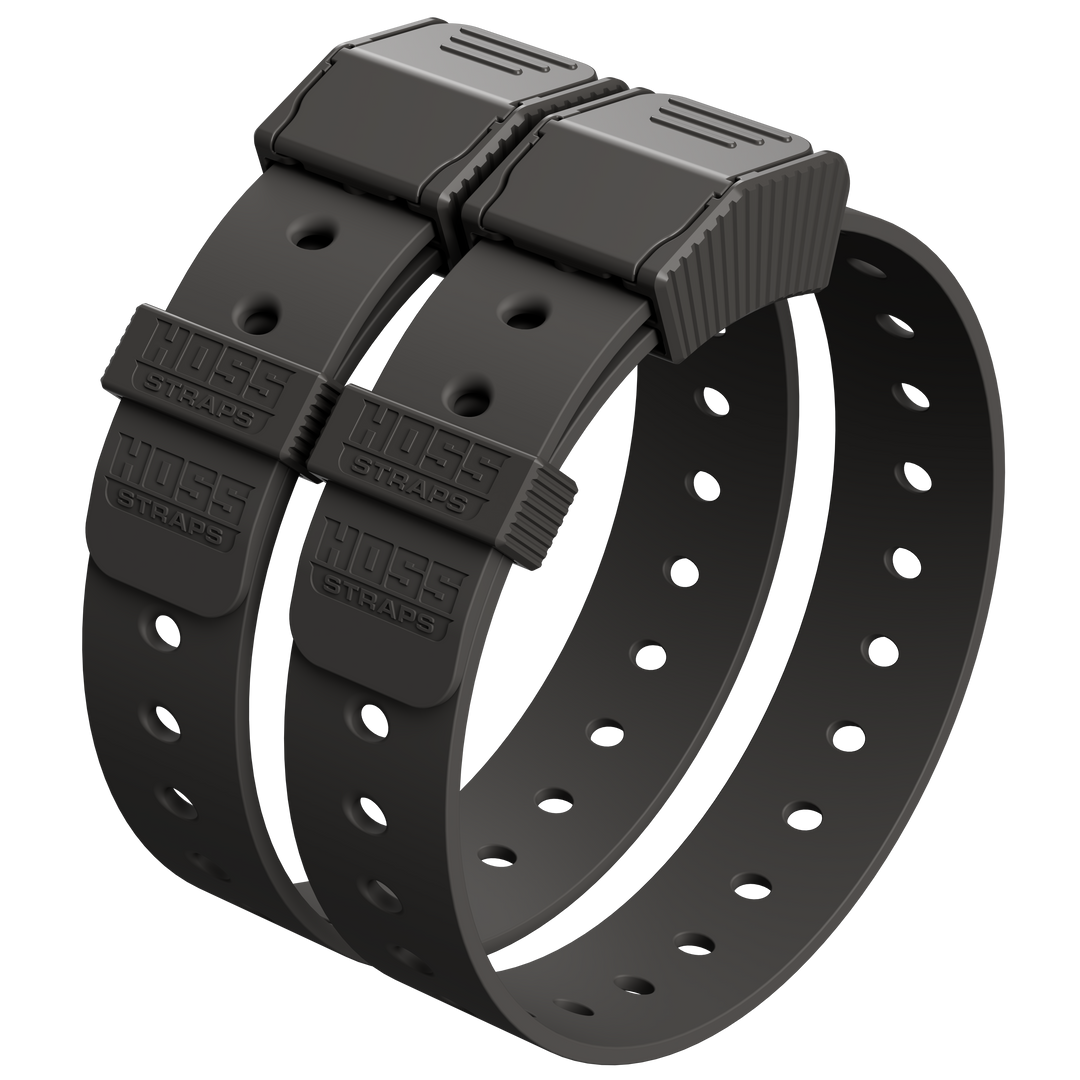
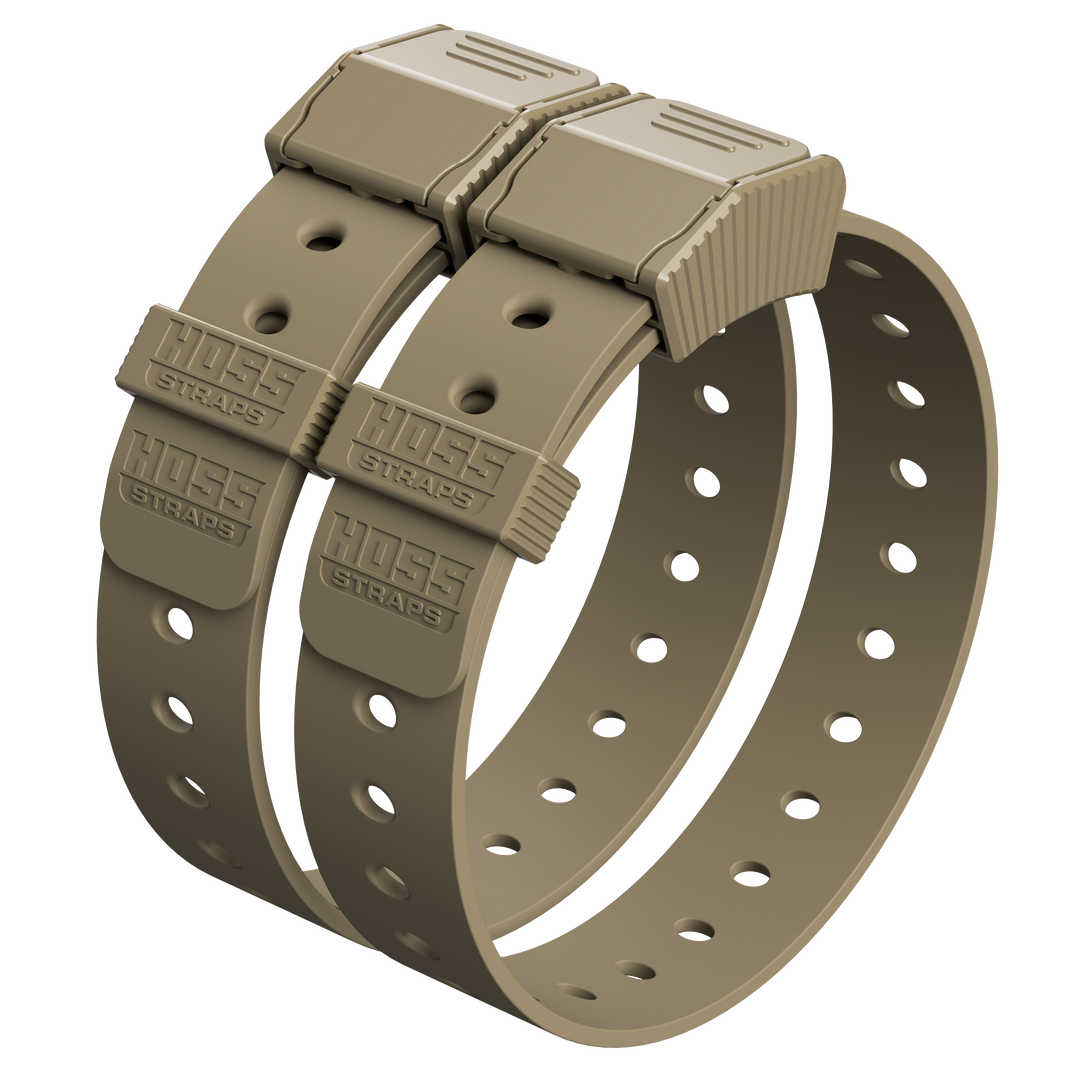
Hoss Straps states that its gear straps can connect for extra length. The working draft sequence is simple: join the buckle of one open strap to an adjustment hole on a second strap, route the longer chain around the object and support, then close the remaining buckle on an available hole. Both buckles must be fully engaged, visible, and reachable.
Short answer: two connected Hoss Straps gear straps create one adjustable loop with two buckle points. The usable loop is shorter than the two nominal strap lengths added together because each buckle needs overlap at an adjustment hole. Measure the locked setup instead of assuming that two 24-inch straps create a 48-inch closed loop.

A correct connected setup should have
- Two clean, undamaged Hoss Straps gear straps with compatible buckle and hole geometry.
- One buckle joining the two straps and one buckle closing the final loop.
- Two fully engaged adjustment holes with no half-locked buckle.
- A flat strap path with no twists, sharp edges, hidden releases, or blocked controls.
- A hand check before the gear is moved, loaded, or returned to service.
Guide overview
- Before you connect the straps
- The three connection steps
- How to measure connected length
- When a connected pair may help
- Inspection and release
- Connection problems and fixes
- Frequently asked questions
Before you connect Hoss Straps gear straps
What you needTwo Hoss Straps gear straps, the object, the real support or anchor, and a flexible tape or non-stretch string.
Where to work Use a stable, stationary setup with the object supported. Do not practice while gear can roll, fall, swing, or shift.
What to inspectCheck each strap body, adjustment hole, buckle, keeper, release surface, and contact point before joining anything.
Clean away sand, mud, salt, or grit that could block a buckle. Set aside a strap with cuts, cracks, stretched or torn holes, permanent deformation, heat damage, or a buckle that will not close and release cleanly.
Measure the full route around both the object and support. If one longer strap already fits with enough room to close and release the buckle, a single strap gives you fewer connection points to inspect.


How to connect Hoss Straps gear straps
The following sequence is based on the current Hoss Straps buckle design, first-party statements that the straps connect, and AI-generated connected-setup scenes. Keep the article behind the editorial hold until Hoss Straps approves the sequence.
Step 1
Lay two open straps end to end
Place the straps flat with the buckle on the first strap pointing toward the row of adjustment holes on the second strap. Remove twists and decide which hole will give the joining buckle enough engagement while preserving the reach you need.
Check: the straps should form one straight chain. The free buckle at the far end will close the loop after the chain is routed around the setup.
Step 2
Click the first buckle into the second strap
Place the first buckle into the selected adjustment hole on the second strap using the normal Hoss Straps closing motion. Confirm that the buckle is seated fully and cannot lift out with a light hand pull. Do not use a damaged hole or force the buckle into a partial position.
Check: the joined straps should move as one longer open chain, with the connection lying flat and the release still reachable.

Step 3
Route the chain and close the remaining buckle
Wrap the joined straps around the object and its approved support. Keep the straps flat, keep both buckles away from edges and pinch points, and close the remaining buckle into a suitable open adjustment hole on the other strap. Do not crush the object or hide either release.
Check: pull each strap section by hand, inspect both buckle engagements, and confirm that the object stays in the intended position without the strap crossing a control, moving part, hot surface, line, or fragile feature.

How much length do connected straps add?
| Configuration | Nominal strap lengths | Verified connected loop | Release decision |
|---|---|---|---|
| Two 12-inch straps | 12 inches plus 12 inches | Measure after both buckles are locked. | Hold until Hoss Straps records the minimum and maximum inside loop. |
| One 12-inch and one 24-inch strap | 12 inches plus 24 inches | Mixed-size connection also needs approval. | Hold until compatibility and loop range are confirmed. |
| Two 24-inch straps | 24 inches plus 24 inches | Not a verified 48-inch closed loop. Buckle overlap reduces the usable route. | Hold until Hoss Straps records the minimum and maximum inside loop. |
Measurement method for final review: connect clean production samples, close both buckles at the first approved and widest approved settings, then run a flexible tape along the inside centerline of the locked loop. Record the sample, hole positions, measurement tool, reviewer, and date.
When a connected pair may help
A connected pair may help when one strap cannot travel around a larger object and support, or when the attachment points sit farther apart. Hoss Straps product copy and AI-generated scenes visualize connected straps used for more reach around larger gear. That example does not guarantee fit or approve every anchor, movement condition, or transport job.

Before adding a second strap, compare the current 24-inch Hoss Straps gear strap. A single longer strap may fit with fewer inspection points. If a pair is still needed, choose enough straps for the measured route and keep an approved connection diagram with the equipment.
Inspect, test, and release the connected setup
- Both buckles are fully seated in undamaged adjustment holes.
- The straps lie flat without a twist, fold, cut, or sharp-edge contact.
- Both buckle releases are visible and reachable.
- The object and support are suitable for the job and cannot damage the strap.
- A light hand pull does not open either connection or shift the object.
- The setup follows current Hoss Straps instructions and any task-specific rules.
To disconnect the setup, support the object and remove any force that could make it fall, roll, or swing. Open one buckle using the approved Hoss Straps release motion, unwrap the straps, then separate the joining buckle. Clean and inspect both straps before storage.
Connection problems and safe fixes
| Problem | Likely cause | Safe next step |
|---|---|---|
| The buckle will not seat | Wrong orientation, debris, damage, or an unsuitable hole | Stop, clean and inspect both parts, then use only the approved orientation and hole. |
| The joined chain is twisted | One strap was turned before the first connection | Open the connection, lay both straps flat, and start again. |
| The final buckle cannot reach | The measured route is longer than the available connected setup | Do not force it. Use an approved longer configuration or a different rated restraint. |
| A release is hidden | The buckle sits behind the object or against the support | Reroute the straps so both releases remain visible and reachable. |
| A hole stretches, tears, or opens | Damage, poor engagement, or an unsuitable use | Remove both straps from service and contact Hoss Straps for replacement guidance. |
Use limit: connecting straps adds reach. It does not prove a higher working limit or approve lifting, towing, recovery, climbing, fall protection, human restraint, or moving-vehicle cargo restraint. Use equipment rated for the exact task whenever formal load or transport rules apply.
Frequently asked questions
How do you connect two Hoss Straps gear straps?
Join the buckle of one open strap to an approved adjustment hole on the second strap, route the longer chain, then use the remaining buckle to close the final loop.
Do two 24-inch straps make a 48-inch loop?
Not as a verified closed-loop measurement. Each buckle needs overlap at an adjustment hole, so the usable inside loop is shorter than 48 inches and changes with the selected holes.
Can a 12-inch Hoss Straps gear strap connect to a 24-inch strap?
The products share the visible Hoss Straps buckle and adjustment-hole pattern, but the canonical pages reviewed do not publish a mixed-size instruction. Ask Hoss Straps to confirm compatibility before using or publishing that configuration.
Does connecting two straps raise the load guidance?
No higher limit should be inferred from added length. A connected setup adds another buckle and changes the configuration. Follow only approved Hoss Straps guidance for the exact task.
How many buckle points should a two-strap loop have?
A two-strap closed loop has one buckle joining the straps and one buckle closing the routed loop. Both points need full engagement, inspection, and release access.
How should connected Hoss Straps gear straps be released?
Support the object, remove force from the setup, and open one buckle using the approved quick-release motion. Unwrap the straps before separating the joining buckle.
Related Hoss Straps guides
Before building a connected setup, use the Gear Strap Size Guide, review how the buckle works, and check how Hoss Straps tests gear straps .
Choose enough strap for the measured route
Measure the full setup first, then compare 24-inch Hoss Straps gear strap packs for longer routes or review the current Hoss Straps gear strap collection before deciding whether a connected pair is needed.