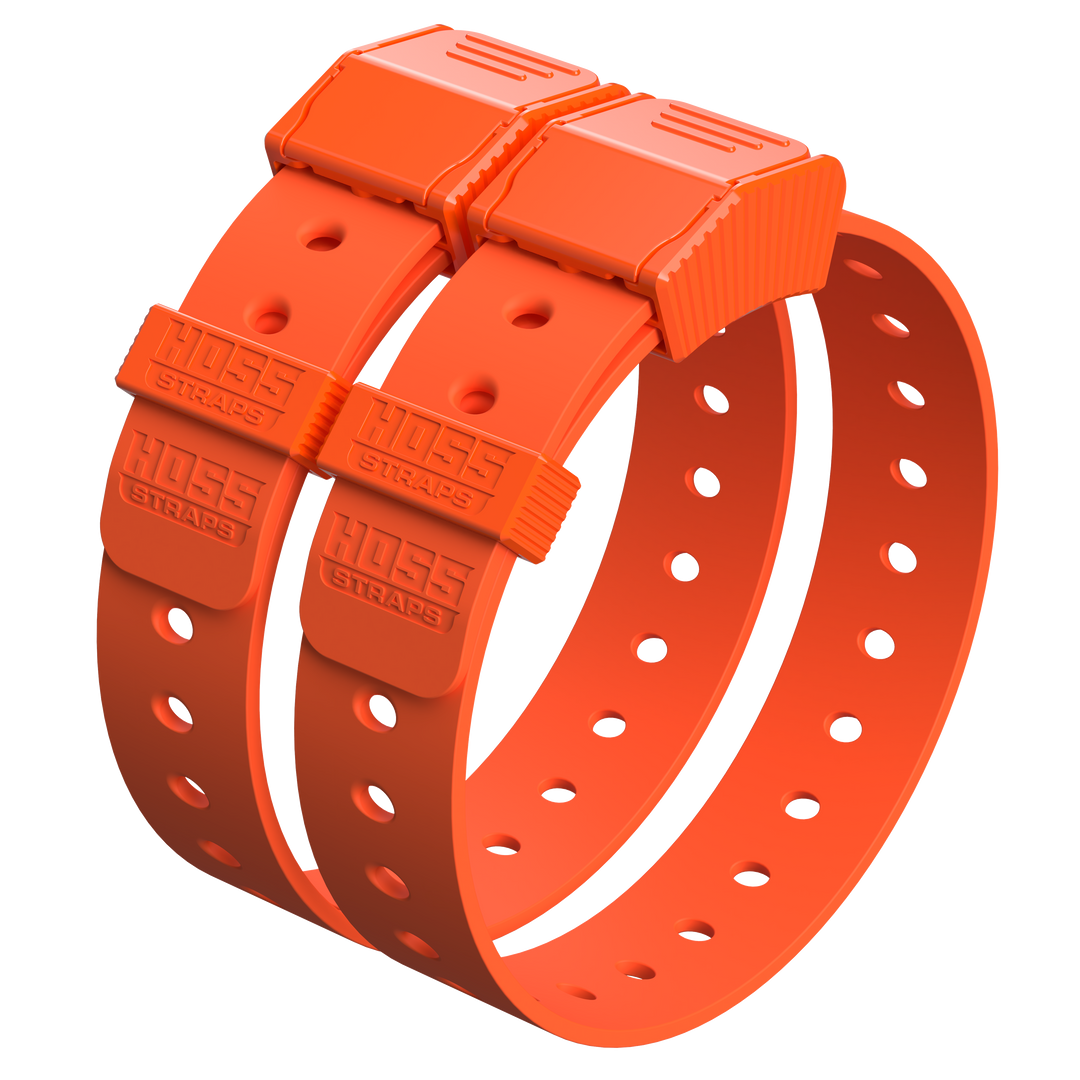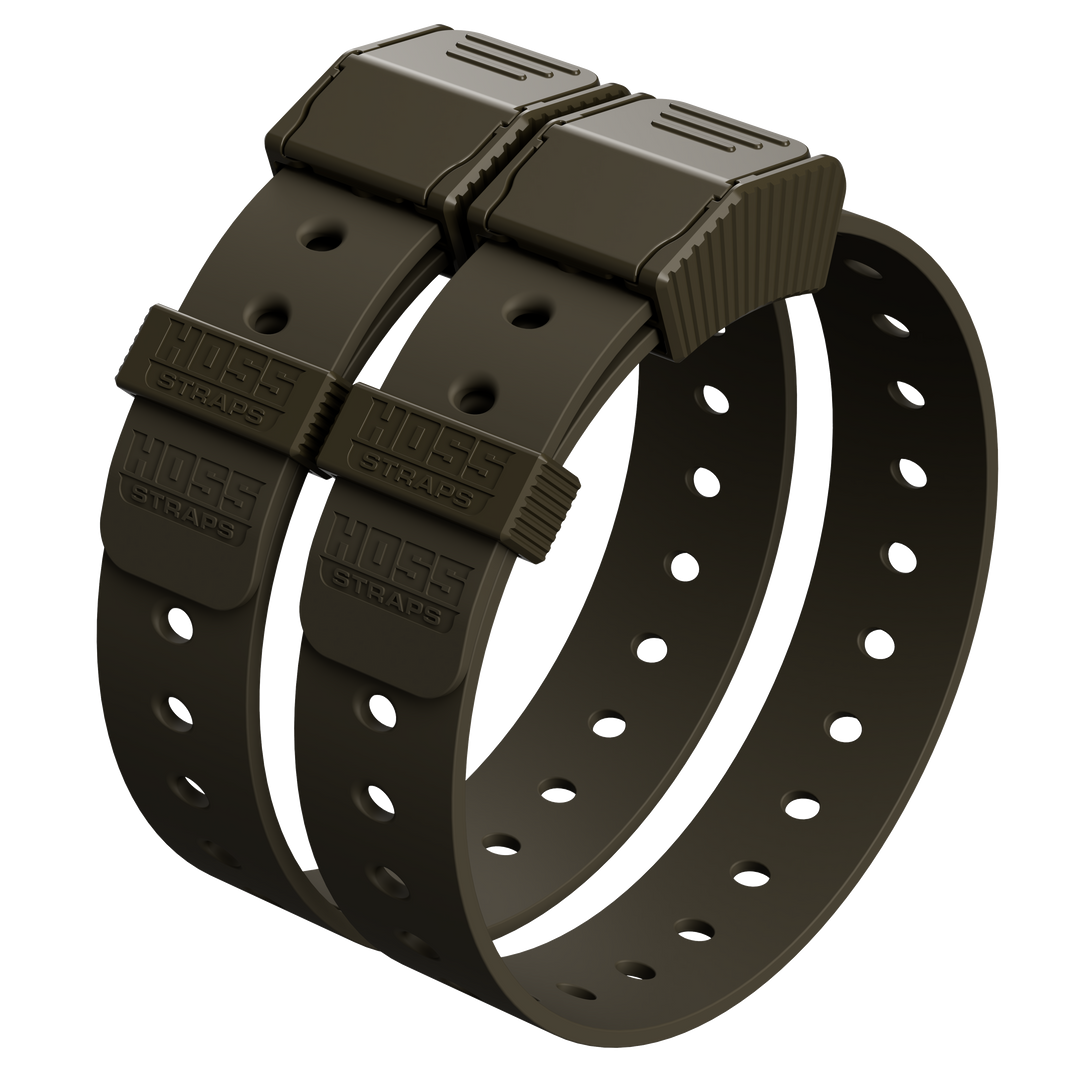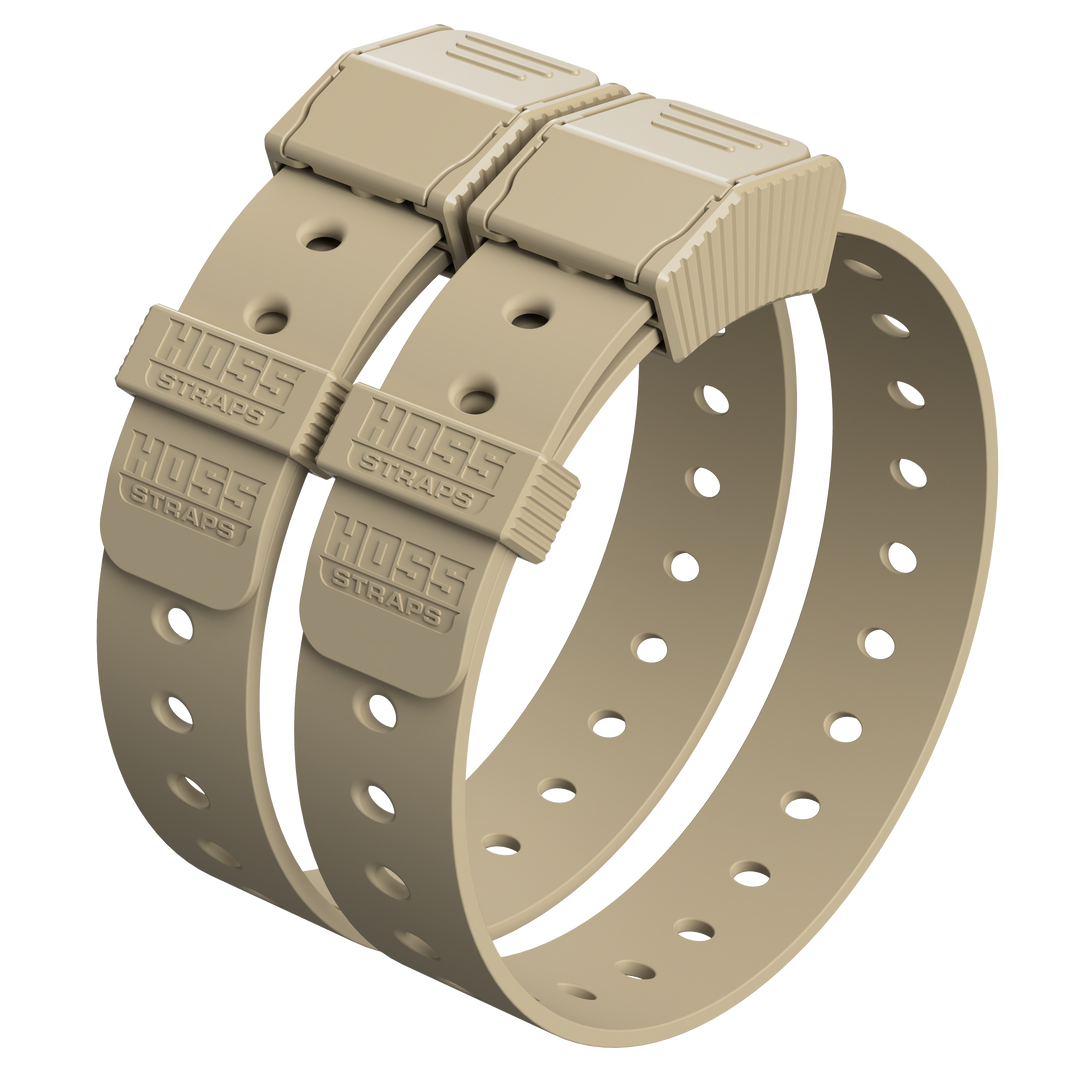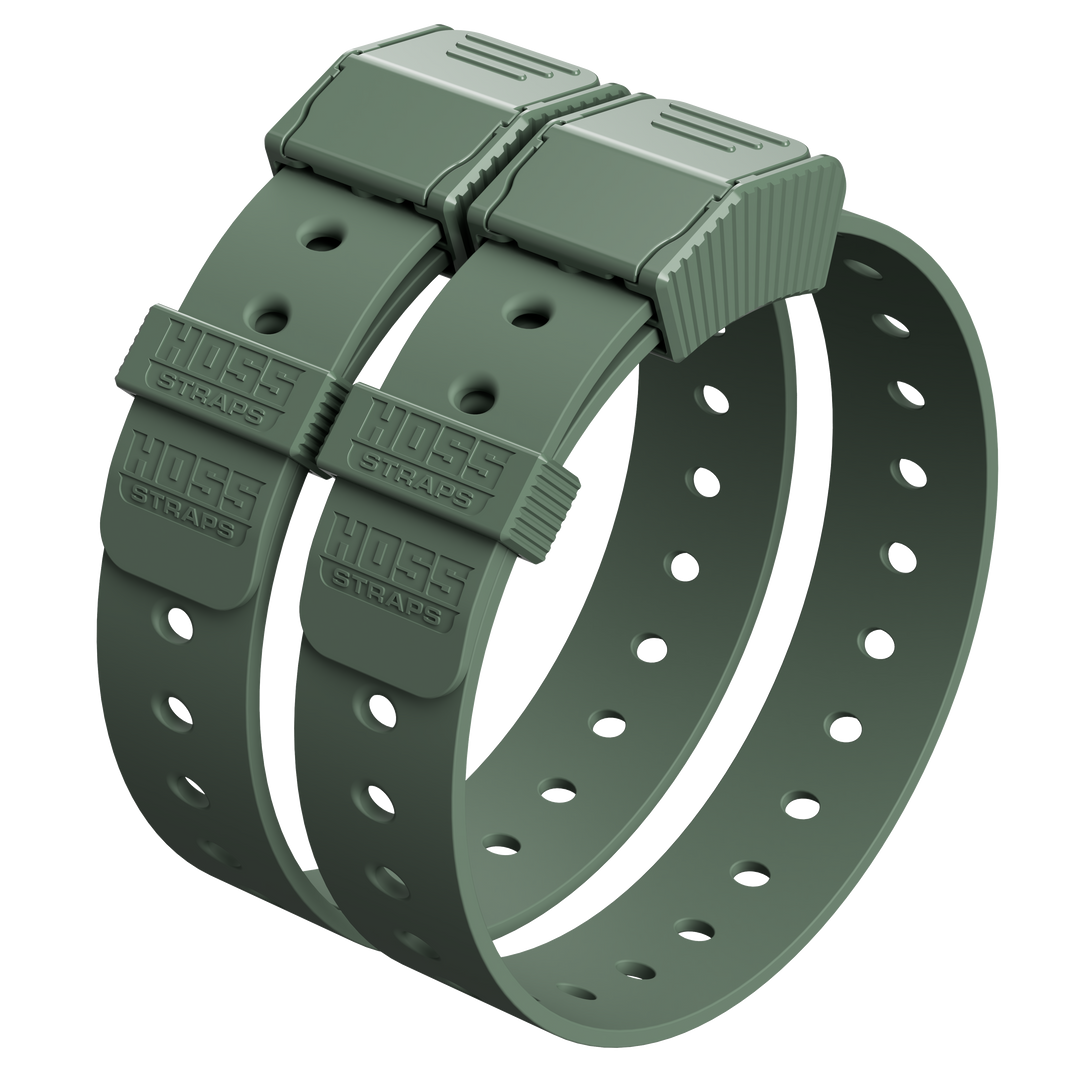



How Quick-Release Gear Strap Buckles Work
A quick-release gear strap buckle gives you a repeatable way to close, open, and refasten the same setup. It is most useful when you need regular access to a dry bag, tool pouch, first-aid kit, cord bundle, or other organized gear without cutting off a single-use tie or untying a knot.
Quick answer: the HOSS buckle closes at a selected adjustment hole and opens from its molded release surface. Keep the buckle visible, press it fully into place, and give the closed setup a light hand check. Before opening it, support the gear and remove outside force from the strap. “Quick release” does not mean automatic release, emergency release, or safe release under load.

Guide Overview
- The visible parts of a quick-release gear strap
- How the HOSS buckle closes and opens
- How common buckle types differ
- How to check operation with gloves
- Why you should support the gear before release
- What can obstruct or damage a buckle
- How to rinse, inspect, and store it
- What quick release does not mean
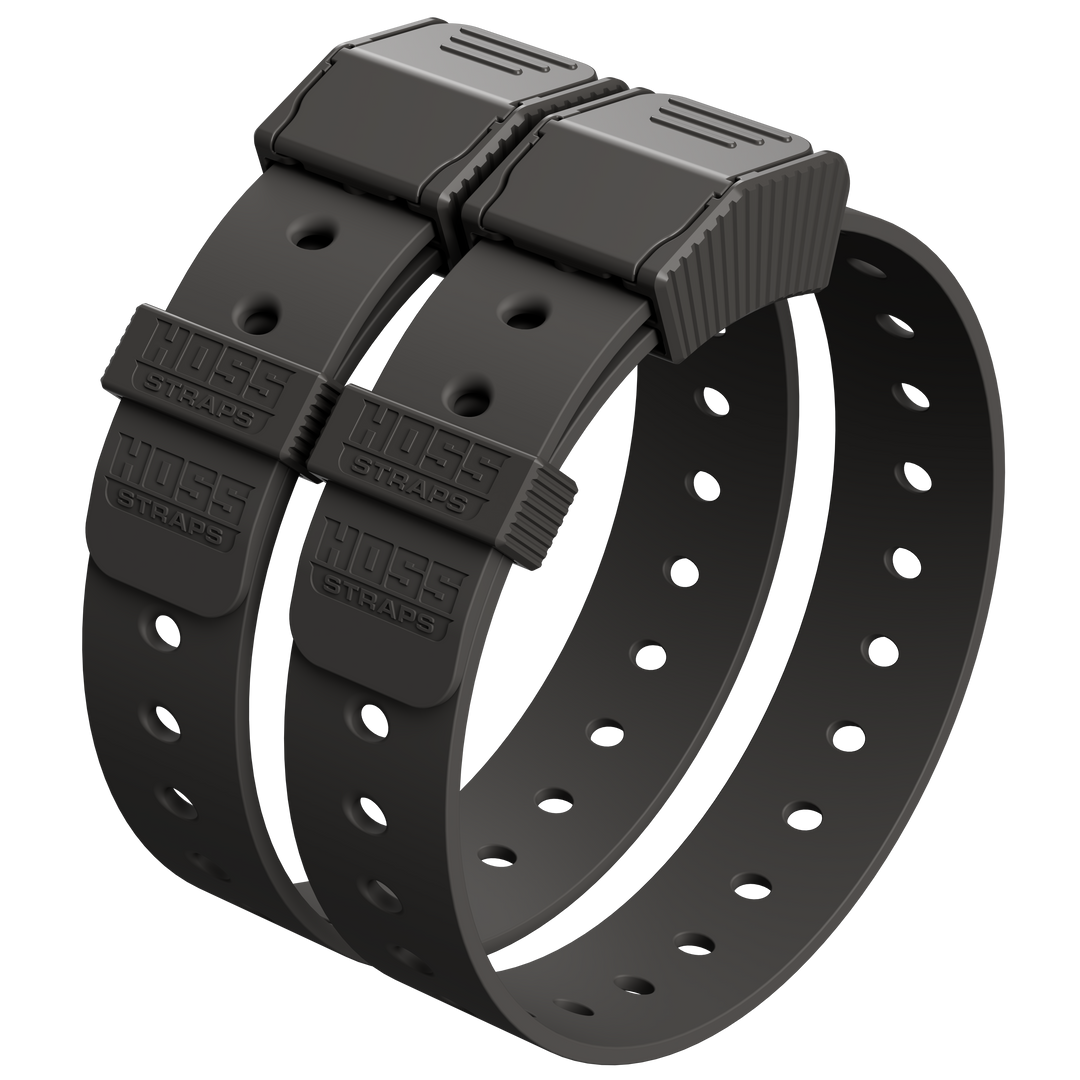
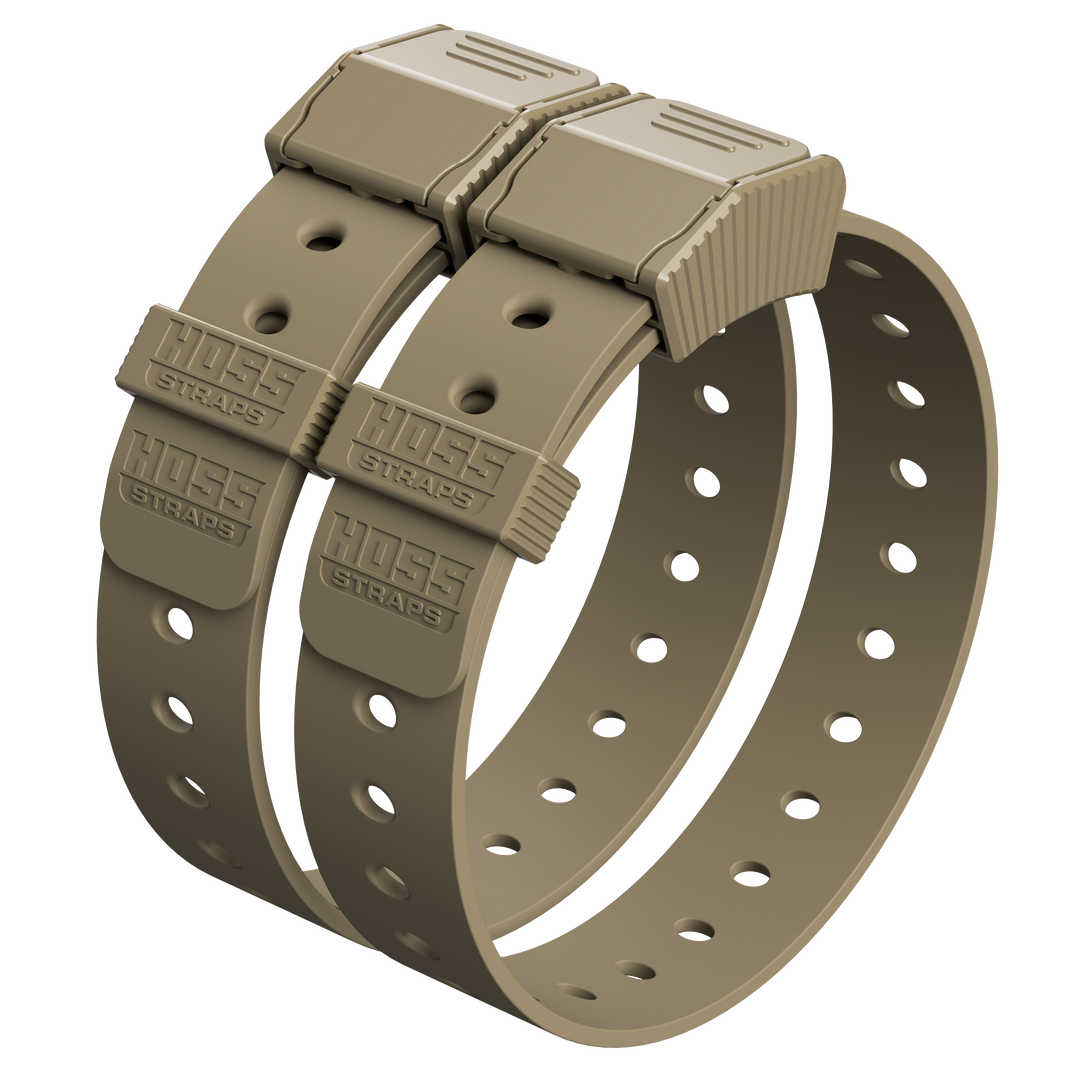
The Parts You Can See and Check
You do not need to disassemble the buckle to make a useful pre-use check. Start with the visible parts and the way they work together.
Strap body
The strap body follows the route around the gear and anchor. Keep it flat, without twists, and away from sharp edges, heated surfaces, moving parts, and fragile finishes.
Adjustment holes
The holes set the fit. Choose an undamaged hole that allows the buckle to close normally. Do not stretch, cut, drill, or reshape a hole to force a different fit.
Locking buckle
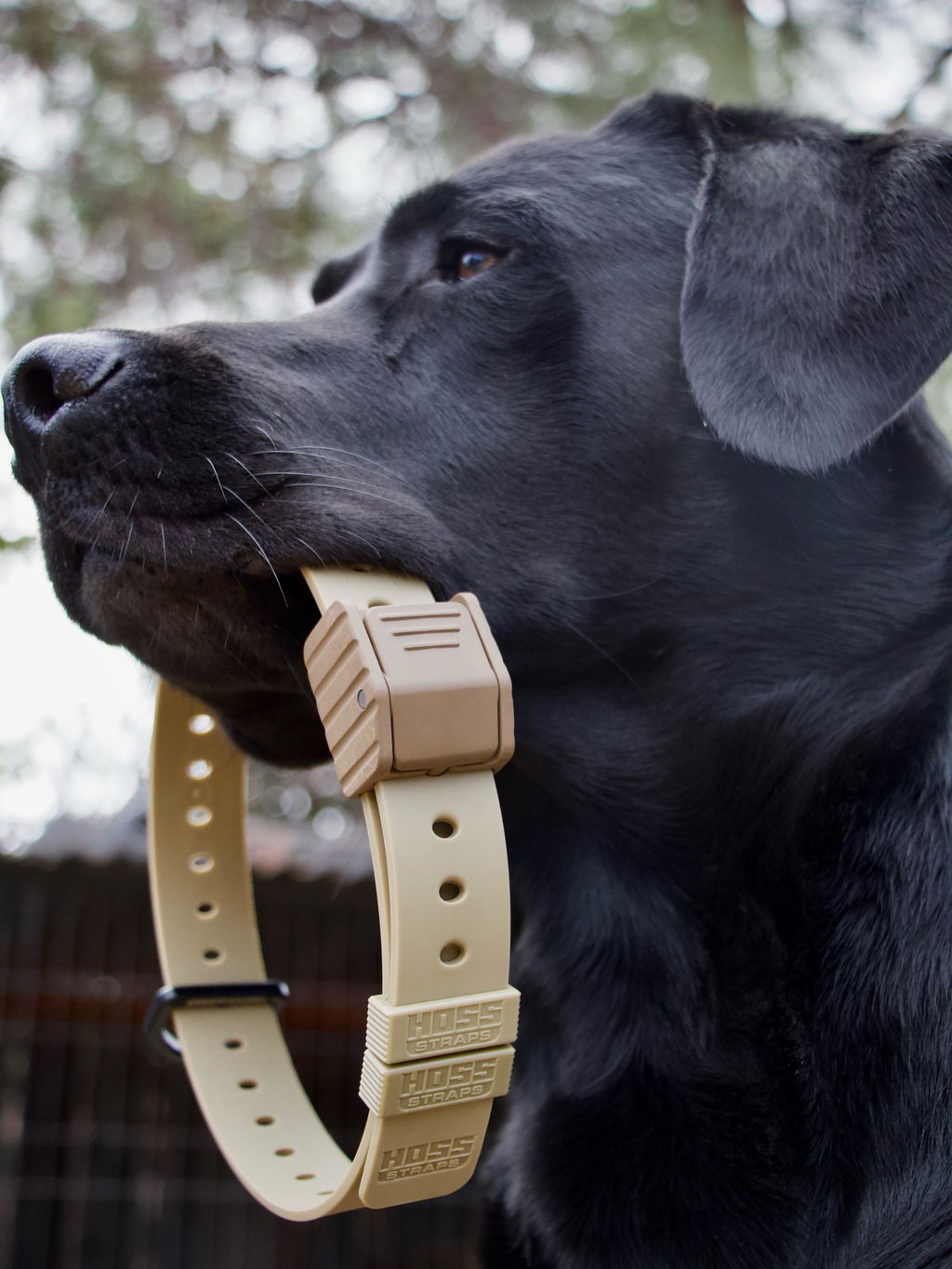
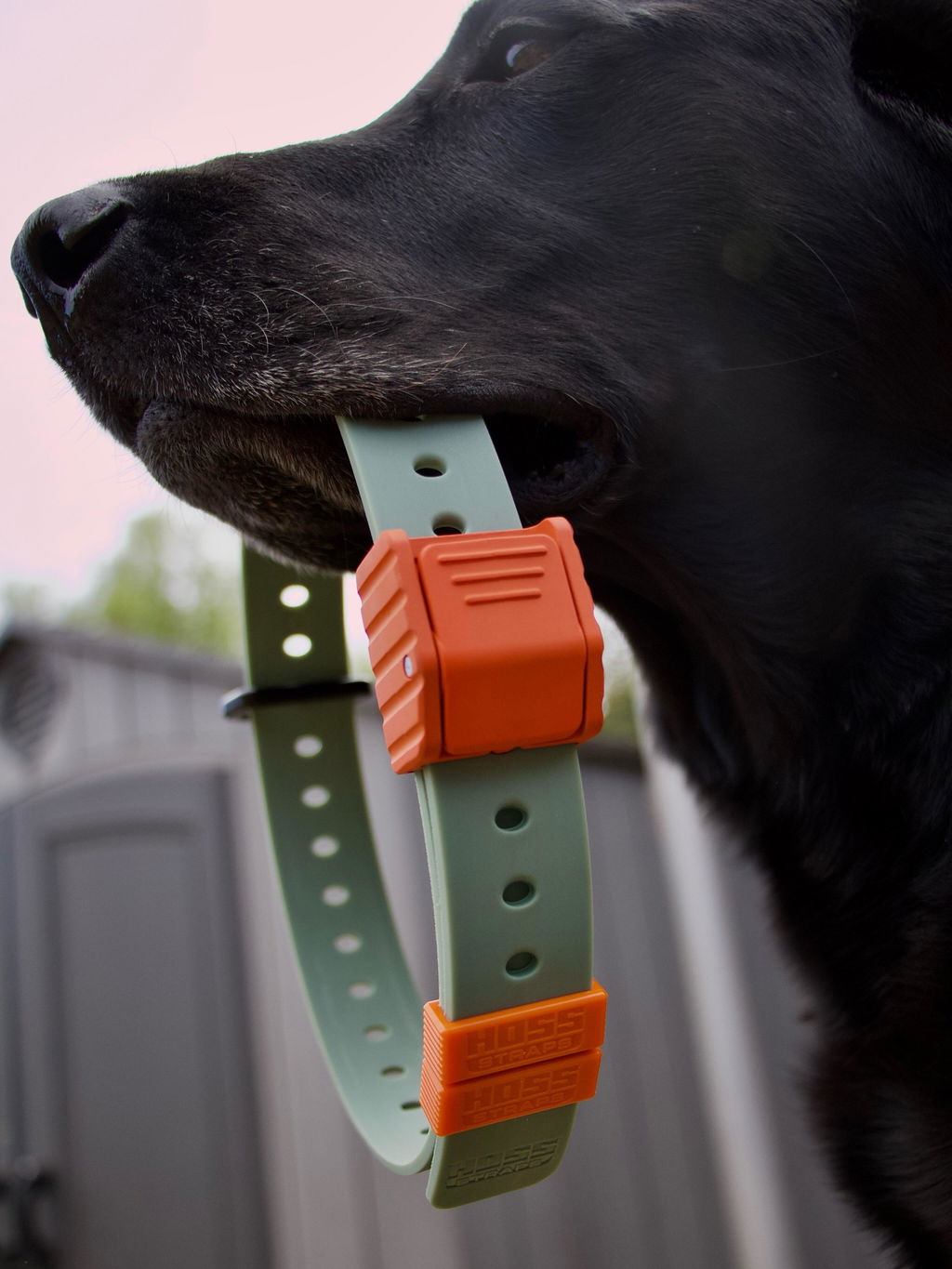
The molded buckle closes at the selected hole. Press it fully into place until it clicks, then look at the closure and give the setup a light hand check before relying on it.
Release surface
The release surface is where you operate the buckle to open the strap. Keep it visible and within reach. If another object blocks it, change the strap route before use.
Keeper
The keeper manages the loose strap end. It does not replace the buckle or create a second locking point.

How the HOSS Quick-Release Buckle Works
The basic cycle is measure, wrap, adjust, close, check, and release. Each step affects how easy the buckle is to operate the next time you need the gear.
- Measure the complete route. Include the object, anchor, corners, padding, and the space needed for the buckle.
- Wrap the strap flat. Remove twists and keep the route away from edges, heat, controls, and moving parts.
- Select an undamaged hole. Choose a snug fit without forcing the strap or buckle.
- Close and check. Press the buckle fully into place, look at the closure, and give it a light hand check.
- Support, release, and inspect. Stabilize the gear, remove force from the strap, operate the release by hand, and inspect the parts before using them again.
If the buckle does not close or open normally, stop. Do not hammer, pry, file, heat, lubricate, or modify it. Rinse away loose debris and inspect the strap before deciding whether it can return to service.
Repeated access is the real advantage
A quick-release buckle is especially useful when you open the same setup several times during a workday or trip. The benefit is not speed alone. It is being able to return to a measured adjustment point while keeping the release easy to find.

How Common Gear Strap Buckle Types Differ
“Quick release” describes a convenience, not one universal mechanism. Different buckles close, adjust, and release in different ways.
| Buckle or closure type | How it commonly works | What to check |
|---|---|---|
| Molded strap-and-hole buckle | The buckle engages a selected hole in a flexible strap body. | Hole condition, full closure, buckle alignment, and reachable release. |
| Side-release buckle | Two pieces connect, and side tabs are squeezed to separate them. | Tab access, cracked prongs, webbing adjustment, and accidental pressure points. |
| Cam buckle | A lever or cam clamps webbing at an adjustable position. | Webbing wear, cam movement, correct threading, and release behavior after use. |
| Ratchet buckle | A ratchet adds mechanical tension through repeated handle movement. | Rated application, webbing path, hardware condition, and the maker’s release steps. |
| Hooked elastic cord | Elastic tension holds the route while hooks attach at each end. | Hook security, snapback path, elastic wear, and whether stretch suits the job. |
HOSS gear straps use a molded buckle and an adjustment-hole strap. They are not ratchet straps, cam straps, side-release bag straps, or hooked bungee cords. Choose by the job and follow the instructions for the exact product you have.
Can You Use a Quick-Release Buckle With Gloves?
You may be able to operate the HOSS buckle with gloves if the release is visible, reachable, and large enough for your gloved hand to use comfortably. Glove thickness, stiffness, moisture, cold, hand position, and surrounding equipment can all change the answer.
Do not assume that “quick release” guarantees one-handed or gloved operation. HOSS does not currently list a glove-specific release-force value or glove test for its gear straps. Check your own access routine with the strap unloaded and the gear fully supported.
A practical glove check
- Put on the gloves you normally wear.
- Build the real setup with the gear supported.
- Close the buckle fully and confirm that you can see the release.
- Reach the buckle from the position where you will normally stand or sit.
- Operate it several times without prying, twisting, or moving other gear first.
If you cannot operate the buckle naturally, move it to a clearer part of the route or choose a different setup. Do not depend on removing a glove during an emergency.
Can You Release the Buckle Under Tension?
Do not plan to release a gear strap while the gear is pulling against it. “Quick release” describes the buckle’s opening method; it is not a promise that the buckle will open easily or safely under external force.
Before opening the buckle, stabilize the object, support its weight, and remove force from the strap. Keep your face, hands, and other people out of the possible movement path. If the buckle feels harder to operate, do not force it. Re-support the gear and reduce the load on the strap first.
Never use this buckle as an emergency dump, breakaway, rescue, fall-arrest, lifting, towing, recovery, climbing, human-restraint, or suspended-load release. Those jobs require equipment and procedures designed for their specific hazards.
What Can Jam or Damage a Quick-Release Buckle?
A buckle can stop working normally because of contamination, damage, heat, misalignment, or a poor strap route. The most common visible problems are preventable.
- Sand, salt, mud, and grit: particles can collect around the release and contact surfaces.
- Forcing a misaligned closure: a buckle should not need hammering, prying, or twisting to engage.
- Damaged adjustment holes: cuts, tears, deep wear, or permanent deformation can prevent a normal connection.
- Hard impact or crushing: a buckle trapped behind gear can be struck or pressed against an edge.
- High heat: hot surfaces can damage or permanently change the strap or buckle.
- Modification: drilling, trimming, heating, gluing, or adding lubricant can alter the mechanism.
If debris is visible, support the gear, remove the strap, and rinse it instead of forcing the buckle. If it remains cracked, chipped, deformed, jammed, or unreliable after cleaning and drying, set it aside.
How to Care for the Buckle
- Rinse: after saltwater, mud, sand, or heavy use, rinse the strap body, holes, buckle, and release area with fresh water.
- Clear debris: turn the open buckle so water can reach visible recesses. Do not pry it with a tool.
- Air-dry: let the parts dry naturally, away from open flame and high heat.
- Inspect: check for cuts, cracks, chips, deformation, damaged holes, and abnormal closure or release.
- Store relaxed: keep the strap clean, dry, and out of a tightly bent or crushed position.
Cleaning removes loose contamination; it does not repair damage. See the complete Gear Strap Care guide for inspection and replacement cues.
What Do the Patent and Cycle Claims Tell You?
HOSS lists intellectual-property rights related to its buckle, strap, and accessories on the HOSS patent information page. A patent can identify a protected design or invention. It does not replace product instructions, a working-load statement, or a test result for your setup.
The same applies to release-cycle claims. A useful cycle result should identify the exact product, sample count, strap condition, contaminants, opening method, number of cycles, failures, and stop rule. HOSS does not currently show a customer-facing cycle-count result for the gear strap buckle. Reusable means the buckle can be opened and used again when it remains undamaged and operates normally; it does not mean unlimited cycles without wear.
What Quick Release Does Not Mean
| Phrase | Reasonable meaning | What it does not promise |
|---|---|---|
| Quick release | The buckle has a direct hand-operated opening method. | Automatic, remote, emergency, or load-bearing release. |
| Reusable | The buckle can be opened, inspected, adjusted, and used again when undamaged. | Unlimited life, no wear, or permission to ignore inspection. |
| Works with gloves | Your gloved hand can reach and operate the buckle in your checked setup. | Guaranteed operation with every glove, temperature, hand position, or load. |
| 75 lb Working Load | HOSS’s stated working-load value for its gear straps. | Breaking strength or approval for every 75-pound object or arrangement. |
| Patented | HOSS identifies patent rights related to listed product features. | A safety rating or proof for lifting, towing, recovery, or human restraint. |
For more context on the load statement, read working load vs breaking strength for gear straps.
Quick-Release Buckle Questions
How does a HOSS quick-release buckle work?
The molded buckle closes at a selected adjustment hole and opens from its release surface. Press it fully into place, check the closure, support the gear before opening, and inspect the strap after use.
Can I open it while wearing gloves?
Possibly, if the buckle is visible and easy to reach with your actual gloves. Check the unloaded setup before use. Glove thickness, moisture, cold, and surrounding gear can change access.
Can I release the buckle while the strap is under tension?
Do not plan to. Stabilize the gear, support its weight, and remove force from the strap before opening the buckle. Quick release is not an emergency or load-release rating.
What can make the buckle stick or jam?
Sand, salt, mud, trapped grit, hard impact, crushing, high heat, misalignment, damaged holes, or modification can interfere with normal operation. Rinse loose debris away and never pry the buckle.
How many times can the buckle be opened?
HOSS does not currently list a customer-facing cycle-count result for its gear strap buckle. Inspect it before every use and stop using it if it is cracked, chipped, deformed, jammed, or unreliable.
Is a quick-release buckle the same as a breakaway buckle?
No. Quick release means the buckle has a direct hand-operated opening method. It does not mean the buckle will open automatically, break away at a set force, or serve as an emergency safety release.
See How HOSS Straps Work
Follow the complete How HOSS Straps Work guide, then compare the HOSS gear strap collection. Choose a size that fits the measured route, keep the buckle within reach, and use the Care guide after wet or dirty jobs.